Automated Guided Vehicles (AGV) can operate in manufacturing environments with structured routes and defined transportation tasks. Facility layouts and traffic management systems influence their performance. Careful planning helps vehicles move efficiently. Deployment is often aligned with broader production requirements.
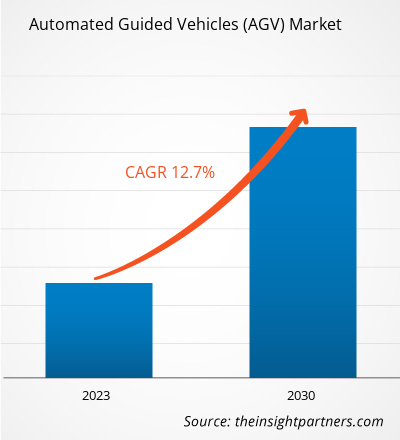
The global Automated Guided Vehicles (AGV) Market is expected to grow from US$ 4.53 billion in 2022 to US$ 11.84 billion by 2030. The market is estimated to register a compound annual growth rate (CAGR) of 12.7% from 2022 to 2030. Increasing industrial automation, growing e-commerce activities, and rising demand for efficient material handling solutions are supporting the adoption of automated guided vehicles across manufacturing, logistics, and warehouse operations.
Automated Guided Vehicles (AGVs) are driverless vehicles designed to transport materials within industrial and commercial facilities. They use navigation technologies, sensors, and control systems to move goods along designated routes. These vehicles can support the transportation of raw materials, components, pallets, and finished products, helping businesses streamline internal logistics and improve operational efficiency.
Increasing Industrial Automation Supports Market Growth
The growing adoption of industrial automation is a major factor driving the Automated Guided Vehicles (AGV) Market. Manufacturers are increasingly implementing automated systems to improve productivity, reduce repetitive manual activities, and maintain consistent production workflows. AGVs help transport materials between different operational areas, supporting continuous manufacturing processes.
Get Access Report Sample:
https://www.theinsightpartners.com/sample/TIPAT00002059
The development of Industry 4.0 is further encouraging businesses to connect automated equipment with digital platforms and production systems. AGVs can work alongside warehouse management software, manufacturing execution systems, and other automated equipment. This integration helps organizations coordinate material movement and improve operational visibility.
Businesses are also focusing on improving workplace safety and reducing the risks associated with manual material transportation. AGVs equipped with sensors, cameras, and obstacle-detection technologies can navigate designated routes while responding to objects in their surroundings. These capabilities make them useful in facilities seeking more controlled material handling operations.
E-Commerce and Warehouse Expansion Create Opportunities
The expansion of e-commerce is increasing the need for efficient warehouse and distribution operations. Online retailers and logistics providers handle large volumes of inventory and require reliable systems to move products across storage, picking, packing, and dispatch areas.
Automated Guided Vehicles support these activities by transporting goods between operational locations. Their use can help reduce unnecessary movement, improve material flow, and support more organized warehouse operations. As distribution facilities handle growing order volumes, businesses are evaluating automation technologies to improve throughput and operational consistency.
The adoption of AGVs is also relevant to facilities facing labor availability challenges and rising operating costs. Automated transportation systems can handle repetitive tasks and allow employees to focus on activities that require supervision, decision-making, and specialized skills. These benefits are encouraging companies to consider AGVs as part of their warehouse modernization strategies.
Technological Advancements Improve Vehicle Capabilities
Technological development is playing an important role in the evolution of automated guided vehicles. Modern AGVs use different navigation methods, including laser-based systems, magnetic guidance, wired navigation, and guide tape technologies. These systems help vehicles follow designated paths and operate within structured industrial environments.
Advances in sensors and control software are improving vehicle navigation and obstacle detection. Fleet management systems can coordinate multiple vehicles, allocate transportation tasks, and monitor vehicle performance. These capabilities help organizations manage automated material handling operations more effectively.
Manufacturers are also focusing on vehicle flexibility, load-handling capacity, and integration with existing infrastructure. Improved battery systems and charging solutions can support longer operating periods. Continued development in these areas is expected to expand the practical applications of AGVs across industrial and commercial facilities.
Applications Across Manufacturing and Logistics
Manufacturing remains an important application area for AGV technology. Automotive, electronics, food processing, and other industrial facilities use automated vehicles to transport components and materials to production areas. Reliable material delivery can help maintain production schedules and reduce interruptions.
In logistics facilities, AGVs support the movement of pallets, containers, and inventory between different warehouse locations. They can also work alongside automated storage systems and other material handling equipment. These applications are particularly relevant to distribution centers that require coordinated movement of goods.
The technology is also being adopted in facilities where material transportation must be performed repeatedly and consistently. By automating these activities, organizations can improve workflow coordination and make better use of available operational resources.
Key Players and Competitive Landscape
The Automated Guided Vehicles (AGV) Market includes established material handling companies and automation technology providers. Market participants focus on product development, navigation capabilities, vehicle performance, software integration, and customer-specific automation solutions.
Key players in the market include:
- Dematic Corp
- Kion Group AG
- Jungheinrich AG
- Toyota Material Handling Inc
- Konecranes Plc
- John Bean Technologies Corp
- Daifuku Co Ltd
- Bastian Solutions LLC
- Hyster-Yale Group Inc
- Murata Machinery Ltd
These companies contribute to the development of automated material handling technologies through product innovation, engineering capabilities, and automation solutions. Competition is influenced by vehicle reliability, system integration, operational flexibility, and the ability to address changing customer requirements.
Future Outlook
The Automated Guided Vehicles (AGV) Market is expected to maintain strong growth through 2030 as businesses continue investing in warehouse automation, smart manufacturing, and advanced logistics systems. Increasing e-commerce activity and the need for efficient material transportation are likely to support demand across industrial and commercial facilities.
Future developments are expected to focus on improved navigation, intelligent fleet management, enhanced safety features, and better integration with digital systems. Advances in sensors, software, and battery technologies may further improve vehicle performance and operational flexibility.
About The Insight Partners
The Insight Partners is a leading market research and consulting firm delivering actionable insights through in-depth industry analysis and strategic intelligence. The firm supports clients across various industries in making informed business decisions by providing comprehensive market forecasts, competitive assessments, and growth opportunities.
Contact Us:
If you have any queries about this report or if you would like further information, please contact us:
Contact Person: Ankit Mathur
E-mail: sales@theinsightpartners.com
Phone: +1-646-491-9876
Also Available in :
