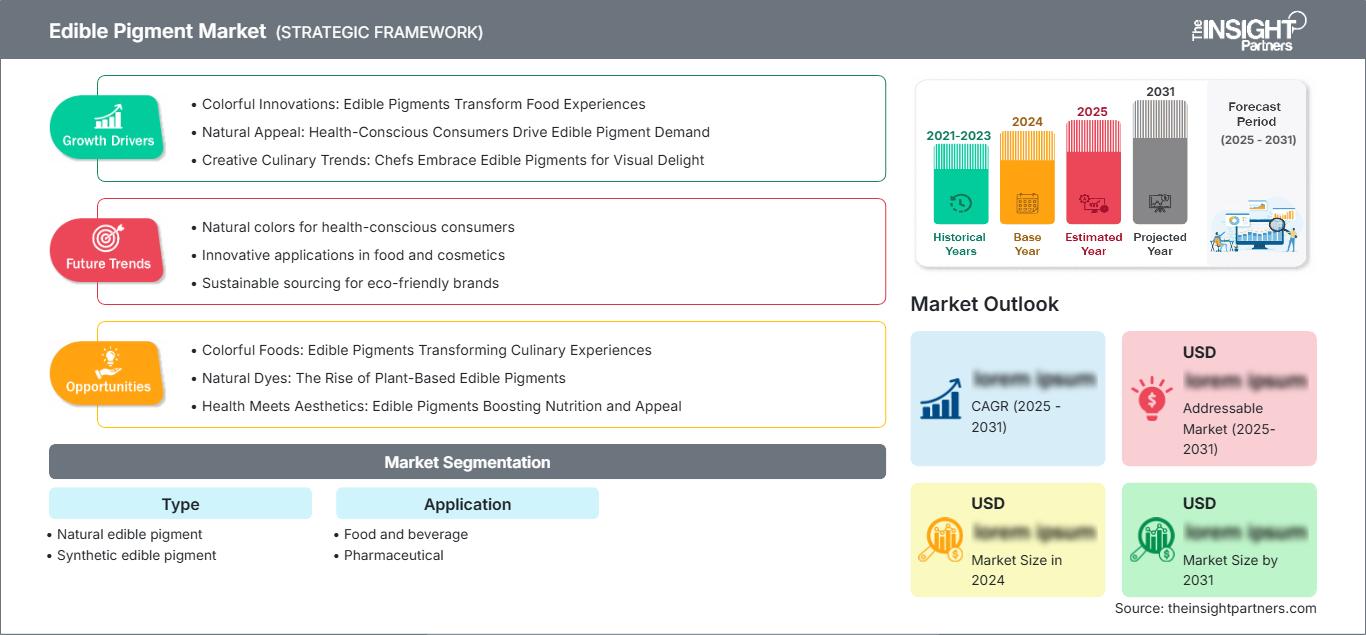
The Edible Pigment Market is experiencing significant growth due to increasing demand for natural food ingredients, rising consumer preference for clean-label products, and expanding applications across the food and beverage industry. The market size is expected to reach US$ 3.24 billion by 2034 from US$ 1.66 billion in 2025, registering a CAGR of 7.69% during 2026–2034. As consumers become more conscious about food quality, transparency, and ingredient safety, manufacturers are increasingly replacing synthetic colorants with edible pigments derived from natural sources. The growing popularity of visually appealing food products and healthier ingredient formulations continues to support strong market expansion globally.
Market Analysis and Overview
- Growing Demand for Natural Food Colorants
Consumer preferences are rapidly shifting toward naturally sourced food ingredients. Edible pigments obtained from fruits, vegetables, algae, flowers, and botanical sources are gaining widespread acceptance as alternatives to synthetic food colors. This transition is driven by growing awareness regarding health concerns associated with artificial additives and increasing demand for clean-label food products.
- Rising Popularity of Clean-Label and Organic Foods
The clean-label movement continues to shape purchasing decisions across global food markets. Consumers increasingly seek products with simple, recognizable ingredient lists and minimal processing. Edible pigments align perfectly with this trend by offering natural coloring solutions that enhance product appearance while maintaining transparency and consumer trust.
Get Sample PDF – https://www.theinsightpartners.com/sample/TIPRE00013086
- Expanding Applications Across Food and Beverage Industries
Edible pigments are widely used in beverages, bakery products, confectionery, dairy products, snacks, sauces, and processed foods. Food manufacturers rely on these ingredients to improve visual appeal, create product differentiation, and align with changing consumer preferences. The growing demand for innovative food products is creating substantial opportunities for edible pigment suppliers.
- Increasing Demand for Functional and Nutrient-Rich Ingredients
Many edible pigments offer functional benefits beyond coloration. Pigments such as carotenoids, anthocyanins, chlorophyll, and curcumin contain antioxidant properties and are associated with various health benefits. Consumers increasingly favor ingredients that contribute both aesthetic and nutritional value, driving adoption across health-focused food categories.
- Regulatory Support for Natural Ingredients
Food safety authorities and regulatory agencies across major markets are encouraging the use of safe and naturally derived ingredients. Stringent regulations surrounding synthetic food additives have encouraged food manufacturers to explore natural pigment alternatives. This regulatory environment continues to support the long-term growth prospects of the edible pigment market.
Key Market Drivers
Rising consumer preference for natural and clean-label food products.
Increasing demand for visually appealing food and beverages.
Growing awareness regarding potential health concerns linked to synthetic food colors.
Expansion of organic and functional food categories.
Strong growth in the global food processing industry.
Increasing adoption of natural ingredients in beverages and confectionery.
Rising demand for plant-based and sustainable food solutions.
Supportive regulatory developments promoting natural food additives.
Major Market Trends
- Shift Toward Plant-Based Pigments
Manufacturers are increasingly utilizing pigments extracted from fruits, vegetables, flowers, and algae to satisfy demand for sustainable and plant-based ingredients. Natural sources such as beetroot, spirulina, turmeric, paprika, and purple sweet potato are becoming increasingly important within product formulations.
- Growing Demand for Anthocyanin-Based Colors
Anthocyanins derived from berries, grapes, purple corn, and other botanical sources are gaining popularity due to their vibrant hues and antioxidant properties. These pigments are widely used in beverages, confectionery products, and dairy formulations.
- Expansion of Functional Food Applications
Consumers increasingly seek foods that offer both nutrition and visual appeal. Edible pigments with bioactive properties are being incorporated into wellness drinks, dietary supplements, fortified foods, and nutraceutical products.
- Technological Advancements in Extraction Methods
Innovations in extraction and stabilization technologies are improving pigment quality, color consistency, shelf stability, and production efficiency. Advanced processing techniques are helping manufacturers expand the commercial applications of natural edible pigments.
Market Segmentation Insights
By Type
Carotenoids
Anthocyanins
Chlorophyll
Curcumin
Betalains
Other Natural Pigments
Carotenoids account for a significant market share due to their extensive use in food and beverage products, as well as their nutritional and antioxidant benefits.
By Source
Fruits
Vegetables
Flowers
Algae
Spices
Other Natural Sources
Vegetable-derived pigments hold a substantial share due to widespread use of beetroot, carrots, spinach, and paprika as natural color sources.
By Application
Beverages
Bakery and Confectionery
Dairy Products
Snacks and Savory Products
Processed Foods
Nutraceuticals
The beverage segment represents a major application area as manufacturers increasingly adopt natural coloring ingredients for juices, functional drinks, flavored waters, and wellness beverages.
By Distribution Channel
Direct Sales
Food Ingredient Suppliers
Specialty Distributors
Online Channels
Direct sales remain a dominant distribution channel due to the technical requirements and formulation support often needed by food manufacturers.
Regional Market Insights
North America holds a significant share of the edible pigment market due to strong demand for clean-label products, increasing health consciousness, and growing adoption of natural food ingredients. Consumers across the region continue to favor transparency in food formulations, supporting market expansion.
Europe remains a major market driven by stringent regulations regarding food additives, strong demand for organic products, and growing consumer preference for natural ingredient solutions. Countries such as Germany, France, Italy, and the United Kingdom are key contributors to regional growth.
Asia Pacific is expected to witness the fastest growth during the forecast period due to rapid urbanization, increasing disposable incomes, expanding food processing industries, and growing awareness regarding natural ingredients. Countries including China, India, Japan, South Korea, and Australia present substantial opportunities for edible pigment manufacturers.
Top Players in the Edible Pigment Market
Key companies operating in the edible pigment market include:
Chr. Hansen Holding A/S
Givaudan SA
International Flavors & Fragrances Inc. (IFF)
Sensient Technologies Corporation
Döhler GmbH
Naturex (Givaudan)
DDW The Color House
Kalsec Inc.
Symrise AG
ROHA Group
Lycored Ltd.
FMC Corporation
These companies focus on natural ingredient innovation, sustainable sourcing, strategic acquisitions, advanced extraction technologies, and global expansion initiatives to strengthen their market positions.
Get the Premium Research Report @ https://www.theinsightpartners.com/buy/TIPRE00013086
Future Outlook
The edible pigment market is expected to witness robust growth through 2034 as food and beverage manufacturers increasingly prioritize natural ingredients, clean-label formulations, and consumer transparency. Growing demand for plant-based products, functional foods, and organic beverages is expected to create substantial opportunities for natural pigment suppliers. Technological advancements in pigment extraction and stabilization, along with increasing regulatory support for natural alternatives, will continue to drive market development. As food brands focus on combining visual appeal with health-conscious ingredient choices, the market is projected to grow from US$ 1.66 billion in 2025 to US$ 3.24 billion by 2034, registering a CAGR of 7.69% during 2026–2034.
FAQs
- What is the projected size of the edible pigment market by 2034?
The edible pigment market is expected to reach US$ 3.24 billion by 2034, growing from US$ 1.66 billion in 2025.
- What is the expected CAGR of the edible pigment market?
The market is estimated to record a CAGR of 7.69% during 2026–2034.
- What are the key factors driving the growth of the edible pigment market?
Major growth drivers include increasing demand for natural food colorants, rising consumer preference for clean-label products, growing organic food consumption, expanding functional food applications, and stricter regulations on synthetic additives.
- Which application segment holds a significant share of the edible pigment market?
The beverage segment holds a significant share of the market due to the growing use of natural pigments in juices, flavored drinks, energy beverages, functional beverages, and health-focused beverage formulations.
Trending Report –
About The Insight Partners
The Insight Partners is a global leader in market research, delivering comprehensive analysis and actionable insights across diverse industries. The company empowers decision-makers with data-driven intelligence to navigate evolving markets and accelerate growth.
Contact Us:
- Contact Person: Ankit Mathur
- E-mail: mathur@theinsightpartners.com
- Phone: +1-646-491-9876
Also Available in : Korean | German | Japanese | French | Chinese | Italian | Spanish
