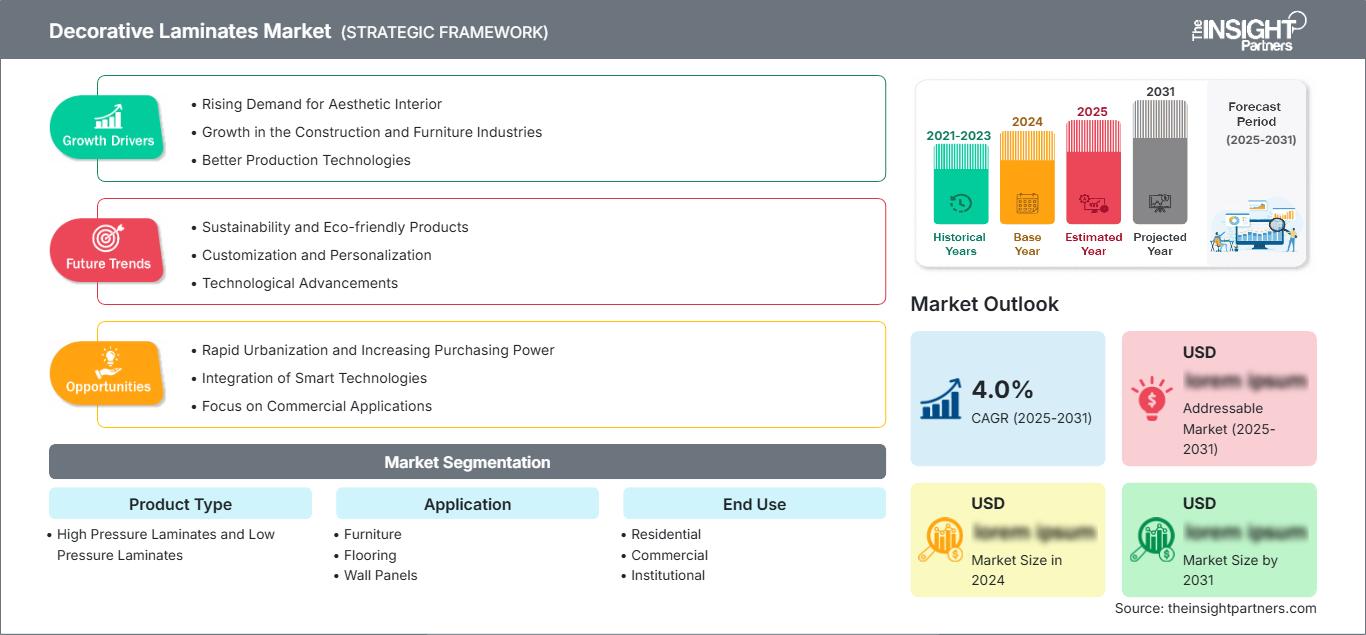
The Decorative Laminates Market is growing at a steady pace. It was valued at US$ 7.49 billion in 2025. It is expected to reach US$ 11.67 billion by 2034. That works out to a CAGR of 5.0% between 2026 and 2034. Decorative laminates are thin, layered surfaces that give furniture, floors, and walls a polished look. They have grown from simple furniture overlays into key design elements in modern homes and buildings. The total addressable market is projected at about US$ 86.72 billion across 2026 to 2034.
What Is Driving the Market?
Housing growth is the first big driver. Rapid urbanization in emerging hubs is pushing up demand for interior finishing materials. In India, residential property sales rose by nearly 50% year on year, which shows how quickly the need for surfaces can climb. Rising demand for modular furniture and a surge in home remodeling add to the pull.
Digital printing is the second driver. Modern digital lines can print high-resolution images and endless design choices. They lower the cost of small batches, so makers can follow fast-moving style trends. Designers now get bespoke patterns that were once too costly to produce.
Get exclusive insights into the Decorative Laminates Market – https://www.theinsightpartners.com/sample/TIPRE00004667
Hygiene and safety are the third driver. Since the pandemic, buyers care more about clean surfaces. Laminates with built-in antimicrobial silver-ion technology are now popular in healthcare facilities and public restrooms. Scratch-resistant finishes add to their appeal.
There are challenges too. Resin and paper prices can swing sharply. Rules on formaldehyde emissions are strict. Competition is also rising from luxury vinyl tile and engineered stone. Makers that manage costs and keep improving performance should hold their ground.
Which Segment Leads?
The market is split by product type, application, and end use.
By product type, the groups are high-pressure laminates and low-pressure laminates. High-pressure laminates are known for extreme durability and impact resistance, which makes them the standard for counters and busy floors. Low-pressure laminates are the fastest-growing group. They are cost-efficient and easy to process, so they suit ready-to-assemble furniture and vertical uses.
By application, furniture holds the largest share. Wardrobes, tables, and desks all rely on laminate surfaces. Flooring is projected to grow at the highest CAGR, since laminate offers a more affordable and scratch-resistant option than hardwood. Wall panels, cabinets, counters, and doors add steady demand. Cabinets lean on moisture resistance, while counters need heat and chemical resistance.
By end use, residential is the largest group, fueled by renovation trends and modular kitchens. Commercial is expected to grow at a high rate as offices, hotels, and retail malls expand. Institutional uses, such as schools, call for low-maintenance materials. Industrial uses need chemical-resistant surfaces.
Which Region Leads?
Asia Pacific is the largest and fastest-growing region. It accounts for over 38% of the global share. China and India are the main production hubs. Big construction projects, smart city plans, and a thriving furniture export trade support demand. Rising middle-class incomes also drive a taste for modular kitchens and wardrobes.
North America is a mature, high-value region. Strong remodeling habits and interest in low-VOC products keep demand healthy. Europe is anchored by design leaders in Germany, Italy, and Austria. It has strict emission standards and a shift toward bio-based resins and recycled wood-based cores. South and Central America is an emerging market, with growth in Brazil and Chile across commercial and boutique segments.
Which Companies Are Prominent?
- Abet Laminati S.p.A.
- Archidply Industries
- FunderMax GmbH
- Greenlam Industries Limited
- Merino Laminates (Merino Group)
- OMNOVA Solutions Inc.
- Panolam Industries International, Inc.
- Roseburg Forest Products Co.
- Stylam Industries Ltd.
- Wilsonart LLC
These firms span Europe, North America, and Asia. Some are global brands. Others are strong regional players with deep local networks.
Competition is intensifying. Makers set themselves apart through premium looks, anti-fingerprint and antimicrobial features, and wider product ranges such as exterior cladding. Many are also integrating their supply chains, from paper and resin to impregnation and distribution. Recent launches show the pace of change. In November 2025, Egger North America refreshed its decor collection with 12 new designs and a reworked premium matte range. In May 2025, Formica India introduced a dual matt finish with anti-fingerprint performance.
Buy the Full Report https://www.theinsightpartners.com/buy/TIPRE00004667
What Is Changing in 2026?
Finishes are shifting. The market is moving away from high-gloss looks toward deep, super-matte surfaces. Some even have thermal healing that repairs tiny scratches. Hyper-realistic textures that copy the knots and grains of exotic woods are also in demand.
Supply chains are changing too. European anti-dumping duties on imported decor paper have pushed large converters to bring resin impregnation in-house. In flooring, luxury vinyl tile is a strong rival in damp areas. Laminate makers are responding with water-resistant cores and click-lock systems for fast installation.
Transportation is a new frontier. Lightweight laminates are being used in aircraft and high-speed rail interiors that must meet strict fire-safety and weight rules.
What Are the Investment Opportunities?
Exterior facades offer a clear opening. UV-resistant compact laminates can replace stone or metal in ventilated facade systems. They are durable and need little upkeep.
The circular economy is another area to watch. Tighter limits on VOC emissions, including EU Regulation 2023/1464, favor brands that lead with 100% recycled cores and bio-based resins. Green certifications can also attract eco-minded younger buyers.
E-commerce and social media open a direct path to homeowners. Brands can show unique textures online and reach buyers without traditional retail bottlenecks. Partnerships with modular furniture makers and online platforms can help firms tap the rise in ready-to-assemble products.
Taken together, these trends point to a market with solid room to grow through 2034.
Related Reading / Reports
Explore additional research from The Insight Partners covering related building materials markets:
- Global Flooring Market — covers flooring materials used across homes and commercial spaces.
- Luxury Vinyl Flooring Market — looks at a leading rival to laminate flooring.
- Steel Sandwich Panel Market — explores panels used in modern building envelopes.
- Fiber Cement Market — tracks durable cladding and siding materials.
About US:
The Insight Partners is among the leading market research and consulting firms in the world. We take pride in delivering exclusive reports along with sophisticated strategic and tactical insights into the industry. Reports are generated through a combination of primary and secondary research, solely aimed at giving our clientele a knowledge-based insight into the market and domain. This is done to assist clients in making wiser business decisions. A holistic perspective in every study undertaken form an integral part of our research methodology and makes the report unique and reliable.
Contact US
If you have any queries about this report or if you would like further information, please contact us:
Phone: +1-646-491-9876
E-mail: sales@theinsightpartners.com
Also Available in : Korean | German | Japanese | French | Chinese | Italian | Spanish
