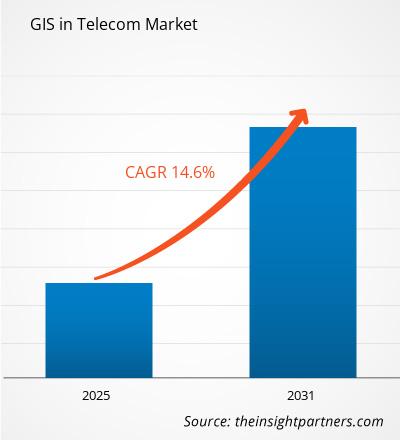
The Geographic Information System (GIS) in Telecom Market is witnessing significant growth as telecommunications companies increasingly adopt geospatial technologies to improve network planning, infrastructure management, and operational efficiency.
According to The Insight Partners, the global GIS in Telecom Market was valued at US$ 2.77 billion in 2025 and is projected to reach US$ 5.97 billion by 2034. The market is expected to register a compound annual growth rate (CAGR) of 8.91% from 2026 to 2034. The growing deployment of 5G networks, increasing investments in telecommunications infrastructure, and rising demand for network optimization are among the major factors supporting market expansion.
Key Market Drivers Accelerating GIS Adoption in Telecommunications
- Increasing Need for Network Optimization and Expansion
The growing demand for reliable connectivity is encouraging telecom operators to invest in advanced network management technologies. GIS provides detailed geographical information that supports network planning, infrastructure development, and resource allocation. Operators can use GIS platforms to identify areas with insufficient coverage, analyze network performance, and determine the most effective locations for installing new infrastructure.
- Growing Demand for 5G Network Deployment
The global expansion of 5G technology is creating significant opportunities for GIS adoption in the telecommunications industry. Unlike previous generations of mobile networks, 5G requires denser infrastructure, including small cells, fiber-optic connections, and strategically positioned base stations. GIS platforms help operators identify suitable deployment locations by analyzing geographical conditions, population density, existing infrastructure, and potential signal coverage.
Get Sample PDF @ https://www.theinsightpartners.com/sample/TIPRE00007838
Emerging Trends in the GIS in Telecom Market
- Integration of Artificial Intelligence and Big Data Analytics
The integration of Artificial Intelligence (AI), machine learning, and big data analytics with GIS technology is emerging as an important market trend. Telecom operators generate substantial volumes of geographical, customer, and network performance data. Combining this information with GIS platforms enables companies to identify patterns, forecast network demand, and improve infrastructure planning.
- Adoption of Real-Time Geospatial Data
Real-time geospatial data is transforming telecommunications network monitoring and management. Modern GIS platforms enable operators to visualize network assets, monitor infrastructure conditions, and identify service interruptions through continuously updated geographical information.
Market Opportunities in GIS in Telecom
- Enhanced Customer Experience and Service Delivery
Improving customer experience represents a significant opportunity for GIS solution providers. Telecom operators can use GIS technology to develop accurate coverage maps, identify connectivity problems, and understand geographical variations in service quality.
- Expansion into Rural and Remote Areas
The expansion of telecommunications infrastructure into rural and remote locations presents another important growth opportunity. Several underserved regions continue to experience limited broadband access and inadequate mobile network coverage. GIS technology helps operators assess geographical conditions, population distribution, terrain characteristics, and existing infrastructure before investing in network expansion.
GIS in Telecom Market Segmentation Analysis
The GIS in Telecom Market is segmented by type, deployment, end user, and geography.
By Type
- Software: GIS software enables telecom operators to visualize network infrastructure, manage geographical databases, conduct spatial analysis, and optimize network planning. Increasing demand for automated network management and advanced analytical capabilities is supporting this segment.
- Services: GIS services include consulting, implementation, integration, maintenance, and technical support. Telecom companies rely on these services to integrate GIS platforms with existing systems and improve their operational capabilities.
By Deployment
- Cloud: Cloud-based GIS solutions offer scalability, flexibility, remote accessibility, and reduced infrastructure requirements. They enable telecom operators to manage geographical information across multiple locations while supporting collaboration between network planning and operational teams.
- On-Premise: On-premise GIS solutions provide organizations with greater control over data management, system configurations, and security policies. Large telecom operators with specific infrastructure and data governance requirements continue to consider these deployment models.
By End User
- Small and Medium Enterprises (SMEs): SMEs are adopting GIS solutions to improve network management, infrastructure planning, and operational efficiency. Cloud-based platforms are particularly relevant because they can reduce initial technology investments.
- Large Enterprises: Large telecommunications organizations require advanced GIS platforms to manage extensive network infrastructure, analyze geographical information, and coordinate operations across multiple regions. Their investments in 5G and next-generation connectivity are supporting demand for enterprise GIS solutions.
Regional Analysis of the GIS in Telecom Market
The global GIS in Telecom Market is analyzed across North America, Europe, Asia Pacific, South and Central America, and the Middle East and Africa.
North America represents an important market due to its advanced telecommunications infrastructure, increasing investments in 5G deployment, and adoption of digital network management technologies. The United States is a key market, supported by the need for network optimization and expansion. Telecom operators in the region are increasingly using GIS platforms to improve infrastructure planning and network performance.
Europe is witnessing growing adoption of GIS solutions as telecommunications providers modernize existing networks and invest in advanced connectivity infrastructure. Increasing digitalization, smart city initiatives, and the expansion of fiber-optic networks are supporting demand for geospatial technologies.
Asia Pacific presents significant growth opportunities due to rapid urbanization, expanding mobile connectivity, and increasing investments in telecommunications infrastructure. Countries such as China, India, Japan, and Australia are investing in next-generation communication networks. The increasing deployment of 5G infrastructure and growing demand for broadband services are expected to support regional market development.
South and Central America is experiencing increasing demand for improved telecommunications connectivity. Investments in broadband infrastructure and network expansion are encouraging operators to adopt GIS technologies for efficient planning and infrastructure management.
Middle East and Africa offer emerging opportunities as governments and telecom companies invest in digital transformation, smart cities, and communication infrastructure. GIS platforms can help operators improve network coverage and expand services into underserved areas.
Get the Premium Research Report @ https://www.theinsightpartners.com/buy/TIPRE00007838
Competitive Landscape and Key Market Players
The GIS in Telecom Market is characterized by the presence of established technology providers and specialized geospatial solution companies. Market participants are focusing on product innovation, strategic partnerships, software development, and service expansion to strengthen their competitive positions.
Some of the prominent companies operating in the global GIS in Telecom Market include:
- Bentley Systems, Incorporated
- Blue Marble Geographics
- Cyient
- Esri Global Inc.
- Harris Corporation
- Hexagon AB
- Pitney Bowes Inc.
- RMSI
- Spatial Business Systems, Inc.
- Trimble Inc.
Future Outlook of the GIS in Telecom Market
The future of the GIS in Telecom Market is expected to remain positive as telecommunications companies continue modernizing their infrastructure and adopting advanced digital technologies. The growing deployment of 5G, increasing demand for broadband connectivity, and expansion of fiber-optic networks will create additional opportunities for GIS solution providers.
Related Report
Telecom Application Programming Interface (API) Market Size and Forecast (2021 – 2034)
Telecom Service Assurance Market Size and Forecasts (2021 – 2031)
About The Insight Partners
The Insight Partners delivers market intelligence and consulting services to help clients make informed decisions. The firm covers industries such as Aerospace and Defense, Automotive and Transportation, Semiconductor and Electronics, Biotechnology, Healthcare IT, Manufacturing, Medical Devices, Technology, Media, and Chemicals and Materials.
Contact Us:
If you have any queries about this report or if you would like further information, please contact us:
Contact Person: Ankit Mathur
E-mail: sales@theinsightpartners.com
Phone: +1-646-491-9876
Also Available in :
Korean German Japanese French Chinese Italian Spanish
