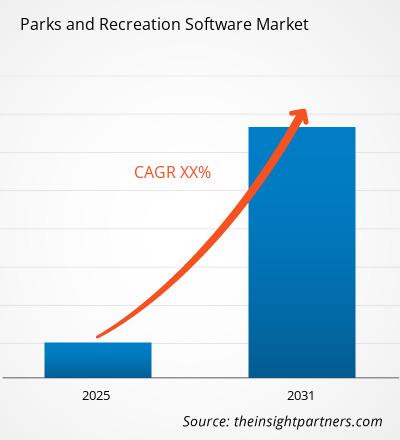
The Parks and Recreation Software Market is expanding as municipal departments, community centers, sports complexes, and private leisure operators digitize facility bookings, program registrations, membership management, and payment processing. Growth is supported by public funding for community infrastructure, rising demand for self-service mobile booking, and the replacement of fragmented legacy tools with unified cloud platforms.
The global Parks and Recreation Software market was valued at US$ 191.26 million in 2025 and is expected to reach US$ 288.95 million by 2034; it is estimated to record a CAGR of 4.69% during 2026-2034.
What is driving the market?
Operational modernization, citizen expectations for seamless digital access, and increased public investment in recreational spaces are the principal growth drivers. Agencies and facility operators are increasingly focused on reducing administrative overhead, preventing double-bookings, and automating recurring billing and waitlist management. Residents expect mobile-first portals to browse classes, reserve fields or pavilions, and manage memberships on demand.
The transition is moving beyond basic online registration toward all-in-one operational suites with real-time reporting and resource optimization. Vendors are investing in cloud-native architectures, integrated payment gateways, automated communications, and data dashboards that track facility utilization and enrollment trends. Tight municipal budget cycles, legacy system migration hurdles, and data privacy or cybersecurity compliance remain important constraints.
Download Sample Report@ https://www.theinsightpartners.com/sample/TIPRE00012350
Which region leads?
North America leads the market, accounting for an estimated 42%–46% share in 2025, supported by high municipal software adoption, extensive public park networks, and established cloud infrastructure. Growth in the United States and Canada is driven by cloud upgrades, integrated point-of-sale and scheduling needs, and strong community sports and camp participation.
Asia Pacific is the fastest-growing region, projected to expand at a CAGR of 8.5%–9.3% through 2034, fueled by rapid urbanization, rising disposable incomes, and expanding investments in urban parks, fitness hubs, and sports complexes across China, India, Japan, and Australia. Europe holds an estimated 24%–28% share, supported by smart-city initiatives, municipal digitalization programs, and strong demand for multi-use sports and leisure facility management.
Which segment leads?
By deployment model, Cloud-Based software is the leading segment, representing an estimated 68%–73% of market revenue in 2025. Its position is supported by lower upfront IT costs, remote staff accessibility across field locations, automatic updates, and seamless mobile integration for residents.
By application, Facility Management leads with an estimated 36%–40% share in 2025, reflecting high demand for field, court, pavilion, and aquatic center scheduling and resource allocation. Community Engagement & Program Registration is identified as a high-growth application segment, with an estimated 8.0%–8.8% CAGR, as departments prioritize resident outreach, mobile apps, and personalized program discovery. By end user, Public Parks & Municipal Departments hold the largest share, driven by city and county-wide standardization.
Which companies are prominent?
The competitive landscape includes Active Network, CivicPlus (CivicRec), Vermont Systems (RecTrac), PerfectMind (Xplor Recreation), Amilia, RecDesk, MyRec.com, EZFacility, Daxko, and Mindbody.
These companies compete across municipal recreation suites, membership and class management, facility reservation engines, and integrated payment processing. Strategic differentiation increasingly depends on mobile user experience, accounting and ERP integrations, payment processing reliability, configurability for multi-site operations, and dedicated municipal support. The list reflects prominent market participants rather than a revenue-ranked market-share table.
What is changing in 2026?
The market is shifting from standalone booking tools toward unified, data-driven community engagement ecosystems. Agencies are prioritizing platforms that consolidate facility rentals, league scheduling, camp registrations, point-of-sale transactions, and financial reconciliation into a single system of record.
Vendors are accelerating practical AI and automation capabilities, including predictive attendance forecasting, automated staff scheduling, smart waitlist fulfillment, and resident support chatbots. Procurement decisions are increasingly tied to mobile accessibility, WCAG compliance, payment security, and actionable utilization analytics that help directors justify budgets and optimize underused spaces.
What are the major investment opportunities?
The strongest opportunities lie in cloud-native municipal suites, embedded payment processing, mobile citizen portals, and AI-assisted scheduling and demand analytics. Solutions that replace legacy on-premise systems with fast onboarding and seamless municipal accounting integration can capture steady recurring SaaS and transaction revenue.
Additional opportunities include specialized modules for youth sports leagues, seasonal camps, campgrounds, and smart access control such as automated gate locks, QR code check-ins, and IoT-enabled field lighting tied directly to reservation calendars.
Asia Pacific and mid-sized municipalities offer attractive expansion potential as public-private partnerships and smart-city budgets grow. Investors should prioritize platforms that combine intuitive resident UX, high payment attach rates, strong regulatory and accessibility compliance, and scalable multi-facility architectures.
Get Full Copy of This Report @ https://www.theinsightpartners.com/buy/TIPRE00012350
Future Outlook
Through 2034, parks and recreation software will evolve into core civic infrastructure connecting physical public spaces with digital citizen services. Growth will be anchored by the retirement of legacy on-premise systems, wider adoption of automated facility access and IoT integrations, and predictive analytics that help agencies align programming with demographic shifts. As municipalities and private operators compete for leisure time and operational efficiency, platforms that pair frictionless mobile experiences with measurable revenue and utilization gains will capture the strongest long-term demand.
Related Reports:
Event Stream Processing Market Share, Growth & Demand by 2034
API Management Market Growth Opportunities and Forecast by 2031
Smart Advisor Market Key Companies Profile and SWOT Analysis by 2034
About The Insight Partners
The Insight Partners is a leading market research and consulting firm delivering actionable insights through in-depth industry analysis and strategic intelligence. The firm supports clients across various industries in making informed decisions by providing comprehensive market forecasts, competitive assessments, and growth opportunities.
Contact Us:
If you have any queries about this report or if you would like further information, please contact us:
Contact Person: Ankit Mathur
E-mail: sales@theinsightpartners.com
Phone: +1-646-491-9876
Also Available in : Korean| German| Japanese| French| Chinese| Italian| Spanish
