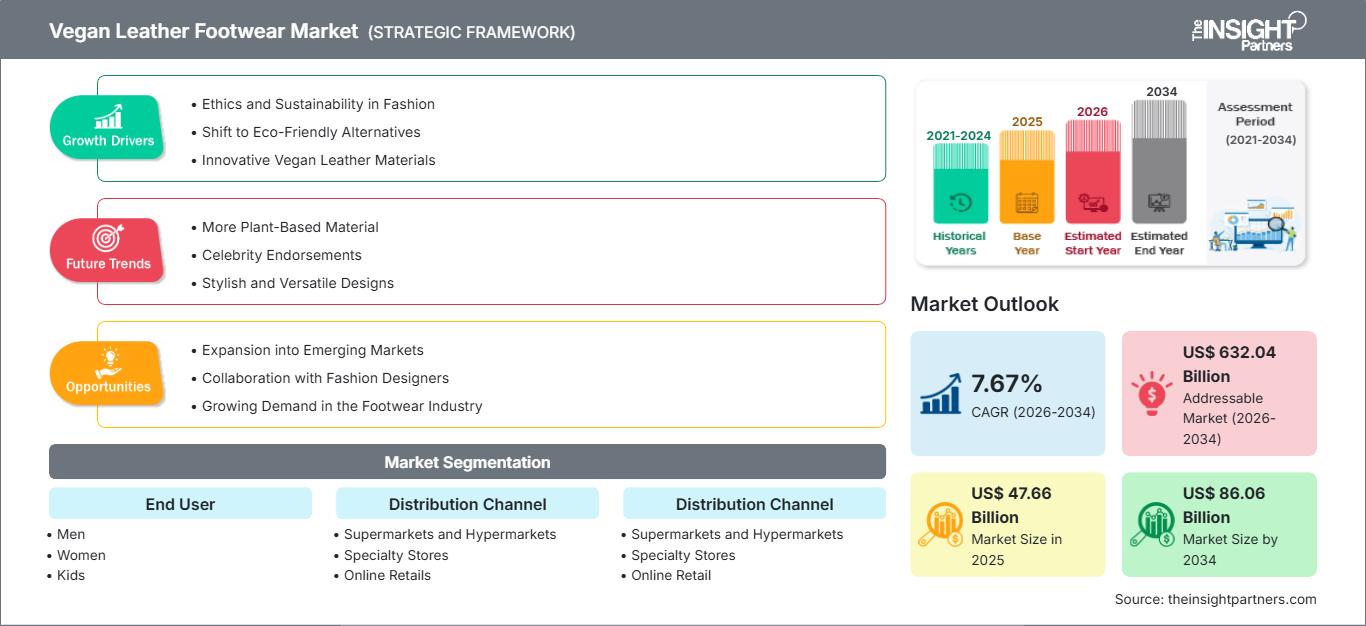
The Vegan Leather Footwear Market is witnessing substantial growth as consumers increasingly prioritize sustainability, ethical fashion, and cruelty-free products. The market was valued at US$ 47.66 billion in 2025 and is projected to reach US$ 86.06 billion by 2034, registering a CAGR of 6.79% during 2026–2034. Rising awareness of environmental issues associated with traditional leather production, growing acceptance of plant-based alternatives, and increasing demand for eco-friendly fashion accessories are key factors driving market growth. Manufacturers are investing in innovative materials and sustainable production methods to meet evolving consumer expectations while maintaining durability, style, and comfort.
Market Analysis and Overview
- Rising Consumer Preference for Sustainable Fashion
The global fashion industry is undergoing a major transformation as consumers increasingly seek environmentally responsible products. Vegan leather footwear has emerged as a preferred alternative to conventional leather shoes due to its reduced environmental impact and cruelty-free appeal. Growing awareness of sustainability issues is encouraging consumers to purchase footwear products that align with their ethical and environmental values.
- Increasing Adoption of Cruelty-Free and Animal-Free Products
Consumers are becoming more conscious of animal welfare concerns associated with traditional leather manufacturing. This has led to a significant increase in demand for vegan leather footwear made from synthetic, plant-based, and recycled materials. The rising popularity of vegan lifestyles and ethical consumption patterns continues to support market expansion worldwide.
Get Sample PDF – https://www.theinsightpartners.com/sample/TIPRE00026439
- Advancements in Alternative Leather Materials
Manufacturers are increasingly developing innovative vegan leather materials derived from pineapple leaves, mushroom fibers, apple waste, cactus plants, recycled plastics, and other sustainable sources. These next-generation materials offer improved durability, comfort, and aesthetic appeal while reducing dependence on animal-derived leather products.
- Growth of Eco-Conscious Luxury and Premium Footwear
Luxury fashion brands and premium footwear manufacturers are incorporating vegan leather materials into their product portfolios to cater to environmentally conscious consumers. Premium vegan footwear products are gaining traction as shoppers seek stylish alternatives that combine sustainability with high-end design and craftsmanship.
- Expansion of E-Commerce and Direct-to-Consumer Business Models
Online retail platforms are playing a major role in the growth of the vegan leather footwear market. Consumers can easily compare products, evaluate sustainability claims, and access a broader range of brands through digital channels. Direct-to-consumer strategies are helping brands establish stronger relationships with environmentally conscious buyers.
Key Market Drivers
Rising demand for sustainable fashion products.
Growing consumer awareness regarding animal welfare.
Increasing popularity of vegan and ethical lifestyles.
Advancements in plant-based and recycled leather alternatives.
Expansion of eco-friendly footwear collections by major brands.
Growing influence of sustainability-focused consumer purchasing decisions.
Rising demand for cruelty-free fashion accessories.
Increased availability through online and specialty retail channels.
Major Market Trends
- Growing Popularity of Plant-Based Leather Alternatives
Materials derived from pineapple leaves, mushrooms, cactus fibers, apple peels, and other renewable resources are gaining popularity as sustainable alternatives to traditional leather. These innovations are helping brands improve their environmental credentials while meeting consumer demand for eco-friendly products.
- Rising Demand for Recycled Material Footwear
Footwear manufacturers are increasingly utilizing recycled plastics, reclaimed textiles, and post-consumer waste materials in vegan footwear production. The circular economy movement is encouraging brands to reduce waste and promote sustainable manufacturing practices.
- Expansion of Premium Vegan Fashion Products
Consumers are increasingly willing to invest in premium sustainable products. Luxury vegan footwear collections featuring innovative materials, superior craftsmanship, and contemporary designs are gaining strong market acceptance.
- Increased Focus on Transparency and Sustainability Certification
Brands are emphasizing supply chain transparency, sustainable sourcing, and environmental certifications to build consumer trust. Sustainability reporting and eco-labeling are becoming important differentiators within the competitive footwear landscape.
Market Segmentation Insights
By Product Type
Casual Footwear
Sports Footwear
Formal Footwear
Sandals and Slippers
Boots
Casual footwear accounts for a significant share of the market due to widespread consumer adoption, versatility, and growing availability across various fashion categories.
By Material Type
Polyurethane (PU)-Based Vegan Leather
Recycled Synthetic Materials
Plant-Based Vegan Leather
Bio-Based Leather Alternatives
Plant-based vegan leather is witnessing strong growth as consumers increasingly seek environmentally friendly alternatives to synthetic materials.
By Distribution Channel
Supermarkets and Hypermarkets
Specialty Footwear Stores
Brand-Owned Retail Stores
Online Retail Platforms
Department Stores
Online retail remains one of the fastest-growing channels due to increasing digital commerce adoption and growing consumer interest in sustainable shopping options.
By End User
Men
Women
Children
The women’s segment represents a substantial market share due to higher demand for fashion-forward and sustainable footwear products, although demand among men is growing rapidly.
Regional Market Insights
North America holds a significant share of the vegan leather footwear market due to strong consumer awareness regarding sustainability, increasing adoption of ethical fashion products, and growing demand for environmentally friendly alternatives. The region benefits from the presence of leading sustainable footwear brands and a strong e-commerce ecosystem.
Europe remains a major market driven by strict environmental regulations, widespread sustainability initiatives, and strong consumer support for cruelty-free products. Countries such as Germany, France, Italy, the Netherlands, and the United Kingdom continue to contribute significantly to regional growth.
Asia Pacific is expected to witness the fastest growth during the forecast period. Rising disposable incomes, increasing fashion consciousness, growing awareness regarding sustainability, and expanding footwear manufacturing capabilities are driving market expansion in China, India, Japan, South Korea, and Southeast Asian countries.
Top Players in the Vegan Leather Footwear Market
Some of the leading companies operating in the vegan leather footwear market include:
Stella McCartney
VEJA
Matt & Nat
Native Shoes
Allbirds, Inc.
Will’s Vegan Store
Dr. Martens plc
Adidas AG
Nike, Inc.
Puma SE
Reebok International Ltd.
TOMS Shoes
These companies are focusing on sustainable material innovation, plant-based leather development, recycled material incorporation, strategic partnerships, and direct-to-consumer expansion to strengthen their positions in the growing sustainable footwear industry.
Get the Premium Research Report @ https://www.theinsightpartners.com/buy/TIPRE00026439
Future Outlook
The vegan leather footwear market is expected to witness strong growth through 2034 as sustainability becomes a central focus for both consumers and footwear manufacturers. Continued advancements in bio-based materials, increasing demand for cruelty-free fashion, and growing regulatory emphasis on environmental responsibility are expected to create significant opportunities across the industry. Manufacturers are likely to invest in innovative plant-based leather technologies, recycled material integration, and transparent supply chain practices to remain competitive. Additionally, the expansion of online retail platforms and premium sustainable fashion categories will continue to support market development. As consumers increasingly prioritize ethical purchasing decisions and eco-conscious lifestyles, the market is projected to grow from US$ 47.66 billion in 2025 to US$ 86.06 billion by 2034, registering a CAGR of 6.79% during 2026–2034.
FAQs
- What is the projected size of the Vegan Leather Footwear Market by 2034?
The Vegan Leather Footwear Market is expected to reach US$ 86.06 billion by 2034, growing from US$ 47.66 billion in 2025.
- What is the expected CAGR of the Vegan Leather Footwear Market?
The market is estimated to register a CAGR of 6.79% during 2026–2034.
- What factors are driving the growth of the Vegan Leather Footwear Market?
Major growth drivers include increasing demand for sustainable fashion, rising consumer awareness regarding animal welfare, growing adoption of vegan lifestyles, advancements in alternative leather materials, and expanding availability of eco-friendly footwear products.
- Which product segment holds a significant share of the Vegan Leather Footwear Market?
Casual footwear holds a significant share of the market due to its everyday usability, wide consumer appeal, growing sustainable fashion trends, and availability across multiple price points and styles.
Trending Report –
About The Insight Partners
The Insight Partners is a global leader in market research, delivering comprehensive analysis and actionable insights across diverse industries. The company empowers decision-makers with data-driven intelligence to navigate evolving markets and accelerate growth.
Contact Us:
- Contact Person: Ankit Mathur
- E-mail: mathur@theinsightpartners.com
- Phone: +1-646-491-9876
Also Available in : Korean | German | Japanese | French | Chinese | Italian | Spanish
