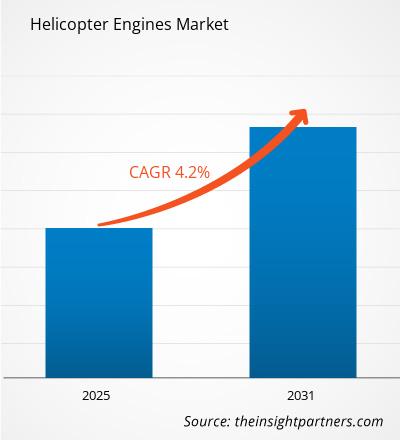
The global helicopter engines market is poised for sustained expansion over the coming decade, driven by global defense fleet modernization, surging demand for emergency medical services (EMS) and offshore operations, and rapid advancements in fuel-efficient propulsion technologies. The global Helicopter Engines Market size is projected to reach US$ 33.28 billion by 2034 from US$ 24.2 billion in 2025. The market is anticipated to register a CAGR of 3.60% during the forecast period 2026-2034.
Rotorcraft propulsion remains a critical pillar of both defense and civil aviation infrastructure. Across military segments, rising geopolitical tensions and increased defense budgets are accelerating procurement programs for next-generation attack, utility, and heavy-lift rotorcraft. Defense agencies are prioritizing engines capable of delivering higher power-to-weight ratios, improved hot-and-high performance, and enhanced durability in harsh operating environments. Simultaneously, the civil and commercial aviation sector is experiencing steady fleet renewal as operators replace aging platforms with quieter, lower-emission aircraft for search-and-rescue (SAR), offshore energy logistics, law enforcement, and executive transport.
Technological Shifts and Market Dynamics
Turboshaft engines continue to dominate the global landscape due to their superior reliability, power density, and compatibility with widely available jet fuels. However, stringent environmental regulations and tightening carbon-intensity targets are reshaping research and development priorities across the industry. Original equipment manufacturers (OEMs) are heavily investing in Sustainable Aviation Fuel (SAF) compatibility, lightweight composite materials, advanced turbine cooling technologies, and Full Authority Digital Engine Control (FADEC) systems.
Furthermore, the integration of digital twins and predictive maintenance gateways is transforming aftermarket and Maintenance, Repair, and Overhaul (MRO) operations. By utilizing real-time sensor telemetry to monitor engine vibration and turbine gas temperatures, operators can extend time-on-wing, minimize unscheduled downtime, and optimize lifecycle costs. While high certification hurdles and acquisition costs remain challenges for smaller civil operators, robust aftermarket service contracts provide steady, recurring revenue streams for engine manufacturers.
Get a PDF Sample- https://www.theinsightpartners.com/sample/TIPRE00017092
Competitive Landscape and Key Players
The global helicopter engines market is characterized by high technological barriers to entry and strong strategic collaborations between engine makers and airframe manufacturers. Leading companies are focusing on modular engine architectures, next-generation turbine cores, and localized MRO partnerships to secure long-term contracts.
Key players operating in the global helicopter engines market include:
GE Aviation
Honeywell International Inc.
IHI Corporation
Kawasaki Heavy Industries, Ltd.
Lycoming Engines
MTU Aero Engines AG
Pratt and Whitney
Rolls-Royce Holding PLC
Safran S.A.
ULPower Aero Engines
Regional Overview
North America holds a commanding position in the global market, supported by extensive military rotorcraft fleets, substantial defense R&D investments, and major ongoing fleet upgrade programs. Europe follows closely, backed by strong domestic aerospace manufacturing, stringent aviation emissions mandates, and active civil helicopter deployment across offshore wind and medical transport sectors. Meanwhile, the Asia-Pacific region is emerging as a high-growth hub, propelled by expanding indigenous defense manufacturing, infrastructure development, and rising commercial helicopter adoption across emerging economies.
Get Full Copy of This Report- https://www.theinsightpartners.com/buy/TIPRE00017092
Future Outlook
Looking ahead through 2034, the helicopter engines market is set to undergo a transformative transition toward cleaner, smarter, and more versatile propulsion architectures. Hybrid-electric propulsion systems which pair conventional turboshaft engines with electric motors and energy storage are expected to gain substantial traction, offering dramatic reductions in fuel consumption, acoustic signatures, and carbon emissions. Additionally, breakthroughs in additive manufacturing (3D printing) and ceramic matrix composites (CMCs) will enable lighter engine components capable of withstanding higher operating temperatures, further boosting thermal efficiency.
As urban air mobility (UAM) concepts mature and defense doctrines increasingly emphasize multi-domain agility, engine manufacturers that successfully balance rugged reliability with sustainable, digitally connected propulsion technologies will capture the greatest share of market growth over the next decade.
Related Reports-
Air Crane Helicopter Market Size, Trends & Growth by 2034
Helicopter Blades Market Share, Trends & Growth by 2034
Helicopter Mast Market Forecast, Trends & Growth by 2034
Helicopter Swashplate Market Scope, Trends & Growth by 2034
Helicopter Seats Market Analysis, Trends & Growth by 2034
About The Insight Partners
The Insight Partners is a leading market research and consulting firm delivering actionable insights through in-depth industry analysis and strategic intelligence. The firm supports clients across various industries in making informed decisions by providing comprehensive market forecasts, competitive assessments, and growth opportunities.
Contact Us:
If you have any queries about this report or if you would like further information, please contact us:
Contact Person: Ankit Mathur
E-mail: sales@theinsightpartners.com
Phone: +1-646-491-9876
Also Available in : Korean| German| Japanese| French| Chinese| Italian| Spanish
