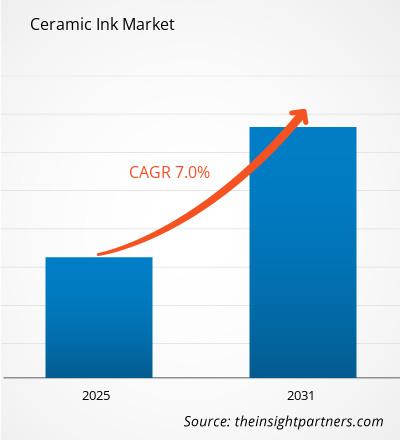
Colorful tiles, patterned glass, and printed food containers all depend on one specialty product. The Ceramic Ink Market is gaining speed as brands chase bolder designs. It was valued at US$ 3.13 billion in 2025. It is expected to reach US$ 5.61 billion by 2034. That works out to a CAGR of 6.70% between 2026 and 2034. Ceramic inks are heat-fired pigments that bond with surfaces such as ceramic, glass, and metal.
What Is Driving the Market?
Custom products come first. Shoppers want items that feel personal, and brands respond with unique designs and vivid colors. This trend is strong in packaging, textiles, and consumer goods. It is especially visible in-home décor and lifestyle products, where ceramic inks print well on many surfaces.
Packaging growth comes next. E-commerce and the push for sustainable packaging keep the sector busy. Ceramic inks resist scratches and fading, so prints last on packaging surfaces.
Get exclusive insights into the Ceramic Ink Market – https://www.theinsightpartners.com/sample/TIPMC00002278
Printing technology adds a third push. Digital inkjet printing has changed how makers work. It raises print resolution, speeds up production, and cuts waste.
Challenges exist, too. Switching from analog to digital methods calls for new equipment and skills, and ink makers must keep formulas steady across many surfaces.
Which Segment Leads?
The report studies the market by type, technology, and application.
By type, the market splits into decorative inks and functional inks.
By technology, digital and analog printing sit side by side. Digital printing is the more dynamic of the two because of its precision and flexibility. Analog printing remains useful in established production lines.
By application, the report covers ceramic tiles, glass printing, and food container printing, three uses that all rely on durable, long-lasting color.
Which Region Leads?
The report covers North America, Europe, Asia Pacific, and South and Central America.
North America deserves a close look, with the United States as a key market. Demand for custom products, a growing packaging industry, and advances in printing technology all help sales there.
Asia Pacific and Latin America are described as emerging markets. Their economies are industrializing and urbanizing quickly, and ceramics, textiles, and packaging sectors are expanding. As incomes rise, people want customized, high-quality printed goods.
Which Companies Are Prominent?
The report profiles these leading players:
- Ferro Corporation
- Sun Chemical
- TecGlass
- Frittta
- Zschimmer & Schwarz
- Torrecid Group
- Colorbbia S.p.A
- Kao Chimigraf
- Six Star Ceramic Colors Co., Ltd
- Esmaglass-Itaca Grupo
Many of these firms have deep roots in ceramic colors and glazes. Names such as Ferro Corporation and Sun Chemical operate on a global scale. Torrecid Group, Zschimmer & Schwarz, and Esmaglass-Itaca Grupo focus closely on tile and glass decoration.
Rivals compete on color range, durability, and print quality. Many are also working on greener formulas and smarter production.
Buy the Full Report https://www.theinsightpartners.com/buy/TIPMC00002278
What Is Changing in 2026?
Sustainability is the loudest theme. Makers are building eco-friendly inks with fewer volatile organic compounds. Brands want greener printing, and shoppers increasingly care about it. This drives fresh work on formulas that meet both environmental and performance goals.
Emerging markets are the second theme. As Asia Pacific and Latin America grow richer, ceramic inks gain wider use.
Smart technology is the third. Makers are bringing IoT and AI into production. Real-time monitoring lets printers adjust output on the fly, which improves quality and cuts waste.
What Are the Investment Opportunities?
Home décor looks promising. Interest in unique, personal design is rising again, and ceramic inks print on tiles, glass, and ceramic surfaces.
Smart packaging is a second opening. Inks that print conductive patterns or QR codes let brands connect with shoppers and add product details.
The automotive industry is a third. Ceramic inks are tough and attractive, so carmakers are adopting them for interior and exterior parts. The total addressable market for 2026 to 2034 is estimated at about US$ 39.51 billion. With rising demand and steady innovation, the road ahead looks bright for producers and investors alike.
Related Reading / Reports
Explore additional research from The Insight Partners covering related coatings and materials markets:
- Antimicrobial Coating Market — covers coatings that limit microbe growth.
- Sealants Market — looks at sealing products across industries.
- Adhesives and Sealants Market — examines bonding and sealing materials together.
- Hot Melt Adhesives Market — tracks fast-setting adhesives used in packaging and more.
About US:
The Insight Partners is among the leading market research and consulting firms in the world. We take pride in delivering exclusive reports along with sophisticated strategic and tactical insights into the industry. Reports are generated through a combination of primary and secondary research, solely aimed at giving our clientele a knowledge-based insight into the market and domain. This is done to assist clients in making wiser business decisions. A holistic perspective in every study undertaken form an integral part of our research methodology and makes the report unique and reliable.
Contact US
If you have any queries about this report or would like a customized version, please get in touch with us.
Phone: +1-646-491-9876
E-mail: sales@theinsightpartners.com
Also Available in : Korean | German | Japanese | French | Chinese | Italian | Spanish
