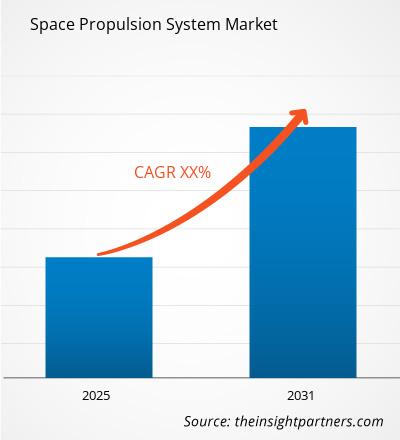
The global space propulsion system market is entering a phase of accelerated expansion, driven by record orbital launch cadences, surging deployments of Low Earth Orbit (LEO) satellite constellations, and heightened government defense budgets. According to the latest industry analysis, the global Space Propulsion System Market size is projected to reach US$ 32.15 billion by 2034, up from US$ 11.25 billion in 2025. The market is anticipated to register a compound annual growth rate (CAGR) of 12.37% during the forecast period of 2026–2034.
Space propulsion systems serve as the foundational architecture for modern orbital and deep-space mobility, encompassing chemical rocket engines, electric thrusters, cold-gas systems, and propellant feed mechanisms. As commercial aerospace firms and national space agencies transition toward reusable launch vehicles, satellite life-extension missions, and cislunar logistics, demand for high-efficiency, reliable, and cost-effective propulsion technologies has surged across all orbital regimes.
Key Market Drivers and Industry Dynamics
A primary catalyst behind the market’s rapid trajectory is the proliferation of mega-constellations in Low Earth Orbit for global broadband connectivity, Earth observation, and secure military communications. Thousands of small and medium satellites require compact, high-specific-impulse electric and green monopropellant thrusters for precise orbital insertion, station-keeping, collision avoidance, and end-of-life deorbiting. Concurrently, escalating geopolitical tensions have prompted defense ministries worldwide to prioritize responsive space launch capabilities and maneuverable orbital assets, securing long-term order books for propulsion manufacturers.
Get a PDF Sample- https://www.theinsightpartners.com/sample/TIPRE00017105
Technologically, the industry is witnessing a dual-track evolution. While liquid and solid chemical propulsion systems maintain a dominant share for heavy-lift boosters and time-critical orbital insertion burns, non-chemical and electric propulsion technologies such as Hall-effect thrusters and electrospray systems are experiencing the fastest adoption rates due to their superior fuel efficiency and mass-saving benefits on long-duration missions. Furthermore, the commercialization of launch services has compressed per-kilogram access costs to orbit, unlocking previously deferred commercial payloads, orbital transfer vehicles (space tugs), and deep-space exploration probes.
Regional Landscape
North America continues to command the largest share of the global space propulsion system market, underpinned by substantial federal investments from NASA and the U.S. Department of Defense alongside a vibrant commercial launch ecosystem led by private spaceflight pioneers. Europe represents another major hub of innovation, supported by sovereign constellation programs, the ramp-up of next-generation heavy launchers, and collaborative European Space Agency (ESA) initiatives. Meanwhile, the Asia-Pacific region is poised to record the fastest regional growth through 2034, propelled by expanding indigenous launch capabilities, lunar exploration roadmaps, and rising national space expenditures across India, China, Japan, and South Korea.
Competitive Landscape and Key Players
The global space propulsion system market is characterized by intense research and development, strategic partnerships, and vertical integration as companies compete to deliver reusable, scalable, and modular propulsion architectures. Leading organizations shaping the competitive landscape include:
Accion Systems
Aerojet Rocketdyne
Airbus S.A.S.
ArianeGroup GmbH
BLUE ORIGIN
IHI AEROSPACE Co., Ltd.
Lockheed Martin Corporation
Northrop Grumman Corporation
Safran
Space Exploration Technologies Corp. (SpaceX)
These industry leaders are actively investing in additive manufacturing (3D printing) to reduce engine part counts and production lead times, while advancing full-flow staged combustion engines, nuclear thermal concepts, and standardized electric propulsion modules for nano- and micro-satellite platforms.
Get Full Copy of This Report- https://www.theinsightpartners.com/buy/TIPRE00017105
Future Outlook
Looking ahead toward 2034, the future outlook for the space propulsion system market is defined by the commercialization of in-space logistics, autonomous orbital maneuvering, and sustainable propellant innovation. As Earth’s orbital environment becomes increasingly congested, regulatory mandates surrounding space debris mitigation will compel satellite operators to integrate dedicated propulsion units even on smaller spacecraft classes. The emergence of dedicated orbital transfer vehicles and in-orbit refueling depots is set to transform propulsion from a single-use hardware expenditure into recurring space infrastructure. Additionally, breakthroughs in non-toxic “green” propellants, water-based electrolysis thrusters, and advanced nuclear propulsion architectures will open new frontiers for sustained lunar operations and interplanetary cargo transport, ensuring robust, multi-decade momentum across the global aerospace value chain.
Related Reports-
Aerospace Carbon Fiber Market Size, Trends & Growth by 2034
Aircraft Window Frame Market Share, Trends & Growth by 2034
Flight Information Display System Market Forecast, Trends & Growth by 2034
Supersonic Jet Market Scope, Trends & Growth by 2034
Aircraft Rudder Pedals Market Analysis, Trends & Growth by 2034
About The Insight Partners
The Insight Partners is a leading market research and consulting firm delivering actionable insights through in-depth industry analysis and strategic intelligence. The firm supports clients across various industries in making informed decisions by providing comprehensive market forecasts, competitive assessments, and growth opportunities.
Contact Us:
If you have any queries about this report or if you would like further information, please contact us:
Contact Person: Ankit Mathur
E-mail: sales@theinsightpartners.com
Phone: +1-646-491-9876
Also Available in : Korean| German| Japanese| French| Chinese| Italian| Spanish
