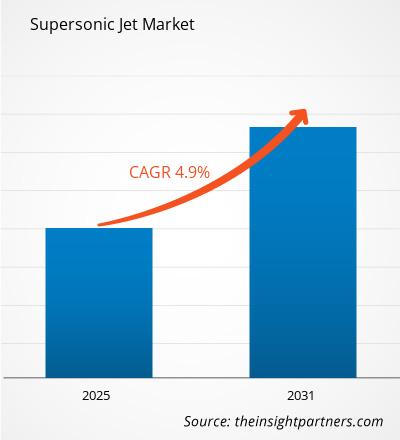
The global Supersonic Jet Market is entering a transformative phase of technological validation, defense modernization, and commercial re-entry, with total market valuation projected to reach US$ 47.78 billion by 2034, up from US$ 29.61 billion in 2025. According to comprehensive industry market intelligence, the sector is anticipated to register a compound annual growth rate (CAGR) of 5.46% during the forecast period of 2026–2034.
Market Forecast and Growth Dynamics
Historically, defense procurement has anchored the supersonic sector, accounting for the overwhelming majority of global revenue through the deployment of 4.5-, 5th-, and emerging 6th-generation multirole combat aircraft. Escalating geopolitical tensions, rising national defense budgets across North America, Europe, and the Asia-Pacific, and growing demand for high-speed interceptor and air-superiority platforms continue to drive robust order backlogs in the 1 Mach to 2 Mach and 2 Mach to 3 Mach speed brackets.
Simultaneously, the commercial and business aviation segments are experiencing renewed momentum. After more than two decades without commercial supersonic passenger service following the retirement of the Concorde, next-generation aircraft developers are overcoming the historical barriers of sonic boom noise, excessive fuel burn, and operating costs. Breakthroughs in aerodynamic shaping, lightweight carbon-composite airframes, and 100% Sustainable Aviation Fuel (SAF)-compatible propulsion systems are enabling manufacturers to cut long-haul intercontinental travel times by up to 50% while meeting stringent environmental standards.
Get a PDF Sample- https://www.theinsightpartners.com/sample/TIPRE00018362
Regional Insights and Segment Trends
By Type
- Light Jet
- Mid-Size Jet
- Large Jet
By Application
- Commercial
- Business Travel
Geographically, North America leads global market expenditure, backed by extensive defense R&D, next-generation fighter programs, and active commercial supersonic flight testing. Europe maintains a substantial foothold through collaborative defense programs and advanced fighter exports, while the Asia-Pacific region represents a high-growth hub fueled by indigenous fighter jet production, carrier aviation expansion, and rising business travel demand.
Key Market Players
The competitive landscape of the supersonic jet market features a dynamic mix of legacy defense primes, established aerospace manufacturers, specialized research institutes, and agile supersonic startups pioneering low-boom and high-efficiency propulsion technologies. Prominent companies and organizations operating in the global supersonic jet market include:
Boom Technology, Inc. (Boom Supersonic)
Lockheed Martin Corporation
Airbus SAS
Aerion Corporation
Boeing
Spike Aerospace, Inc.
TsAGI (Central Aerohydrodynamic Institute)
HyperMach Europe Aeronautics
Dassault Aviation
Tupolev
Industry leaders are heavily investing in flight-test milestones and proprietary engine architectures to capture early market share. Recent milestone flight-testing campaigns—such as low-boom experimental demonstrators achieving supersonic cruise without disruptive ground-level shockwaves and Mach-cutoff flight validations—are providing aviation regulators with critical acoustic data needed to modernize overland supersonic flight rules.
Get Full Copy of This Report- https://www.theinsightpartners.com/buy/TIPRE00018362
Future Outlook
Looking toward 2034, the future outlook for the global supersonic jet market is defined by the convergence of acoustic innovation, propulsion efficiency, and regulatory modernization. As acoustic data from low-boom flight demonstrations informs updated noise-based certification standards by global aviation authorities, the commercial supersonic sector is positioned to transition from experimental testing to commercial airline and VIP business fleet integration.
Furthermore, the adoption of supercruise capabilities—allowing aircraft to sustain supersonic speeds without fuel-guzzling afterburners—alongside digital twin engineering and SAF-ready engines, will dramatically improve per-seat economics and lifecycle sustainability. While high capital expenditure, certification timelines, and supply chain complexities remain key considerations for manufacturers, strategic partnerships between commercial airlines, defense contractors, and propulsion specialists are expected to unlock unprecedented growth across both military and civil aviation domains throughout the 2026–2034 forecast horizon.
Related Reports-
Tail Rotor Market Size, Trends & Growth by 2034
Helicopter Seats Market Share, Trends & Growth by 2034
Nano Drones Market Analysis, Trends & Growth by 2034
Firefighting Aircraft Market Forecast, Trends & Growth by 2034
Firefighting Drones Market Scope, Trends & Growth by 2034
About The Insight Partners
The Insight Partners is a leading market research and consulting firm delivering actionable insights through in-depth industry analysis and strategic intelligence. The firm supports clients across various industries in making informed decisions by providing comprehensive market forecasts, competitive assessments, and growth opportunities.
Contact Us:
If you have any queries about this report or if you would like further information, please contact us:
Contact Person: Ankit Mathur
E-mail: sales@theinsightpartners.com
Phone: +1-646-491-9876
Also Available in : Korean| German| Japanese| French| Chinese| Italian| Spanish
