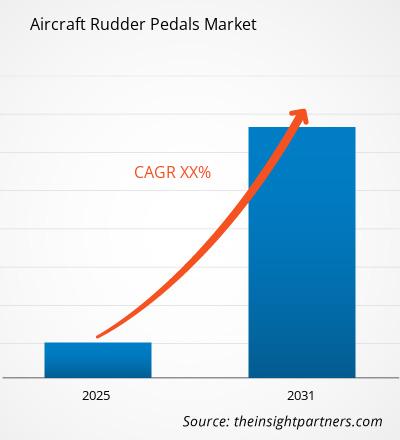
The global Aircraft Rudder Pedals Market was valued at US$ 1.6 Billion in 2025 and is projected to reach US$ 2.73 Billion by 2034, registering a CAGR of 6.08% during 2026–2034. This steady upward trajectory reflects surging global commercial aircraft production, ongoing defense fleet modernization, and the rapid integration of electronic fly-by-wire (FBW) flight control architectures across commercial, military, and next-generation aviation platforms.
Rudder pedals serve as a critical primary flight control interface in the cockpit, enabling pilots to manage yaw stability during flight and execute directional steering and differential braking during ground taxiing, takeoff, and landing operations. As aircraft manufacturers prioritize weight reduction, ergonomic precision, and digital cockpit integration, demand for advanced, sensor-equipped rudder pedal assemblies has accelerated across both line-fit OEM installations and aftermarket retrofits.
Primary Growth Drivers and Technological Shifts
A primary catalyst fueling the expansion of the aircraft rudder pedals market is the record commercial aircraft backlog held by major airframe manufacturers. Rising global passenger air traffic and aggressive fleet expansion by low-cost and full-service carriers particularly across single-aisle narrow-body programs are sustaining multi-year production schedules. Because every newly delivered commercial airframe, business jet, helicopter, and military aircraft requires complete cockpit control systems at line-fit, rising OEM delivery rates directly translate into higher component procurement volumes.
Simultaneously, the aerospace industry’s transition from traditional mechanical cable-and-pulley linkages to fully digital fly-by-wire (FBW) flight control systems is reshaping product design. Modern FBW rudder pedal units replace heavy mechanical rods with high-precision force and position transducers, active force-feedback actuators, and redundant electronic signaling. These innovations significantly lower overall airframe weight, improve fuel efficiency, enhance flight envelope protection, and streamline maintenance intervals. Furthermore, heightened defense spending globally is driving the procurement of next-generation fighter jets, military transport aircraft, and rotorcraft equipped with ruggedized, modular cockpit control interfaces.
Get a PDF Sample- https://www.theinsightpartners.com/sample/TIPRE00018541
Regional Dynamics
North America continues to command a leading share of the global aircraft rudder pedals market, anchored by an established aerospace manufacturing ecosystem, robust defense budgets, and high concentration of Tier-1 cockpit system integrators. Europe follows closely, supported by strong commercial aircraft assembly rates and ongoing investments in sustainable, lightweight aviation technologies. Meanwhile, the Asia-Pacific region is poised to record the fastest growth over the forecast period. Expanding domestic aircraft assembly initiatives, booming commercial fleet orders in India and China, and growing regional Maintenance, Repair, and Overhaul (MRO) capabilities are creating substantial opportunities for both original equipment and replacement components.
Competitive Landscape and Key Players
The global aircraft rudder pedals market features a mix of diversified Tier-1 aerospace conglomerates and specialized flight-control component manufacturers competing on precision engineering, regulatory certification, weight optimization, and lifecycle reliability. Prominent companies operating in the market include:
ACS Products Co.
Adams Aviation Supply Company Ltd.
Collins Aerospace
INGENIUM AEROSPACE
McFarlane Aviation, Inc.
Parker Hannifin Corp.
Rafaut Group
Sitec Aerospace GmbH
Sun Country Industries, LLC
Woodward, Inc.
Industry leaders are increasingly investing in composite structural materials, modular open-systems architectures, and electromechanical actuation to meet stringent aviation safety standards while reducing total cost of ownership for airline and defense operators.
Get Full Copy of This Report- https://www.theinsightpartners.com/buy/TIPRE00018541
Future Outlook
Looking ahead through 2034, the aircraft rudder pedals market is set to undergo significant technological evolution as aviation moves toward “more-electric” aircraft architectures and autonomous flight assistance. Emerging Urban Air Mobility (UAM) platforms, electric Vertical Takeoff and Landing (eVTOL) vehicles, and optionally piloted aircraft will require compact, lightweight, and electronically integrated yaw control interfaces tailored for simplified pilot operations.
Additionally, the integration of artificial intelligence-assisted flight control laws, predictive health monitoring sensors within pedal assemblies, and customizable haptic feedback will elevate cockpit safety and pilot situational awareness. As aging commercial and military fleets undergo mandatory avionics and cockpit modernization programs, aftermarket retrofits and MRO replacements will provide a resilient secondary revenue stream alongside surging OEM line-fit demand.
Related Reports-
Aircraft Cowlings Market Size, Trends & Growth by 2034
Aircraft Hydraulic System Market Share, Trends & Growth by 2034
Aircraft Ailerons Market Analysis, Trends & Growth by 2034
About The Insight Partners
The Insight Partners is a leading market research and consulting firm delivering actionable insights through in-depth industry analysis and strategic intelligence. The firm supports clients across various industries in making informed decisions by providing comprehensive market forecasts, competitive assessments, and growth opportunities.
Contact Us:
If you have any queries about this report or if you would like further information, please contact us:
Contact Person: Ankit Mathur
E-mail: sales@theinsightpartners.com
Phone: +1-646-491-9876
Also Available in : Korean| German| Japanese| French| Chinese| Italian| Spanish
