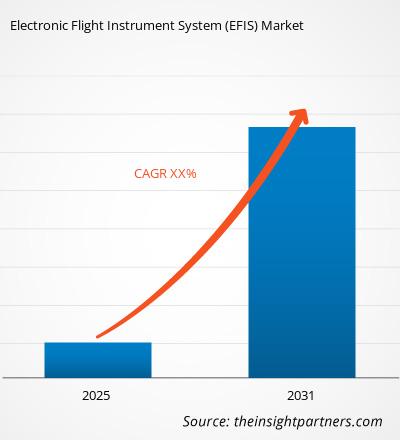
The global Electronic Flight Instrument System (EFIS) Market is poised for steady, technology-driven expansion over the coming decade. According to a comprehensive industry analysis, the global electronic flight instrument system (EFIS) market size is projected to reach US$ 903.64 million by 2034 from US$ 702.77 million in 2025. The market is anticipated to register a CAGR of 2.83% during the forecast period 2026-2034.
As the aviation industry accelerates its transition from legacy analog instrumentation to fully integrated digital glass cockpits, EFIS platforms have become the operational nerve center of modern aircraft. By consolidating primary flight displays (PFD), multi-function displays (MFD), and engine indication and crew alerting systems (EICAS) into unified, high-resolution interfaces, EFIS technology dramatically enhances pilot situational awareness, reduces cockpit workload, and optimizes flight safety across commercial, military, and general aviation fleets.
Key Growth Drivers and Market Dynamics
Several converging factors are fueling consistent capital allocation toward both line-fit installations and aftermarket retrofits:
Fleet Modernization and Retrofit Mandates: Airlines, defense operators, and private aircraft owners are actively replacing aging mechanical gauges to mitigate parts obsolescence and comply with evolving global airspace regulations, including Automatic Dependent Surveillance-Broadcast (ADS-B) and Performance-Based Navigation (PBN) standards.
Advancements in Display and Sensor Integration: Modern EFIS architectures increasingly incorporate touchscreen capabilities, 3D synthetic vision systems (SVS), enhanced flight vision systems (EFVS), and real-time weather and terrain mapping. These features allow flight crews to maintain high operational precision during low-visibility approaches and adverse weather conditions.
Weight Reduction and Fuel Efficiency: Replacing heavy, mechanically complex electromechanical instruments with lightweight solid-state digital displays lowers overall aircraft weight. This reduction translates directly into improved fuel efficiency and lower lifecycle maintenance costs critical priorities for commercial carriers managing tight operating margins.
Get a PDF Sample- https://www.theinsightpartners.com/sample/TIPRE00018714
Competitive Landscape and Key Players
The global EFIS ecosystem is characterized by intense technological innovation, strategic partnerships, and ongoing product certifications across general, commercial, and defense aviation tiers. Leading organizations shaping the competitive landscape include:
Honeywell International Inc.
Communications Holdings, Inc.
Rockwell Collins, Inc.
Esterline Technologies Corporation
Garmin Ltd.
Astronautics Corporation of America
Avidyne Corporation
Genesys Aerosystems
Aspen Avionics, Inc.
Dynon Avionics
These key players are focusing heavily on modular open-systems architectures (MOSA), streamlined cockpit retrofits for legacy airframes, and intuitive human-machine interfaces (HMI) to capture market share across diverse aircraft weight classes.
Get Full Copy of This Report- https://www.theinsightpartners.com/buy/TIPRE00018714
Future Outlook
Looking ahead toward 2034, the Electronic Flight Instrument System market will evolve beyond basic flight data visualization into intelligent, networked decision-support ecosystems. A defining trend in the next generation of EFIS development is the integration of artificial intelligence (AI) and machine learning algorithms into avionics processing. Certifiable, human-in-the-loop AI capabilities are expected to power adaptive alert prioritization, predictive maintenance diagnostics, and automated anomaly detection, helping pilots manage complex flight phases with greater confidence while minimizing nuisance warnings.
Furthermore, the rapid maturation of Advanced Air Mobility (AAM), electric vertical takeoff and landing (eVTOL) aircraft, and unmanned aerial vehicles (UAVs) will create novel commercial avenues for compact, ultra-lightweight, and highly automated EFIS solutions. As flight decks become increasingly connected to satellite networks and ground-based data systems, avionics manufacturers will also prioritize robust cybersecurity frameworks such as compliance with DO-326A standards to safeguard flight-critical instrumentation against emerging digital threats. While stringent regulatory certification timelines (such as DO-178C) and engineering talent shortages present ongoing hurdles, sustained global aircraft production and aftermarket upgrade cycles will ensure resilient market expansion through 2034.
Related Reports-
Flight Information Display System Market Size, Trends & Growth by 2034
About The Insight Partners
The Insight Partners is a leading market research and consulting firm delivering actionable insights through in-depth industry analysis and strategic intelligence. The firm supports clients across various industries in making informed decisions by providing comprehensive market forecasts, competitive assessments, and growth opportunities.
Contact Us:
If you have any queries about this report or if you would like further information, please contact us:
Contact Person: Ankit Mathur
E-mail: sales@theinsightpartners.com
Phone: +1-646-491-9876
Also Available in : Korean| German| Japanese| French| Chinese| Italian| Spanish
