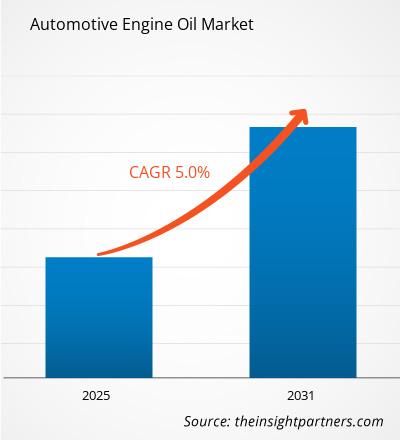
An oil change is one of the most routine purchases in motoring, yet it supports a market worth ten of billions. The Automotive Engine Oil Market was valued at US$ 42.04 Billion in 2025 and is expected to reach US$ 48.89 Billion by 2034. The automotive engine oil market is estimated to record a 1.69% CAGR during 2026 to 2034.
What Is Automotive Engine Oil?
Automotive engine oil is the lubricant that reduces friction, controls heat and carries contaminants away from the moving parts of an engine. It is built from a base oil and an additive package, and its grade decides how well it protects at high temperature and on a cold start. Without it, wear would shorten engine life within a few thousand kilometres.
What Is Driving Growth in the Automotive Engine Oil Market?
A growth rate under two per cent describes a mature market, so the story here is value rather than volume. Modern engines, especially in luxury and performance vehicles, need premium oils that deliver better protection, higher fuel efficiency and longer service intervals. Each step up in oil quality lifts the revenue earned per litre sold.
Request a Sample Copy of the Report: https://www.theinsightpartners.com/sample/TIPRE00011044
Formulation science supports that shift. Synthetic and semi-synthetic oils now offer superior lubrication, extended drain intervals and tailored performance for specific engine designs, including high-mileage products. For suppliers, the automotive engine oil market rewards those who can match chemistry to engine type.
The aftermarket is the third pillar. As the number of vehicles on the road rises, so does the need for regular oil changes, and DIY maintenance remains popular alongside professional servicing. Oil change services at repair shops add a steady, recurring stream of demand that does not depend on new car sales.
Additives deserve their own mention. Innovations that improve fuel economy, reduce emissions and add advanced wear protection create room for differentiated, higher-priced products. What makes this significant is that consumers increasingly want oils that keep pace with modern engines and last longer between changes.
Segmentation Overview: Grades, Fuel Types and Vehicles
By Grade:
Mineral oils remain the budget option, widely used in older engines and cost-sensitive markets. Semi-synthetic oils blend mineral and synthetic stocks to balance performance and price. Fully-synthetic oils deliver the best stability and longevity, which is why they anchor the premium end of the automotive engine oil market.
By Type:
Gasoline engines account for a large installed base of passenger vehicles and drive steady lubricant consumption. Diesel engines, common in commercial fleets, call for oils built to handle soot and heavy loads. Alternative Fuel vehicles represent a smaller but evolving niche that pushes formulators to rethink additive packages.
By Vehicle Type:
Passenger Cars generate the broadest demand through routine servicing. Light Commercial Vehicles and Heavy-Duty Vehicles consume large volumes because of high mileage and demanding duty cycles. Motorcycles add a distinct requirement for oils that also protect clutches and gearboxes.
By Geography:
The report covers North America, Europe, Asia Pacific, and South and Central America, with growth assessed across the forecast period.
Key Market Players in Automotive Engine Oil
- Castrol
- ENI GmbH
- ExxonMobil Corp
- Fuchs Petrolub SE
- JIANGSU LOPAL TECH. CO., LTD.
- LUKOIL oil company
- Petroliam Nasional Berhad (PETRONAS)
- Royal Dutch Shell PLC
- Sinopec Petroleum and Chemical Corp
- Valvoline, Inc
The field blends integrated oil majors, national energy companies and dedicated lubricant specialists. Brand strength, distribution reach and approvals from vehicle manufacturers decide who wins shelf space and workshop contracts. Premium synthetic ranges and additive technology are the main areas where these companies compete.
Buy Premium Report: https://www.theinsightpartners.com/buy/TIPRE00011044
Sustainability and Innovation Trends in Engine Oil
Longer oil change intervals are the clearest trend, because efficient engines and stable synthetic oils cut maintenance costs and waste. Eco-friendly formulations are gaining attention too, including biodegradable oils and those derived from renewable sources, as manufacturers respond to environmental pressure and carbon reduction goals. Smart lubrication is an emerging idea, in which sensors and IoT technology feedback real-time information on oil condition. Together these trends point towards oils that last longer, perform better and leave a lighter footprint.
Regional Outlook for the Automotive Engine Oil Market
Asia Pacific held the largest share of the automotive engine oil market, supported by a well-established automotive industry across the region. The United States stands out as a key market, backed by demand for high-performance oils, formulation advances and a strong aftermarket. Europe sees steady demand for premium oils, helped by stricter emissions expectations that reward efficient formulations. South and Central America offers an opening as vehicle ownership rises and servicing networks expand in countries such as Brazil and Argentina.
Related Reports:
Industrial Lubricants Market Size & Emerging Trends 2031
White Oil Market Size, Share, and Analysis by 2031
Automotive Glazing Market Demand, Size & Forecast by 2034
About The Insight Partners
The Insight Partners is among the leading market research and consulting firms in the world. We take pride in delivering exclusive reports along with sophisticated strategic and tactical insights into the industry. Reports are generated through a combination of primary and secondary research, solely aimed at giving our clientele a knowledge-based insight into the market and domain. This is done to assist clients in making wiser business decisions. A holistic perspective in every study undertaken forms an integral part of our research methodology and makes the report unique and reliable.
Contact Us:
If you have any queries about this report or if you would like further information, please contact us:
Phone: +1-646-491-9876
E-mail: sales@theinsightpartners.com
Also Available in: Korean | German | Japanese | French | Chinese | Italian | Spanish
