The Glacial Acrylic Acid Market is expanding as chemical manufacturers, personal care brands, and industrial formulators rely on high-purity acrylic monomers (purity $ge$ 99%) to produce superabsorbent polymers (SAPs), specialty coatings, adhesives, and water treatment agents. Growth is supported by rising hygiene product penetration in emerging economies, aging global demographics, infrastructure-driven water treatment demand, and advancements in bio-based and low-emission chemical synthesis.
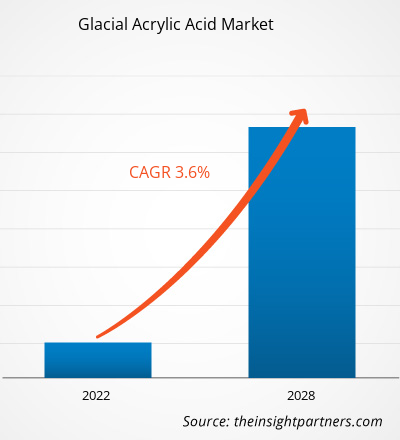
The global glacial acrylic acid market size is projected to reach US$ 4.08 billion by 2034 from US$ 3.00 billion in 2025. The market is anticipated to register a CAGR of 3.5% during the forecast period 2026–2034
What is driving the market?
Surging demand for superabsorbent polymers (SAPs) in disposable hygiene products, expanding water treatment requirements, and growth in specialty coatings and adhesives are the principal growth drivers. Personal care manufacturers require high-purity glacial acrylic acid to synthesize cross-linked polyacrylate networks used in infant diapers, adult incontinence products, and feminine hygiene items. Simultaneously, municipal and industrial water authorities are increasing procurement of polyacrylic acid-based scale inhibitors and flocculants to comply with stricter wastewater regulations.
The industry is moving beyond basic commodity production toward backward-integrated supply chains and lower-carbon manufacturing routes. Suppliers are investing in catalyst efficiency, energy recovery, and bio-propylene or renewable feedstock pilots to meet Scope 3 emissions targets. However, raw material price volatility tied to crude oil and propylene cycles, stringent hazardous-material storage requirements due to GAA’s polymerization risk, and tightening volatile organic compound (VOC) regulations remain key constraints.
Which region leads?
Asia Pacific leads the market, accounting for the largest global consumption and production volume share (over 50% of broader acrylic monomer volume), and is also the fastest-growing region through 2034. Growth is supported by rapid urbanization, rising disposable incomes, expanding retail penetration for baby and adult hygiene products in China, India, and Southeast Asia, and integrated petrochemical capacity. China continues to drive regional capacity additions and downstream ester integration under domestic chemical self-sufficiency initiatives.
North America holds the second-largest revenue share, supported by shale-advantaged propylene feedstocks on the U.S. Gulf Coast, high per-capita hygiene consumption, and demand for ultra-high-purity grades in electronics and medical adhesives. Europe maintains a steady market share driven by circular-economy mandates, low-VOC waterborne coating transitions, and early commercial adoption of bio-attributed glacial acrylic acid.
Which segment leads?
Superabsorbent Polymers (SAPs) primarily serving Nappies (Infant Diapers) and Adult & Feminine Hygiene represent the leading application segment, accounting for more than 30%–40% of global glacial acrylic acid consumption. Its position is supported by the absence of commercially viable, cost-effective substitutes at scale for high-absorbency hygiene cores and steady demographic growth in developing markets.
By industrial end-use, Water Treatment and Specialty Adhesives & Sealants are identified as high-growth application segments, driven by global municipal water infrastructure upgrades, desalination membrane protection, and automotive/electronics lightweighting that requires UV-stable, high-clarity acrylic adhesives.
Which companies are prominent?
The competitive landscape features major integrated chemical producers including BASF SE, Dow Inc., Arkema, Nippon Shokubai Co., Ltd., Evonik Industries AG, Mitsubishi Chemical Group, Formosa Plastics Corporation, Sasol Limited, LG Chem, and Wanhua Chemical Group.
These companies compete across monomer purity, backward integration into propylene feedstocks, regional plant proximity, and sustainable product portfolios. Strategic differentiation increasingly depends on cost-efficient catalytic oxidation technology, secure logistics for temperature-controlled monomer transport, and the ability to supply mass-balance bio-attributed grades at commercial scale.
What is changing in 2026?
In 2026, the market is shifting from volume-driven expansion toward supply-chain resilience, pricing discipline, and certified low-carbon feedstocks. Major producers including BASF in North America implemented price adjustments in 2026 to offset energy, raw material, and freight cost pressures, prompting downstream buyers to favor long-term supply contracts with backward-integrated vendors. Portfolio restructuring is also reshaping regional supply, exemplified by Synthomer’s 2026 divestment of its European acrylate monomers business.
Manufacturers are accelerating the rollout of ISCC PLUS-certified bio-attributed glacial acrylic acid and ultra-high-purity grades tailored for semiconductor and optical adhesive applications. Procurement decisions are increasingly tied to carbon-footprint documentation and supply reliability rather than spot pricing alone.
What are the major investment opportunities?
The strongest opportunities lie in backward-integrated petrochemical complexes, bio-based acrylic acid production routes, and ultra-high-purity purification technologies. Investing in catalyst optimization and waste-heat recovery can significantly lower unit production costs and insulate margins against propylene price swings.
Additional opportunities include capacity expansion in high-growth Asia Pacific and Middle Eastern hubs where upstream cracker integration offers structural cost advantages as well as specialty formulations for waterborne architectural coatings, pressure-sensitive adhesives, and advanced wastewater flocculants. Investors should prioritize projects with secured propylene supply, robust thermal-stabilization and logistics infrastructure, and verified low-emission credentials.
Future Outlook
Looking ahead toward 2034, the Glacial Acrylic Acid Market will transition into a more specialized, sustainability-led value chain. While disposable baby diapers in mature economies face demographic plateauing, rising demand for adult incontinence products in aging societies (such as Japan, Europe, and North America) and expanding hygiene adoption across South Asia, Southeast Asia, and Africa will sustain baseline SAP volume growth. Simultaneously, regulatory pressure to decarbonize chemical manufacturing will accelerate commercial scale-up of bio-attributed and renewable-propylene routes, positioning integrated, low-carbon producers to capture premium margins across high-tech adhesive, coating, and water-infrastructure applications.
About The Insight Partners
The Insight Partners is a leading market research and consulting firm delivering actionable insights through in-depth industry analysis and strategic intelligence. The firm supports clients across various industries in making informed decisions by providing comprehensive market forecasts, competitive assessments, and growth opportunities.
Contact Us:
If you have any queries about this report or if you would like further information, please contact us:
Contact Person: Ankit Mathur
E-mail: sales@theinsightpartners.com
Phone: +1-646-491-9876
