MARKET OVERVIEW
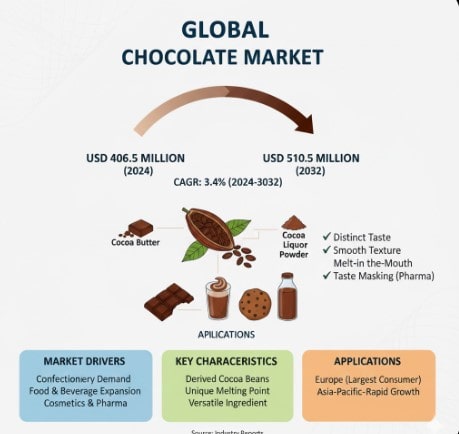
According to a new report from Intel Market Research, the global chocolate market was valued at USD 406.5 million in 2024 and is projected to reach USD 510.5 million by 2032, exhibiting a steady CAGR of 3.4% during the forecast period (2025-2032). This enduring growth stems from chocolate’s universal appeal as both an indulgence and functional ingredient across multiple industries.
📥 Download FREE Sample Report: Chocolate Market – View in Detailed Research Report
What Makes Chocolate Special?
Chocolate’s unique position in global markets comes from its remarkable versatility. Derived from cocoa beans processed into cocoa butter, cocoa liquor, and cocoa powder, it delivers distinctive sensory experiences through its melting properties and rich flavors. Beyond confectionery, cocoa butter’s specific physical properties make it invaluable for pharmaceutical coatings and premium cosmetics, while chocolate itself serves as an effective flavor mask for medicines.
The market growth primarily stems from traditional confectionery applications, though non-food sectors are gaining momentum. Europe currently dominates consumption due to established chocolate traditions, while Asia-Pacific shows accelerating growth as rising disposable incomes drive adoption of Western-style treats.
Key Market Dynamics
This report provides comprehensive analysis of the chocolate market, examining all critical aspects from macro trends to operational details. The research helps stakeholders understand competitive positioning, identify growth opportunities, and navigate industry challenges through:
- Detailed market sizing and growth projections
- Competitive intelligence and player positioning
- Supply chain and raw material analysis
- Emerging application areas and technologies
- Regulatory landscape and sustainability considerations
For chocolate manufacturers, distributors, and investors, these insights provide the strategic intelligence needed to capitalize on market opportunities while mitigating risks in this complex global industry.
MARKET DRIVERS
Premiumization and Health-Conscious Consumption
The chocolate market is experiencing a qualitative shift as consumers increasingly seek premium experiences. Artisanal producers and single-origin chocolates are gaining market share, with consumers willing to pay premium prices for superior quality and ethical sourcing credentials. Dark chocolate varieties, perceived as healthier due to higher cocoa content and antioxidants, represent the fastest-growing segment with annual growth exceeding 5%.
Ubiquitous Gifting Culture
Seasonal demand around holidays like Easter, Christmas, and Valentine’s Day continues to drive significant revenue. The gifting segment has evolved beyond traditional boxed chocolates to include personalized and premium offerings. Luxury packaging innovations and limited-edition flavors create excitement that boosts both sales volumes and margins during key seasonal periods.
➤ Emerging markets present substantial opportunities, particularly in Asia-Pacific where annual growth rates exceed 7% as rising middle classes adopt chocolate consumption habits.
MARKET CHALLENGES
Cocoa Supply Chain Volatility
Chocolate producers face significant challenges from fluctuating cocoa prices, which are sensitive to weather conditions, political instability in West African growing regions, and crop diseases. This price volatility directly impacts production costs and profit margins, requiring sophisticated hedging strategies from major manufacturers.
Additional Industry Pressures
Sustainability Commitments and Costs
Beyond cocoa, prices for other key ingredients like sugar and dairy continue rising. Simultaneously, manufacturers face mounting pressure to demonstrate sustainable and ethical sourcing practices, requiring investments in certification programs and traceability systems that add operational complexity.
Health and Wellness Trends
The global shift toward healthier eating presents formulation challenges. Manufacturers must balance sugar and fat reduction with maintaining the indulgent taste that defines chocolate, often requiring extensive R&D investment and careful consumer testing.
MARKET OPPORTUNITIES
Functional Chocolate Innovation
The intersection of indulgence and functionality represents a major growth frontier. Chocolates fortified with vitamins, minerals, probiotics, or plant-based proteins can command premium pricing while aligning with health-conscious consumer preferences. This convergence of taste and functionality creates opportunities for product differentiation.
Emerging Market Expansion
Developing economies in Asia, Latin America, and Africa present untapped potential. Rising middle-class populations with increasing disposable income are embracing chocolate consumption, supported by expanding retail infrastructure and Western cultural influence. Early movers in these regions can establish strong brand positions before markets become saturated.
Plant-Based Revolution
The plant-based food movement is creating demand for dairy-free chocolate alternatives. This caters not only to vegans but also to lactose-intolerant consumers and flexitarians seeking sustainable options. Innovative formulations using nut milks, oat milk, or other plant bases can capture this growing demographic while commanding price premiums.
COMPETITIVE LANDSCAPE
Concentration and Specialization Define the Market
The global chocolate market features a mix of multinational conglomerates and specialized niche players. The top five producers – Barry Callebaut, Cargill, Nestlé SA, Mars, and Fuji Oil – collectively control approximately half the market, benefiting from economies of scale and established distribution networks.
Barry Callebaut leads as the dominant global supplier, leveraging vertical integration from cocoa sourcing to finished products. Meanwhile, consumer brands like Hershey, Ferrero, and Mondelez compete fiercely on brand recognition and product innovation in retail channels. Specialty manufacturers focus on premium segments or industrial applications, demonstrating that diverse strategies can succeed in this market.
Key Market Participants:
Barry Callebaut
Nestlé SA
Mars Inc.
Hershey Company
Puratos Group
Ferrero Group
REGIONAL ANALYSIS
European consumers increasingly seek premium experiences, driving demand for single-origin chocolates and innovative flavors featuring exotic ingredients.
European manufacturers lead in sustainable sourcing commitments, with certifications becoming standard requirements for market access.
Product reformulations reduce sugar content while incorporating functional benefits through superfood ingredients to meet health-conscious demand.
Chocolate boutiques and interactive museum experiences enhance brand engagement through tastings and production demonstrations.
Asia-Pacific Growth Engine
The Asia-Pacific region represents the fastest-growing chocolate market globally, with China and India driving expansion. While per capita consumption remains below Western levels, rising disposable incomes and urbanization are creating substantial growth opportunities. Manufacturers must adapt products to local tastes and tropical climate conditions while navigating diverse distribution channels.
North American Market
The U.S. and Canadian markets balance mass consumption with premium segment growth. Functional chocolates and ethical sourcing claims gain traction, while seasonal sales patterns differ from Europe with Halloween representing a major consumption period. Innovation focuses on novel flavors and formats to maintain consumer interest.
MARKET SEGMENTATION
By Product Type
- Dark Chocolate
- Milk Chocolate
- White Chocolate
- Compound Chocolate
By Application
- Confectionery
- Bakery Products
- Dairy Products
- Cosmetics
- Pharmaceuticals
By Distribution Channel
- Supermarkets/Hypermarkets
- Convenience Stores
- Specialty Stores
- Online Retail
By Region
- North America
- Europe
- Asia-Pacific
- Latin America
- Middle East & Africa
📘 Get Full Report Here: Chocolate Market – View Detailed Research Report
About Intel Market Research
Intel Market Research is a leading provider of strategic intelligence, offering actionable insights in biotechnology, pharmaceuticals, and healthcare infrastructure. Our research capabilities include:
- Real-time competitive benchmarking
- Global clinical trial pipeline monitoring
- Country-specific regulatory and pricing analysis
- Over 500+ healthcare reports annually
Trusted by Fortune 500 companies, our insights empower decision-makers to drive innovation with confidence.
🌐 Website: https://www.intelmarketresearch.com
📞 Asia-Pacific: +91 9169164321
🔗 LinkedIn: Follow Us