PUNE, June 18, 2026 – The Anti-Acne Cosmetics Market, according to a recent study by Stellar Market Research, is witnessing strong momentum as consumers increasingly prioritize preventive skincare, dermatologist-backed formulations, and clean beauty products. The market is benefiting from growing awareness of acne-related skin concerns among adolescents and adults, expansion of e-commerce beauty channels, and continuous innovation in active ingredients and personalized skincare solutions.
Market Opportunity Overview
The anti-acne cosmetics industry is undergoing a significant transformation from traditional spot-treatment products toward holistic skin health solutions. Consumers are increasingly seeking multifunctional formulations that combine acne treatment, hydration, microbiome balance, and skin barrier protection. This shift is creating opportunities for premium skincare brands, dermatological companies, and ingredient suppliers.
The rise of social commerce, AI-powered skin diagnostics, and tele-dermatology platforms is further influencing purchasing behavior. As consumers demand clinically proven, sustainable, and personalized skincare products, manufacturers are investing heavily in research, digital engagement, and advanced formulations containing salicylic acid, niacinamide, retinoids, probiotics, and botanical extracts.
Download Free PDF Brochure: https://www.stellarmr.com/report/req_sample/Anti-Acne-Cosmetics-Market/487
Key Findings from the Report
- The Anti-Acne Cosmetics Market is forecast to expand steadily through 2032, supported by rising skincare expenditure and increasing acne prevalence across all age groups.
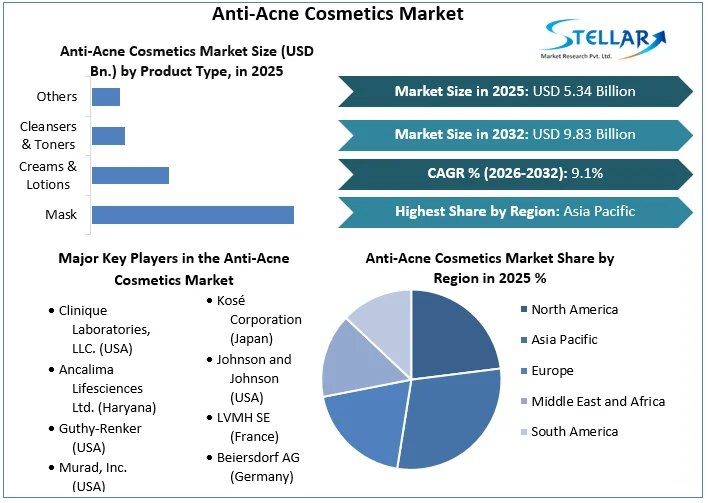
- Creams and lotions remain the dominant product segment due to their widespread adoption and therapeutic effectiveness.
- Cleansers and toners are projected to be among the fastest-growing categories as consumers adopt preventive skincare routines.
- Female consumers currently account for the largest market share, while male grooming demand continues to accelerate.
- Asia-Pacific leads the global market due to high population density, growing disposable income, and increasing skincare awareness.
- India, China, South Korea, and Southeast Asian countries are emerging as high-growth markets driven by digital beauty adoption.
- Online retail channels continue gaining market share as brands leverage direct-to-consumer strategies and influencer marketing.
Market Drivers and Restraints
Key Drivers
Growing Prevalence of Acne Conditions
Acne remains one of the most common dermatological concerns worldwide, affecting teenagers and a rising number of adults. Increasing awareness regarding skin health is driving demand for specialized cosmetic solutions.
Expansion of Premium and Dermatologist-Recommended Skincare
Consumers increasingly prefer clinically tested products with scientifically validated ingredients, supporting demand for premium anti-acne formulations.
Digital Beauty Ecosystem Growth
Online consultations, virtual skin analysis tools, and social media-driven skincare education are expanding market reach and improving product accessibility.
Key Restraints
Skin Sensitivity and Product Side Effects
Certain active ingredients may cause irritation, redness, or dryness, creating barriers for consumer adoption and retention.
Intense Market Competition
The presence of numerous established brands and private-label manufacturers increases pricing pressure and product differentiation challenges.
Technology, Regulation, and Sustainability Trends
Technological advancements are significantly influencing product development within the anti-acne cosmetics market. AI-based skin diagnostics, personalized skincare algorithms, microbiome-focused formulations, and smart ingredient delivery systems are improving treatment effectiveness and consumer engagement.
Regulatory authorities across North America, Europe, and Asia are increasing scrutiny regarding ingredient transparency, product safety, and marketing claims. Compliance with clean-label standards and dermatological testing requirements is becoming increasingly important.
Sustainability is emerging as a competitive differentiator. Companies are introducing recyclable packaging, cruelty-free formulations, responsibly sourced ingredients, and reduced-plastic packaging strategies to meet evolving ESG expectations.
Regional Insights
Asia-Pacific Leads Market Expansion
Asia-Pacific remains the largest regional market, supported by strong consumer demand in China, India, Japan, and South Korea. Growing middle-class populations, rising skincare awareness, and digital beauty ecosystems continue to fuel regional growth.
North America Maintains Strong Innovation Leadership
The United States remains a major innovation hub due to advanced dermatology research, premium skincare adoption, and widespread availability of specialist products.
Europe Gains Momentum Through Sustainable Beauty
European consumers increasingly favor clean-label and environmentally responsible skincare products. Regulatory emphasis on ingredient safety further supports premium market growth.
Emerging Opportunities Across Latin America and Middle East
Brazil, Mexico, Saudi Arabia, and the UAE are witnessing increased investment in beauty and personal care sectors, creating attractive growth opportunities for anti-acne product manufacturers.
Download Free PDF Brochure: https://www.stellarmr.com/report/req_sample/Anti-Acne-Cosmetics-Market/487
Recent Industry Developments
L’Oréal (2025): Expanded AI-powered skin diagnostic capabilities through advanced beauty technology platforms, enhancing personalized acne-care recommendations and consumer engagement.
Galderma (2025): Strengthened dermatology-focused skincare offerings through innovation in acne management solutions, reinforcing medical-grade skincare positioning.
Beiersdorf (2025): Increased investment in microbiome-friendly skincare research, supporting development of gentler anti-acne formulations for sensitive skin consumers.
Shiseido (2024): Introduced advanced acne-care products leveraging biotechnology and skin microbiome research, expanding its premium skincare portfolio across Asia.
Unilever (2024): Accelerated sustainable packaging initiatives across skincare brands, supporting consumer demand for environmentally responsible beauty products.
Competitive Landscape
The Anti-Acne Cosmetics Market features competition among multinational beauty companies, dermatology-focused brands, and emerging digital-native skincare players. Leading participants are pursuing product innovation, strategic partnerships, ingredient research, digital marketing investments, and geographic expansion strategies.
Key companies operating in the market include L’Oréal, Beiersdorf, Shiseido, Unilever, Galderma, Johnson & Johnson, Proactiv, Murad, La Roche-Posay, and other specialized skincare brands. Companies are increasingly focusing on dermatologist endorsements, science-backed formulations, and direct-to-consumer channels to strengthen market positioning.
Analyst Commentary
“The anti-acne cosmetics industry is evolving beyond symptom treatment toward comprehensive skin health management. Consumers are increasingly seeking personalized, clinically validated, and sustainable solutions, creating opportunities for companies that combine scientific innovation with digital engagement strategies,” said a Senior Research Analyst at Stellar Market Research.
Future Outlook
Through the forecast period, the market is expected to benefit from rising skincare awareness, increasing demand for preventive dermatology, and continued investment in personalized beauty technologies. AI-driven diagnostics, microbiome-focused formulations, and sustainable product development will likely become key competitive differentiators.
As digital commerce expands and consumers prioritize evidence-based skincare solutions, companies that effectively combine innovation, regulatory compliance, and sustainability initiatives are expected to capture significant market opportunities.
About Stellar Market Research
Stellar Market Research is a global market research and business consulting firm delivering actionable intelligence across healthcare, consumer goods, technology, manufacturing, chemicals, energy, and industrial sectors. The company provides comprehensive market assessments, competitive intelligence, strategic forecasting, and customized consulting solutions that help organizations identify growth opportunities and make informed business decisions. Through rigorous primary and secondary research methodologies, Stellar Market Research delivers accurate market insights, trend analysis, and strategic recommendations that support business expansion, investment planning, and competitive positioning across global markets.
Media Contact
Stellar Market Research
Pune, Maharashtra, 411029
Website: http://stellarmr.com/
Email: sales@stellarmr.com
Phone: +91 9607365656
