Key Highlights
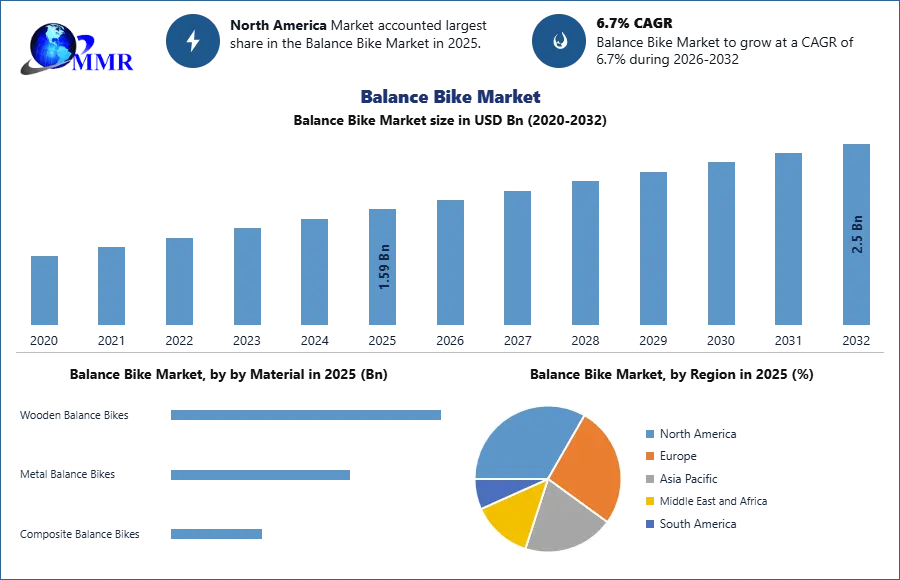
- Balance Bike Market projected to reach USD 2.24 billion by 2030.
- Market expected to grow at a CAGR of 7.1% during the forecast period.
- Rising focus on child development remains a major demand driver.
- Increasing participation in outdoor recreational activities supports market expansion.
- Lightweight and user-friendly product designs continue gaining popularity.
- Europe remains one of the leading regional markets.
- Asia-Pacific presents significant long-term growth opportunities.
Why This Matters Now
Manufacturers of children’s mobility products are operating in a market that is increasingly influenced by developmental learning trends rather than traditional toy purchasing behavior. Parents are seeking products that combine recreation, skill development, and physical activity, creating new growth opportunities for balance bike manufacturers.
This shift is changing competitive dynamics. Companies that position balance bikes as developmental learning tools rather than recreational products gain stronger consumer engagement and pricing power. For investors and mobility product suppliers, the category represents a growing intersection between education, recreation, and child development.
The result is a market where functionality, safety, and developmental benefits increasingly influence purchasing decisions.
Market Overview
Balance Bike Market are pedal-free bicycles designed to help children develop balance, coordination, and riding confidence before transitioning to conventional bicycles. By eliminating pedals and training wheels, these products encourage children to use their feet for propulsion while learning balance naturally.
According to Maximize Market Research, the Balance Bike Market is projected to reach USD 2.24 billion by 2030 while growing at a CAGR of 7.1% during the forecast period.
The market is benefiting from rising awareness regarding early childhood physical development and increasing emphasis on outdoor activities. Parents increasingly recognize balance bikes as tools that help children develop motor skills while encouraging physical exercise.
The business implication is significant. Unlike traditional children’s bicycles, balance bikes are positioned as developmental products, allowing manufacturers to address a broader consumer value proposition centered on learning and skill development.
This positioning supports sustained demand across multiple demographic groups.
Key Trends Driving Growth
The strongest growth catalyst is increasing awareness of child development benefits.
Parents are becoming more informed about the role physical activity plays in developing balance, coordination, confidence, and motor skills. Balance bikes are increasingly viewed as practical developmental tools rather than purely recreational products.
Outdoor recreation trends continue supporting demand.
Families are encouraging children to spend more time participating in outdoor activities. Balance bikes align with this preference by offering a safe and engaging introduction to independent mobility.
Lightweight product designs are becoming increasingly important.
Manufacturers are focusing on ergonomics, ease of handling, and child-friendly designs that improve usability and enhance learning experiences. Lightweight frames help children gain confidence more quickly while improving overall product appeal.
Product safety remains a major purchasing factor.
Parents prioritize durable construction, reliable materials, and child-focused safety features when selecting mobility products. Manufacturers capable of delivering trusted safety performance strengthen their competitive positions.
Retail accessibility is also expanding.
Online sales channels and organized retail networks are increasing product visibility while improving access to a broader customer base.
𝐃𝐨𝐰𝐧𝐥𝐨𝐚𝐝 𝐏𝐃𝐅 𝐁𝐫𝐨𝐜𝐡𝐮𝐫𝐞 @ https://www.maximizemarketresearch.com/request-sample/206143/
Segment Insights
- Dominant Segment – Lightweight Balance Bikes: Lightweight balance bikes remain a major product category due to ease of use and improved learning outcomes for children.
- Fastest-Growing Segment – Not Explicitly Specified: The supplied MMR report does not explicitly identify the fastest-growing segment. No unsupported conclusion has been included.
- Age-Based Demand Driver: Early childhood users remain the primary target demographic due to the developmental benefits associated with balance bike use.
- Product Focus: Child-friendly design, lightweight construction, and safety-oriented features continue influencing purchasing decisions.
- Growth Opportunity: Rising awareness regarding physical development and outdoor activity participation creates long-term demand potential.
Regional Growth Story
Europe remains one of the leading markets for balance bikes.
The region benefits from strong cycling culture, high awareness regarding child development, and widespread acceptance of outdoor recreational activities. Parents increasingly adopt balance bikes as a preferred method for teaching riding skills.
European consumers also demonstrate strong interest in premium-quality products, creating opportunities for manufacturers offering innovative designs and enhanced safety features.
North America continues generating significant demand.
Rising participation in outdoor activities and increasing parental focus on developmental learning products continue supporting market growth. Retail expansion and online distribution channels further improve product accessibility.
Asia-Pacific represents a substantial long-term opportunity.
Growing urban populations, rising disposable incomes, and increasing awareness regarding childhood development are supporting demand across multiple countries. Expanding middle-class populations continue creating opportunities for mobility product manufacturers.
These regional dynamics indicate that future growth will be driven by a combination of mature-market product upgrades and expanding adoption in developing economies.
Competitive Landscape
Competition increasingly centers on product quality, safety, and developmental positioning.
Manufacturers are focusing on lightweight materials, ergonomic designs, improved durability, and enhanced user experiences. Product differentiation has become increasingly important as consumer awareness grows.
The strategic implications are considerable.
Brands that successfully communicate developmental benefits gain stronger market positioning than those competing solely on pricing. Educational value has become an important competitive differentiator.
The market also rewards companies with broad distribution networks.
Manufacturers capable of expanding across online platforms and organized retail channels improve product visibility while increasing customer reach.
Innovation remains an important competitive lever. Companies that improve usability, safety, and design aesthetics can strengthen customer loyalty and brand recognition.
Recent Developments
- Manufacturers continue focusing on lightweight product development.
- Child development benefits remain a central marketing theme across the industry.
- Outdoor recreation participation continues supporting market growth.
- Online distribution channels are increasing product accessibility.
- Product safety and durability remain major competitive priorities.
Strategic Implications
The Balance Bike Market demonstrates how consumer demand is shifting toward products that combine recreation with developmental value.
For manufacturers, future success depends on balancing product innovation, safety, and educational positioning. Parents increasingly evaluate purchases based on developmental outcomes rather than entertainment value alone.
For suppliers and distributors, opportunities extend into premium product categories, specialty retail channels, and online commerce platforms.
For investors, the market provides exposure to growing demand for child development products, outdoor recreation equipment, and family-oriented consumer goods.
The supplied MMR report does not provide specific information regarding EV adoption, battery technologies, powertrain transitions, autonomous driving systems, ADAS technologies, semiconductor dependencies, charging infrastructure, fleet electrification, mobility-as-a-service trends, trade flows, or automotive manufacturing capacity. These topics have therefore been omitted in accordance with the source rule.
Future Outlook
The companies that combine child-focused innovation, trusted safety performance, developmental value, and strong distribution capabilities will emerge as the long-term leaders in the Balance Bike Market.
Analyst Perspective
“The Balance Bike Market continues to benefit from increasing awareness of childhood physical development, growing participation in outdoor activities, and rising demand for skill-based mobility products. Manufacturers that prioritize safety, lightweight design, and developmental value will be best positioned to capture future growth opportunities.” — Tejaswini Kakade, Research Analyst
About Maximize Market Research
Maximize Market Research Pvt. Ltd. (MMR) is a global market research and consulting company that provides reliable, data-focused, and practical business insights. The firm serves a wide range of industries, including healthcare, pharmaceuticals, technology, automotive, electronics, chemicals, personal care, and consumer goods. Through market forecasts, competitive analysis, strategic consulting, and industry impact assessments, MMR helps organizations understand changing market conditions, identify growth opportunities, and make informed business decisions for long-term success.
2nd Floor, Navale IT Park Phase 3
Pune Banglore Highway, Narhe
Pune, Maharashtra 411041, India
+91 9607365656
sales@maximizemarketresearch.com
