Key Highlights
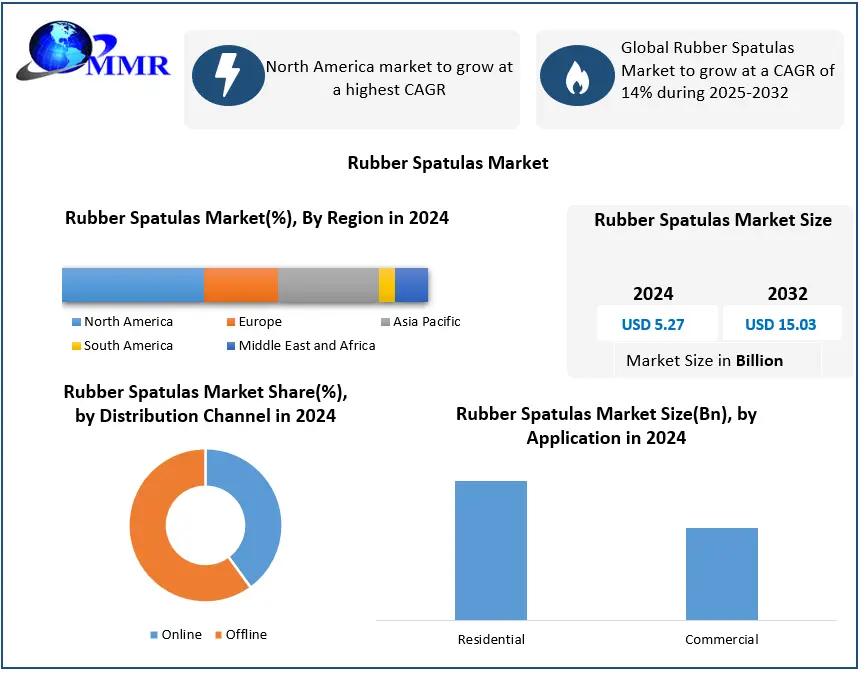
- Rubber Spatulas Market valued at USD 5.27 billion in 2024.
- Market expected to reach USD 15.03 billion by 2032.
- Forecast CAGR stands at 14% during 2025–2032.
- North America accounted for 37% market share in 2024.
- Europe represented 28% of global demand.
- 5-inch spatulas dominated with a 38% share.
- Wood-handle products led handle-material demand with 40% market share.
- Product innovation increasingly centers on heat-resistant silicone and sustainable materials.
- E-commerce continues to expand distribution opportunities across key regions.
Why This Matters Now
Kitchenware manufacturers face a rapidly changing consumer environment where functionality alone no longer secures market share. Premium design, sustainability credentials, and direct-to-consumer distribution are becoming critical competitive advantages.
The Rubber Spatulas Market is moving beyond basic kitchen tools toward branded lifestyle products. Companies that adapt to evolving consumer expectations around durability, aesthetics, and environmental responsibility are positioned to capture disproportionate growth over the next decade.
Market Overview
The global Rubber Spatulas Market was valued at USD 5.27 billion in 2024 and is projected to reach nearly USD 15.03 billion by 2032, expanding at a CAGR of 14%.
Growth is being driven by rising home cooking and baking activities, modernization of foodservice operations, increasing demand for environmentally friendly products, and strong consumer interest in premium kitchenware. The category is also experiencing a material transition as traditional rubber products are increasingly replaced by silicone alternatives offering superior heat resistance, durability, flexibility, and hygiene.
For manufacturers, this shift creates opportunities to differentiate through material innovation and product performance. For retailers, premiumization supports higher average selling prices and stronger margins.
Key Trends Driving Growth
Material innovation remains the most influential trend shaping market competition. Manufacturers are accelerating the shift toward high-heat, BPA-free silicone products that address consumer concerns regarding durability, food safety, and convenience.
The rise of ergonomic design is also changing purchasing behavior. Consumers increasingly seek products that improve usability through comfortable grips, flexible heads, and multifunctional capabilities. This trend supports stronger brand loyalty and repeat purchases.
Lifestyle branding has emerged as another important growth catalyst. Kitchen tools are increasingly marketed as extensions of broader cookware and home décor ecosystems. Companies such as KitchenAid are aligning spatula designs with broader product portfolios, creating cross-selling opportunities and strengthening customer retention.
Sustainability is becoming a competitive differentiator rather than a niche feature. Manufacturers introducing recycled materials and environmentally responsible packaging are responding to growing consumer demand for eco-conscious kitchen products.
E-commerce expansion continues to reshape distribution strategies. Online platforms provide manufacturers with broader market access while enabling direct consumer engagement and product personalization opportunities.
Need more information? Inquire about a sample report now
Segment Insights
- Dominant Segment (Size): The 5-inch rubber spatulas segment accounted for 38% of market share in 2024. Demand is supported by affordability, portability, ease of use, and suitability for everyday cooking and baking tasks.
- Second-Largest Size Category: The 5-inch to 10-inch segment is expected to remain a significant revenue contributor throughout the forecast period.
- Dominant Segment (Handle Material): Wood-handle rubber spatulas held 40% market share in 2024. Consumers favor wood handles for their durability, heat resistance, comfortable grip, and eco-friendly appeal.
- Application Segments: Residential and commercial applications continue to support market expansion, benefiting from rising home cooking activity and foodservice modernization.
- Distribution Channels: Online and offline channels remain important, though e-commerce is increasingly influencing purchasing decisions and brand visibility.
Regional Growth Story
North America remains the largest regional market, accounting for 37% of global demand in 2024. The region benefits from strong consumer spending, established kitchenware brands, advanced retail networks, and high adoption of premium cookware products.
Europe represents the second-largest regional market with a 28% share. The presence of established manufacturers and strong consumer preference for high-quality kitchen products continues to support market demand.
Asia-Pacific is emerging as the fastest-expanding opportunity zone. Rising disposable incomes, increasing urbanization, and growing consumer interest in premium kitchenware are supporting market expansion across China, India, Japan, and South Korea.
The region also benefits from significant rubber production capabilities, strengthening supply-chain advantages for manufacturers and supporting long-term industry growth.
Competitive Landscape
Competition is intensifying as manufacturers move beyond price-based differentiation toward innovation, sustainability, and brand positioning.
OXO continues to strengthen its market presence through user-focused design and broad retail availability. Its 2025 portfolio refresh demonstrates a strategy centered on functionality, accessibility, and mass-market appeal.
KitchenAid is pursuing premium positioning through coordinated product ecosystems and lifestyle branding. The company’s strategy signals confidence that consumers will increasingly view kitchen tools as part of broader home and cooking experiences rather than standalone purchases.
Rubbermaid is targeting commercial foodservice opportunities through high-heat resistant product innovation. This approach strengthens its position among professional users seeking performance and durability.
Cuisinart’s investment in recycled-material products highlights a broader industry move toward sustainability-driven differentiation. As environmental considerations influence purchasing decisions, sustainable innovation is becoming a source of pricing power and brand distinction.
The competitive battleground is increasingly defined by material technology, design innovation, sustainability credentials, and omnichannel distribution capabilities.
Recent Developments
- OXO introduced refreshed silicone spatula offerings in 2025, expanding its Good Grips portfolio with new flexible and high-heat designs.
- KitchenAid launched new silicone spatula sets featuring heat resistance up to 500°F and dishwasher-safe construction.
- Rubbermaid expanded its commercial product portfolio with high-heat resistant silicone scrapers designed for foodservice applications.
- Tovolo expanded its Flex-Core line with seasonal and themed product introductions to strengthen lifestyle-oriented branding.
- Cuisinart advanced sustainability initiatives through Oceanware Collection spatulas manufactured using recycled ghost fishing nets.
Strategic Implications
Manufacturers that prioritize silicone innovation, ergonomic design, and sustainable materials are likely to capture premium market segments and strengthen brand loyalty.
Retailers should anticipate continued growth in premium kitchenware categories as consumers increasingly prioritize performance, aesthetics, and environmental responsibility. Product assortment strategies that emphasize innovation and sustainability may generate stronger sales momentum.
Investors should monitor companies successfully combining material innovation with direct-to-consumer and e-commerce expansion strategies. These businesses appear best positioned to capitalize on changing consumer preferences.
Supply chains are also evolving. Access to sustainable materials and advanced manufacturing capabilities may become increasingly important competitive advantages as environmental expectations rise.
Future Outlook
The Rubber Spatulas Market is entering a phase where innovation, sustainability, and brand positioning will determine market leadership. Companies that successfully align product development with consumer demand for premium, durable, and eco-friendly kitchen tools will shape the next generation of growth, while slower-moving competitors risk losing relevance in an increasingly differentiated marketplace.
Analyst Perspective
“Consumer expectations are shifting beyond functionality toward premium experiences, sustainable materials, and lifestyle-oriented kitchenware. Companies that combine innovation, design, and environmental responsibility will be best positioned to capture long-term value in the Rubber Spatulas Market,” — Dharati Raut, Analyst.
About Maximize Market Research
Maximize Market Research Pvt. Ltd. (MMR) is a global market research and consulting company that provides reliable, data-focused, and practical business insights. The firm serves a wide range of industries, including healthcare, pharmaceuticals, technology, automotive, electronics, chemicals, personal care, and consumer goods. Through market forecasts, competitive analysis, strategic consulting, and industry impact assessments, MMR helps organizations understand changing market conditions, identify growth opportunities, and make informed business decisions for long-term success.
Contact Us :
2nd Floor, Navale IT Park Phase 3
Pune Banglore Highway, Narhe
Pune, Maharashtra 411041, India
+91 9607365656
sales@maximizemarketresearch.com
