Key Highlights
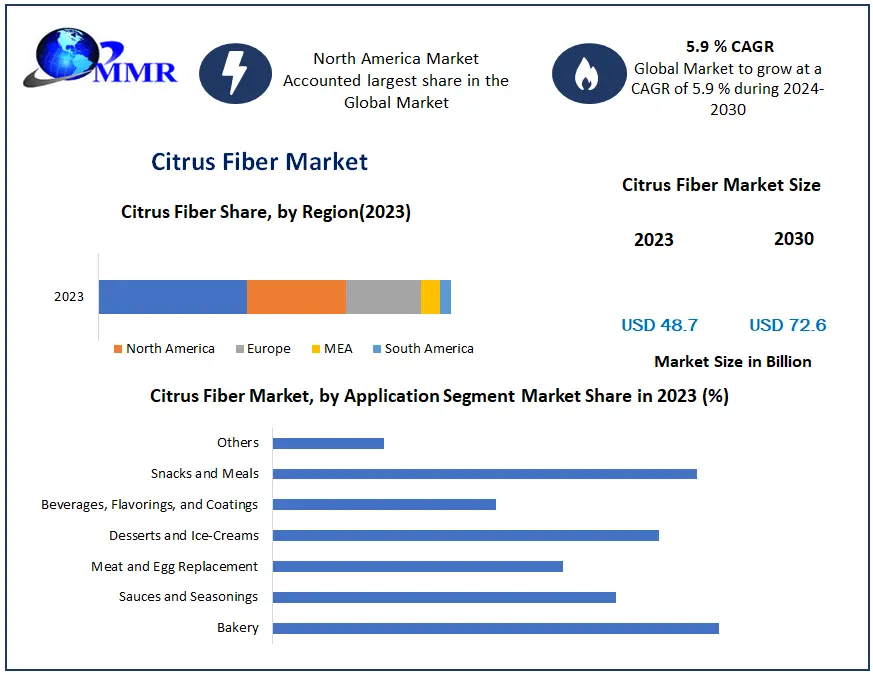
- Citrus Fiber Market size was valued at USD 42.7 billion in 2023.
- Market revenue is expected to reach USD 72.6 billion by 2030.
- The market is projected to grow at a CAGR of 5.9% during the forecast period.
- Clean-label reformulation is becoming a major procurement priority for food manufacturers.
- Growing demand for natural and minimally processed ingredients is accelerating adoption.
- Sustainability initiatives are increasing the value of citrus-derived ingredients.
- Food producers are expanding citrus fiber use across multiple product categories.
Why This Matters Now
The food industry is entering a new phase of ingredient scrutiny. Consumers are rejecting long ingredient lists, questioning synthetic additives, and demanding products that look simpler and healthier.
That shift is creating immediate pressure on manufacturers. The Citrus Fiber Market, valued at USD 42.7 billion in 2023 and expected to reach USD 72.6 billion by 2030, signals how rapidly food companies are investing in natural functionality. Every dollar flowing into this category represents a broader movement away from artificial stabilizers and toward ingredient transparency.
Market Overview
Citrus fiber has evolved from a specialty ingredient into a strategic tool for product development teams. Derived from citrus processing streams, it delivers functional benefits while supporting clean-label positioning.
Food manufacturers increasingly face a difficult equation. They must improve nutritional profiles, maintain texture, extend shelf life, and satisfy consumer expectations simultaneously. Citrus fiber offers a solution that addresses multiple objectives through a single ingredient platform.
The market’s projected growth demonstrates how ingredient selection is becoming central to brand strategy. Companies are no longer competing solely on flavor or price. Ingredient credibility is becoming a competitive asset.
Key Trends Driving Growth
Clean-label demand remains the most influential force shaping the market. Consumers continue to favor products with recognizable ingredients and fewer artificial additives. This trend is forcing reformulation initiatives across nearly every major FMCG category.
Health and wellness priorities are also creating momentum. Dietary fiber enrichment has become an important product differentiation strategy as consumers seek foods that align with broader nutritional goals.
Sustainability is adding another layer of demand. Citrus fiber utilizes byproducts from citrus processing operations, creating opportunities for resource efficiency and waste reduction. Manufacturers increasingly view this circular approach as both an environmental and commercial advantage.
Food innovation is accelerating adoption across bakery, dairy, beverages, sauces, dressings, and processed foods. Product developers value citrus fiber because it can contribute to texture, moisture retention, stabilization, and formulation performance while supporting cleaner labels.
Consumer purchasing behavior is changing as well. Shoppers increasingly compare ingredient panels before making buying decisions. This behavior is pushing food brands to replace synthetic ingredients with alternatives that consumers readily understand.
Download free sample now:https://www.maximizemarketresearch.com/request-sample/125502/
Segment Insights
- Dominant Segment: Food and beverage applications continue to account for the largest share of citrus fiber demand due to broad utilization across processed food categories.
- Fastest-Growing Segment: Clean-label reformulation applications are emerging as the strongest growth area as manufacturers accelerate ingredient replacement programs.
- Bakery manufacturers are expanding citrus fiber usage to improve texture and moisture management.
- Dairy producers are incorporating citrus fiber to support stability and product consistency.
- Beverage manufacturers are exploring fiber-enhanced formulations to meet consumer demand for functional nutrition.
- Processed food producers increasingly utilize citrus fiber to simplify ingredient declarations while maintaining product quality.
Regional Growth Story
Regional growth patterns increasingly mirror the maturity of clean-label adoption and food innovation ecosystems.
Developed markets continue to drive demand through aggressive reformulation efforts and strong consumer awareness regarding ingredient transparency. Food companies in these regions face intense pressure to modernize product portfolios and remove artificial additives.
Emerging economies are contributing additional growth through expanding packaged food consumption and increasing awareness of healthier ingredient alternatives. As global food brands extend clean-label strategies into new markets, citrus fiber adoption is expected to broaden further.
For multinational manufacturers, the opportunity extends beyond product development. It includes establishing supply chains capable of supporting large-scale clean-label transitions across multiple geographies.
Competitive Landscape
Competition within the citrus fiber industry is shifting from ingredient supply toward application expertise. Manufacturers increasingly seek suppliers capable of helping solve formulation challenges rather than simply delivering raw materials.
This evolution signals a more sophisticated market structure. Suppliers with strong technical capabilities, research resources, and collaborative development models are gaining strategic importance within food innovation pipelines.
For competitors, the implications are significant. Product functionality, sustainability credentials, and formulation support are becoming key differentiators. Price alone is unlikely to secure long-term customer relationships.
Over the next 12 to 24 months, competition is expected to intensify around clean-label innovation, circular economy positioning, and value-added application support. Suppliers that help brands accelerate reformulation timelines will likely strengthen their market position.
Recent Developments
- Increased investment in clean-label product reformulation programs.
- Growing use of citrus-derived ingredients in food innovation initiatives.
- Rising industry focus on sustainable ingredient sourcing.
- Expanded application development across bakery, dairy, beverage, and processed food categories.
- Greater emphasis on ingredient transparency and consumer-friendly labeling.
Strategic Implications
For food manufacturers, citrus fiber is becoming more than an ingredient. It is increasingly a strategic response to multiple industry pressures, including clean-label expectations, sustainability commitments, and nutritional enhancement goals.
Ingredient procurement strategies are also evolving. Purchasing decisions increasingly incorporate environmental impact, consumer perception, and formulation flexibility alongside cost considerations.
Investors should recognize that growth in citrus fiber aligns with long-term structural trends rather than temporary consumer fashions. Demand is being supported by changes in regulation, product development priorities, and consumer purchasing behavior.
For suppliers, the opportunity lies in expanding beyond commodity positioning. Technical support, formulation expertise, and sustainability storytelling are emerging as important value drivers.
Future Outlook
The Citrus Fiber Market is moving into a period of sustained expansion as food manufacturers accelerate clean-label transformation programs and seek ingredients capable of delivering both functionality and consumer trust.
As ingredient transparency becomes a defining factor in product success, companies that integrate citrus fiber into next-generation innovation strategies will strengthen their competitive position, while those that remain dependent on legacy additive systems risk falling behind a market that increasingly rewards simplicity, sustainability, and credibility.
Analyst Perspective
“The Citrus Fiber Market illustrates how ingredient innovation is becoming a strategic priority for the food industry. As clean-label expectations, sustainability goals, and health-conscious consumption patterns converge, citrus fiber is positioned to play an increasingly important role in future food formulation strategies.” — Siddhi Dole, Analyst
About Maximize Market Research
Maximize Market Research Pvt. Ltd. (MMR) is a global market research and consulting company that provides reliable, data-focused, and practical business insights. The firm serves a wide range of industries, including healthcare, pharmaceuticals, technology, automotive, electronics, chemicals, personal care, and consumer goods. Through market forecasts, competitive analysis, strategic consulting, and industry impact assessments, MMR helps organizations understand changing market conditions, identify growth opportunities, and make informed business decisions for long-term success.
Contact Maximize Market Research:
2nd Floor, Navale IT Park Phase 3
Pune Banglore Highway, Narhe
Pune, Maharashtra 411041, India
+91 9607365656
sales@maximizemarketresearch.com
