Market Overview
The Global Alloy Wheel Market sits at the intersection of electrification, lightweight engineering, premium vehicle demand, and manufacturing innovation.
Automotive manufacturers face mounting pressure to improve vehicle efficiency while meeting consumer expectations for design, safety, performance, and sustainability. Alloy wheels help address multiple objectives simultaneously. They reduce unsprung weight, improve vehicle dynamics, enhance aesthetics, and contribute to overall efficiency improvements.
As electric vehicle adoption expands, the strategic value of lightweight materials becomes even more significant. Battery-powered vehicles require optimized energy consumption to maximize range. Every component capable of reducing weight contributes to that objective.
This dynamic is creating stronger integration between wheel manufacturers and vehicle development teams. Alloy wheel suppliers are increasingly involved earlier in product design cycles as OEMs pursue platform-wide efficiency improvements.
Key Trends Driving Growth
The most important trend influencing the market is vehicle electrification.
Electric vehicles require lightweight architectures to offset battery mass and improve operational efficiency. Alloy wheels directly support this objective. Their role extends beyond aesthetics into energy management, vehicle dynamics, and performance optimization.
A second major trend is automotive premiumization. Consumers increasingly associate alloy wheels with vehicle quality, design sophistication, and brand positioning. Premium and luxury vehicle manufacturers continue to utilize wheel design as a key differentiation strategy.
Manufacturing innovation is also reshaping the competitive landscape. Advanced casting technologies, precision engineering, and material optimization are enabling manufacturers to produce stronger and lighter wheel designs while maintaining cost competitiveness.
Another significant development is the growing influence of sustainability objectives. Automotive companies are pursuing carbon-reduction targets across manufacturing operations and supply chains. Lightweight vehicle components support these goals by improving efficiency throughout the vehicle lifecycle.
The rise of connected and software-defined vehicles is indirectly contributing to demand. As OEMs redesign vehicle architectures around electrification and digital platforms, component optimization becomes increasingly important. Lightweight wheels support broader vehicle engineering strategies focused on efficiency and performance.
Request a Free Sample Copy or View Report Summary
Segment Insights
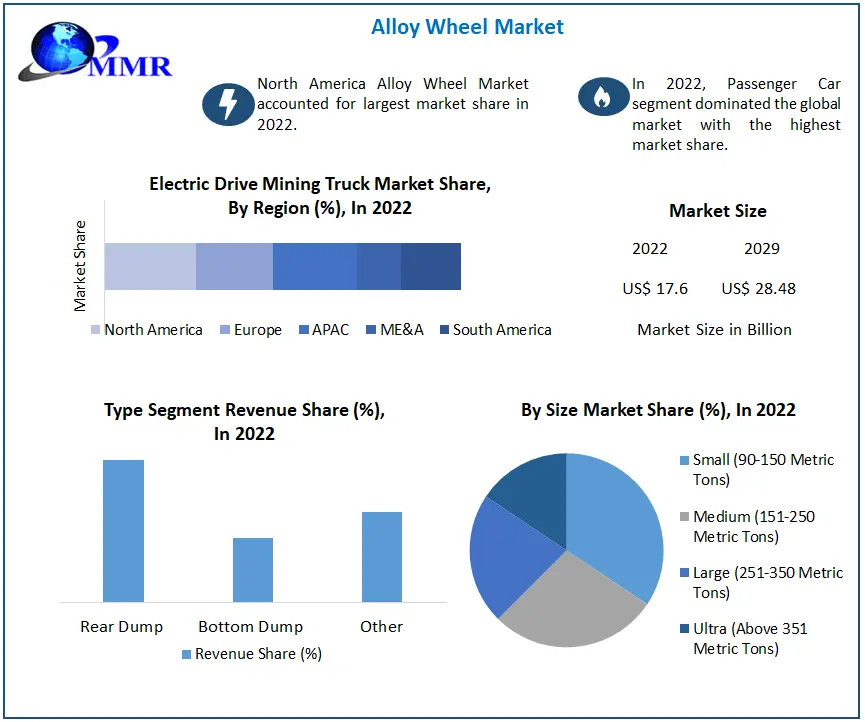
- Dominant Segment: Passenger vehicles represent the dominant application segment, supported by large-scale global vehicle production, consumer demand for enhanced aesthetics, and widespread OEM adoption of alloy wheel technologies.
- Fastest-Growing Segment: The electric vehicle-related opportunity is emerging as one of the most significant growth areas as manufacturers prioritize lightweight vehicle architectures and efficiency improvements.
- Aluminum alloy wheels continue to attract strong industry attention because they offer a balance between weight reduction, durability, performance, and manufacturing scalability.
- OEM demand remains a major revenue driver as automakers increasingly integrate alloy wheels into standard vehicle specifications across multiple product categories.
- The aftermarket segment continues to generate opportunities through customization, replacement demand, and performance-oriented upgrades.
Regional Growth Story
Asia-Pacific remains central to the future of the alloy wheel industry due to its concentration of automotive manufacturing activity, expanding vehicle production, and accelerating electrification initiatives.
China continues to influence global demand dynamics through its position as a leading EV manufacturing hub. As electric vehicle production expands, demand for lightweight automotive components is expected to remain strategically important.
India is emerging as a significant opportunity driven by rising vehicle ownership, premiumization trends, and growing interest in vehicle customization. Expanding automotive manufacturing investments further strengthen the region’s importance.
Japan and South Korea continue to play influential roles through advanced manufacturing capabilities, automotive engineering expertise, and innovation in lightweight vehicle technologies.
In North America, demand is increasingly linked to electric vehicle production, pickup truck modernization, premium vehicle sales, and aftermarket customization. Manufacturers are investing in efficiency-focused vehicle platforms that benefit from lightweight wheel solutions.
Germany remains a key European market because of its concentration of premium automotive brands, engineering leadership, and commitment to vehicle performance and efficiency standards.
Competitive Landscape
Competition is no longer defined solely by wheel manufacturing capacity. It is increasingly determined by technology capabilities, OEM relationships, material science expertise, and production efficiency.
Leading manufacturers are positioning themselves as engineering partners rather than component suppliers. This shift signals a broader evolution in supplier dynamics across the automotive sector.
OEMs are seeking suppliers capable of supporting vehicle lightweighting objectives, sustainability initiatives, and next-generation mobility programs. Wheel manufacturers that can deliver advanced materials, optimized designs, and scalable production capabilities gain stronger bargaining power and longer-term strategic relevance.
The market is also witnessing greater emphasis on manufacturing automation and process innovation. Companies investing in advanced production technologies can improve consistency, reduce waste, and strengthen margins.
For investors, the competitive landscape highlights a broader trend toward value-added automotive components. Suppliers that contribute directly to efficiency, performance, and vehicle differentiation are likely to occupy stronger positions within future mobility ecosystems.
Recent Developments
- Automotive OEMs continue integrating lightweight materials into vehicle platforms to support electrification and efficiency objectives.
- Growing EV production programs are increasing industry focus on weight optimization across vehicle systems.
- Alloy wheel manufacturers are expanding efforts around advanced materials and manufacturing technologies.
- Premium vehicle brands continue using wheel design and engineering as a differentiating factor in product positioning.
- The aftermarket segment remains active as consumers seek performance-oriented and aesthetic vehicle enhancements.
Strategic Implications
For OEMs, alloy wheels are becoming part of broader vehicle optimization strategies rather than standalone components. Lightweight designs support efficiency targets, improve driving dynamics, and contribute to brand differentiation.
For suppliers, the opportunity extends beyond manufacturing volume. Competitive advantage increasingly depends on engineering collaboration, material innovation, and manufacturing excellence.
For investors, the market highlights the growing importance of lightweight technologies within automotive value chains. Companies aligned with electrification trends and advanced vehicle architectures may benefit from long-term structural demand.
For fleet operators, lightweight components can contribute to operational efficiency, lower energy consumption, and improved lifecycle economics—particularly as commercial fleets pursue electrification strategies.
Future Outlook
The next competitive battleground in automotive manufacturing will not be defined solely by batteries, software, or autonomous systems. It will also be shaped by the industry’s ability to remove weight without sacrificing performance, safety, or design—making alloy wheel innovation a strategic differentiator between manufacturers that lead the electric mobility era and those that struggle to remain competitive.
Analyst Perspective
“The alloy wheel industry is increasingly aligned with the automotive sector’s transformation toward electrification, lightweight engineering, and advanced vehicle architectures. Companies that combine manufacturing excellence with material innovation and strong OEM partnerships will be best positioned to capture future opportunities.” — Dharati Raut, Analyst
About Maximize Market Research
Maximize Market Research Pvt. Ltd. (MMR) is a global market research and consulting company that provides reliable, data-focused, and practical business insights. The firm serves a wide range of industries, including healthcare, pharmaceuticals, technology, automotive, electronics, chemicals, personal care, and consumer goods. Through market forecasts, competitive analysis, strategic consulting, and industry impact assessments, MMR helps organizations understand changing market conditions, identify growth opportunities, and make informed business decisions for long-term success.
2nd Floor, Navale IT Park Phase 3
Pune Banglore Highway, Narhe
Pune, Maharashtra 411041, India
+91 9607365656
sales@maximizemarketresearch.com
