Key Highlights
- Luxury fashion continues to benefit from rising consumer spending on premium and exclusive products.
- Digital channels are transforming how luxury brands engage, sell, and retain customers.
- Sustainability is becoming a strategic priority across product development and sourcing.
- Younger affluent consumers are influencing product innovation and brand communication.
- Omnichannel retail strategies are strengthening customer experience and loyalty.
- Luxury accessories and premium apparel remain central revenue contributors.
- Emerging markets are creating new growth opportunities for global brands.
- Brand heritage and exclusivity remain key competitive differentiators.
Why This Matters Now
Luxury brands are facing a strategic crossroads. Growth is no longer guaranteed by heritage alone. Digital-native consumers, sustainability expectations, and shifting definitions of exclusivity are forcing even the most established fashion houses to rethink how they create value.
The market is entering a phase where customer experience matters as much as product craftsmanship. Companies that fail to adapt risk losing relevance among the next generation of luxury buyers while competitors build stronger digital and direct-to-consumer relationships.
Market Overview
The Luxury Fashion Market continues to evolve as affluent consumers seek products that combine status, quality, craftsmanship, and personal expression. What was once driven primarily by exclusivity is increasingly shaped by accessibility through digital channels and personalized brand engagement.
Luxury brands are investing across multiple touchpoints to strengthen customer relationships. Physical boutiques remain important, but digital commerce, social engagement, and experiential retail are becoming equally critical to long-term success.
The industry’s transformation extends beyond product sales. Luxury companies are building ecosystems that combine fashion, lifestyle, personalization, and premium experiences to increase customer lifetime value.
Key Trends Driving Growth
Digitalization has become one of the most powerful forces in luxury fashion. Consumers increasingly discover, evaluate, and purchase luxury products through online channels. This shift has encouraged brands to accelerate investments in e-commerce platforms, digital storytelling, and personalized customer engagement.
Sustainability is becoming a competitive requirement rather than a marketing initiative. Consumers are paying closer attention to sourcing practices, product durability, ethical manufacturing, and environmental impact. As a result, brands are integrating sustainability into product development and supply chain decisions.
Another significant trend is the rise of younger luxury consumers. Millennials and Generation Z are influencing purchasing patterns through social media engagement, digital-first shopping habits, and demand for authenticity. Luxury brands are responding by modernizing communications while preserving exclusivity.
Experiential retail is also gaining importance. Flagship stores are evolving into brand destinations that offer immersive experiences, private consultations, and personalized services. These investments strengthen emotional connections that online transactions alone cannot replicate.
Luxury accessories continue to play a critical role in customer acquisition. Entry-level luxury products allow brands to engage new consumers who may later expand into higher-value categories.
𝐃𝐨𝐰𝐧𝐥𝐨𝐚𝐝 𝐏𝐃𝐅 𝐁𝐫𝐨𝐜𝐡𝐮𝐫𝐞 @ https://www.maximizemarketresearch.com/request-sample/126250/
Segment Insights
- Dominant Segment: Luxury apparel remains a key contributor due to strong consumer demand for premium clothing, designer collections, and exclusive fashion offerings.
- Fastest-Growing Segment: Digital and online luxury retail channels are emerging as major growth drivers as consumers increasingly adopt premium e-commerce experiences.
- Product Categories:
- Apparel
- Footwear
- Accessories
- Jewelry
- Other luxury fashion products
- Distribution Channels:
- Offline Retail
- Online Retail
- Consumer Focus:
- High-net-worth individuals
- Affluent professionals
- Aspirational luxury consumers
The strategic lesson is clear. Product excellence remains essential, but the fastest value creation is occurring where luxury intersects with technology, personalization, and convenience.
Regional Growth Story
Europe continues to play a central role in the luxury fashion ecosystem due to its concentration of heritage brands, manufacturing expertise, and global fashion influence. The region remains a benchmark for craftsmanship and brand prestige.
North America benefits from strong consumer spending and advanced digital retail infrastructure. Luxury brands operating in the region are increasingly leveraging data analytics and omnichannel strategies to deepen customer engagement.
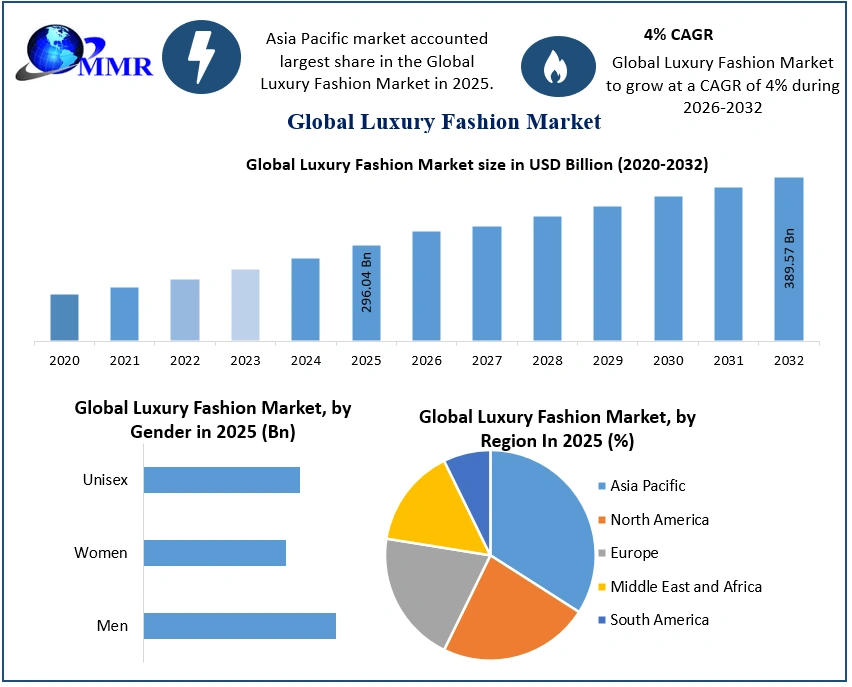
Asia-Pacific represents one of the most important opportunities for luxury fashion companies. Rising disposable incomes, expanding affluent populations, and increasing digital adoption are creating significant demand for premium products and luxury experiences.
Emerging economies are also attracting attention from luxury retailers seeking long-term expansion opportunities. These markets offer growing consumer bases and increasing appetite for internationally recognized luxury brands.
Competitive Landscape
Competition in luxury fashion is shifting from product-centric strategies to ecosystem competition. Brands are no longer competing solely on design and craftsmanship. They are competing on customer relationships, digital capabilities, sustainability credentials, and brand experiences.
Investments in e-commerce, personalization, and sustainability signal a broader industry transformation. Luxury companies are attempting to create deeper engagement across the entire customer journey rather than relying exclusively on seasonal collections.
For rivals, this raises the competitive threshold. Companies that delay digital transformation may struggle to maintain relevance among younger consumers. Those that successfully integrate technology without diluting exclusivity are likely to capture disproportionate market share over the next 12 to 24 months.
The competitive environment also suggests increased focus on partnerships, digital innovation, and direct-to-consumer initiatives. These moves indicate a future where customer ownership becomes one of the industry’s most valuable assets.
Recent Developments
- Increased investment in luxury e-commerce platforms.
- Expansion of omnichannel customer engagement strategies.
- Growing adoption of sustainable sourcing initiatives.
- Stronger focus on personalized shopping experiences.
- Enhanced use of digital marketing and social commerce.
- Continued innovation in premium retail environments.
Strategic Implications
Luxury fashion executives face a dual challenge. They must preserve exclusivity while expanding accessibility through digital channels. Achieving both objectives simultaneously will determine future market leadership.
Brands should prioritize customer intelligence, digital engagement, and sustainability integration. These capabilities are increasingly influencing purchasing decisions across both mature and emerging markets.
Companies that create seamless omnichannel experiences will be better positioned to strengthen loyalty and increase repeat purchases. The future of luxury is not simply about selling products; it is about creating enduring relationships.
Future Outlook
The Luxury Fashion Market is entering a period of structural transformation. Digital commerce, sustainability expectations, and experience-driven consumption are reshaping competitive dynamics across the industry.
The strongest brands will be those that combine heritage with innovation, exclusivity with accessibility, and craftsmanship with technology. Winners will redefine luxury for a new generation of consumers, while losers will remain attached to legacy models as customer expectations move beyond traditional prestige.
Analyst Perspective
“The luxury fashion industry is evolving beyond traditional definitions of exclusivity. Brands that successfully combine premium experiences, sustainability commitments, and digital innovation will be best positioned to capture future consumer demand and strengthen long-term competitive advantage.”
— Siddhi Dhole, Research Analyst
About Maximize Market Research
Maximize Market Research Pvt. Ltd. (MMR) is a global market research and consulting company that provides reliable, data-focused, and practical business insights. The firm serves a wide range of industries, including healthcare, pharmaceuticals, technology, automotive, electronics, chemicals, personal care, and consumer goods. Through market forecasts, competitive analysis, strategic consulting, and industry impact assessments, MMR helps organizations understand changing market conditions, identify growth opportunities, and make informed business decisions for long-term success.
2nd Floor, Navale IT Park Phase 3
Pune Banglore Highway, Narhe
Pune, Maharashtra 411041, India
+91 9607365656
sales@maximizemarketresearch.com
