Oral Treatments and Expanding Regulatory Approvals Reshape the Postpartum Depression Drug Landscape Through 2032
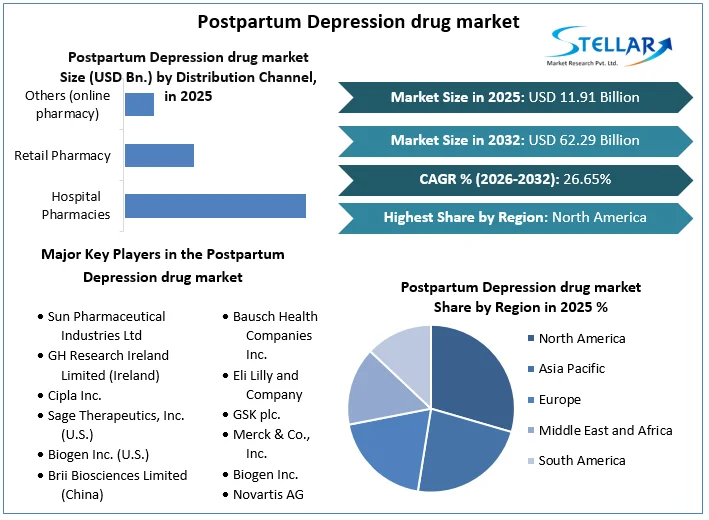
PUNE, India, June 22, 2026 – The Postpartum Depression Drug Market, according to a new study by Stellar Market Research, is entering a transformative phase driven by breakthrough neuroactive therapies, rising awareness of maternal mental health, and increasing government support for early diagnosis. The market was valued at USD 11.91 billion in 2025 and is projected to reach nearly USD 62.29 billion by 2032, expanding at a CAGR of 26.65% during 2026-2032.
Growing Shift Toward Rapid-Acting Therapies Creates New Opportunities
The treatment landscape for postpartum depression (PPD) is undergoing significant change as healthcare systems move beyond conventional antidepressants toward targeted neuroactive therapies. The commercialization of oral drugs and increased screening programs are improving access to treatment while reducing the burden associated with intravenous administration.
The emergence of short-course therapies and advances in neuroscience are creating opportunities for pharmaceutical manufacturers, investors, specialty pharmacies, and healthcare providers. Increasing focus on women’s mental health and broader reimbursement coverage are expected to stimulate long-term demand.
Download Free PDF Brochure: https://www.stellarmr.com/report/req_sample/postpartum-depression-drug-market/2462
Key Findings from the Report
The global Postpartum Depression Drug Market stood at USD 11.91 billion in 2025.
Market revenue is forecast to reach approximately USD 62.29 billion by 2032.
The market is expected to register a robust 26.65% CAGR during 2026-2032.
Brexanolone represented the dominant drug type segment in 2025.
Zuranolone is projected to record the fastest growth over the forecast period.
Medication-based treatment accounted for the largest share owing to growing diagnosis rates.
North America emerged as the leading regional market, while Asia-Pacific is expected to witness the strongest expansion.
Hospital pharmacies continue to represent a major distribution channel for specialized therapies.
Market Drivers and Restraints
Key Growth Drivers
Rising Awareness of Maternal Mental Health
Public health campaigns and increased physician screening are contributing to earlier diagnosis and higher treatment rates.
Advancements in Neuroactive Drug Development
Novel therapies targeting GABA receptor pathways are expanding treatment options and improving symptom relief timelines.
Expansion of Healthcare Infrastructure
Growing access to specialty mental health services and favorable reimbursement policies are increasing adoption rates.
Market Restraints
High Cost of Innovative Therapies
Premium pricing and reimbursement complexities continue to limit access in several developing economies.
Social Stigma and Underdiagnosis
Cultural barriers and lack of awareness still prevent many women from seeking treatment promptly.
Technology, Regulation, and Sustainability Trends
The market is increasingly influenced by precision neuroscience, digital health tools, telepsychiatry, and AI-assisted screening systems. Regulatory agencies are accelerating pathways for innovative maternal health treatments.
Growing emphasis on women’s healthcare equity and ESG initiatives is encouraging pharmaceutical companies to invest in broader accessibility programs. Digital monitoring technologies are also improving treatment adherence and patient outcomes.
Regional Insights
North America Leads Global Demand
North America dominated the market in 2025, supported by advanced healthcare infrastructure, higher awareness levels, and strong regulatory support. The United States remains the largest contributor owing to increasing prevalence of postpartum depression and growing adoption of innovative therapies.
Asia-Pacific Emerges as a High-Growth Region
Countries including China, India, Japan, and South Korea are witnessing rising investments in maternal healthcare. Increasing urbanization, improving healthcare access, and expanding mental health programs are expected to drive rapid growth throughout the forecast period.
Recent Industry Developments
Biogen (2025): Received European Commission approval for ZURZUVAE®, becoming the first approved oral treatment for postpartum depression in Europe and expanding access across the region.
Sage Therapeutics and Biogen (2025): Reported a 68% quarterly increase in ZURZUVAE collaboration revenue, reflecting accelerating commercial adoption. More than 13,500 prescriptions had been shipped since launch.
Supernus Pharmaceuticals (2025): Announced acquisition of Sage Therapeutics in a deal valued at up to USD 795 million, strengthening its position in the depression therapeutics segment.
Lipocine (2025): Advanced Phase III trials of LPCN 1154, with topline data expected in 2026, supporting development of additional oral treatment alternatives.
Biogen and Sage Therapeutics (2025): Expanded commercialization initiatives, including sales force investments and disease awareness programs aimed at increasing diagnosis rates and patient access.
Competitive Landscape
The competitive environment is characterized by product innovation, regulatory approvals, strategic partnerships, and investments in specialty care infrastructure.
Leading participants include:
Sun Pharmaceutical Industries Ltd.
GH Research Ireland Limited
Cipla Inc.
Sage Therapeutics, Inc.
Biogen Inc.
Brii Biosciences Limited
Pfizer Inc.
Companies are focusing on expanding therapeutic portfolios, improving patient access programs, and strengthening distribution networks to capture emerging opportunities.
Download Free PDF Brochure: https://www.stellarmr.com/report/req_sample/postpartum-depression-drug-market/2462
Analyst Commentary
“The postpartum depression therapeutics space is evolving from conventional antidepressant approaches toward rapid-acting neuroactive therapies. Regulatory approvals, expanding reimbursement coverage, and increasing emphasis on maternal mental health are creating a favorable environment for sustained market growth through 2032,” said a Senior Research Analyst at Stellar Market Research.
Future Outlook
Demand for postpartum depression treatments is expected to accelerate over the next decade as healthcare systems prioritize women’s mental health. Continued investment in neuroscience research, increasing regulatory support, broader insurance coverage, and digital healthcare integration are expected to intensify competition and create new revenue streams.
Asia-Pacific and emerging economies are likely to become key growth engines, while next-generation oral therapies and personalized treatment approaches will reshape competitive dynamics.
About Stellar Market Research
Stellar Market Research is a global market research and business consulting company delivering strategic intelligence across healthcare, chemicals, manufacturing, automotive, technology, consumer goods, and energy sectors. The company provides comprehensive industry analysis, competitive benchmarking, market forecasting, and customized consulting solutions to support business decision-making. With a strong focus on data-driven insights and emerging industry trends, Stellar Market Research helps organizations identify growth opportunities, optimize investments, and strengthen market positioning. Its reports combine quantitative analysis with expert perspectives, enabling clients worldwide to make informed strategic decisions in rapidly evolving business environments.
Media Contact
Stellar Market Research
Website: http://stellarmr.com/
Email: sales@stellarmr.com
