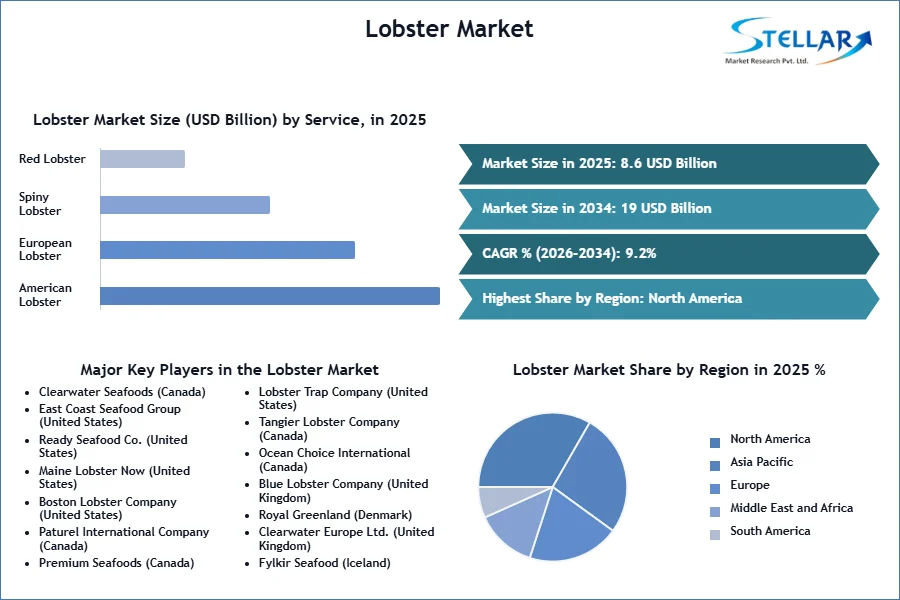
PUNE, June 22, 2026 – The Lobster Market is undergoing a significant transformation as sustainability initiatives, premium seafood demand, and evolving global trade dynamics create new growth opportunities across the value chain, according to the latest analysis by Stellar Market Research. The report highlights that growing consumer preference for high-quality seafood products, coupled with investments in responsible harvesting and advanced cold-chain logistics, is positioning the lobster industry for sustained expansion during the forecast period.
Market Opportunity Overview
The lobster industry is increasingly benefiting from the premiumization of seafood consumption worldwide. Once considered a niche luxury product, lobster has become a strategic offering for restaurants, hospitality operators, seafood retailers, and premium food distributors seeking to capitalize on rising consumer spending and experiential dining trends.
At the same time, sustainability has become a defining market driver. Fisheries, exporters, and distributors are investing in traceability systems, sustainable harvesting practices, and certifications to meet growing consumer and regulatory expectations. The expansion of e-commerce seafood platforms and temperature-controlled logistics networks is further improving product accessibility across international markets.
As global consumers seek high-protein, nutrient-rich seafood options and premium culinary experiences, the lobster industry is transitioning into a more resilient, technology-enabled, and sustainability-focused marketplace.
Download Free PDF Brochure: https://www.stellarmr.com/report/req_sample/lobster-market/2814
Key Findings from the Report
The Lobster Market is projected to record steady growth throughout the forecast period from 2025 to 2032.
American Lobster remains the dominant product segment due to established harvesting operations and strong export demand.
Processed and Value-Added Lobster Products represent the fastest-growing segment as convenience and foodservice demand increase.
The Foodservice Sector continues to account for the largest share of global lobster consumption.
North America remains the leading regional market due to extensive lobster fisheries and export infrastructure.
Asia-Pacific is emerging as the fastest-growing region, supported by rising disposable incomes and premium seafood consumption.
Sustainability certifications and traceability initiatives are increasingly influencing procurement decisions among retailers and hospitality operators.
Market Drivers and Restraints
Key Drivers
Rising Demand for Premium Seafood
Growing disposable incomes and consumer willingness to spend on premium dining experiences continue to support lobster consumption across developed and emerging markets.
Expansion of International Seafood Trade
Improved cold-chain infrastructure and global distribution networks are enabling producers to access new export markets while maintaining product quality.
Sustainability and Traceability Initiatives
Consumers and regulators increasingly favor responsibly sourced seafood, encouraging investments in sustainable fishing practices and certification programs.
Key Restraints
Seasonal Supply Variability
Lobster harvesting is influenced by environmental conditions, regulatory quotas, and seasonal fishing restrictions, which can impact supply consistency.
Price Volatility
Fluctuations in catch volumes, transportation costs, labor expenses, and export demand may create pricing challenges across the value chain.
Technology, Regulation, and Sustainability Trends
Technology is becoming a critical differentiator in the lobster industry. Advanced cold-chain monitoring systems, IoT-enabled tracking technologies, and digital traceability platforms are improving supply-chain visibility and product integrity.
Regulatory agencies continue to strengthen oversight of fisheries management, sustainability standards, and seafood traceability requirements. Compliance with sustainability certifications is increasingly becoming a prerequisite for participation in premium retail and foodservice channels.
Environmental stewardship remains central to industry growth. Fisheries are adopting responsible harvesting methods, conservation measures, and ecosystem management practices to ensure long-term resource availability. These initiatives align with growing ESG expectations from investors, retailers, and consumers.
Download Free PDF Brochure: https://www.stellarmr.com/report/req_sample/lobster-market/2814
Regional Insights
North America Leads Global Production and Exports
North America remains the largest lobster-producing and exporting region globally. The United States and Canada continue to dominate supply due to established fisheries, advanced processing facilities, and strong international trade relationships.
Growing investments in sustainable fisheries management and export infrastructure are helping maintain the region’s competitive advantage.
Asia-Pacific Emerges as a Key Growth Market
Asia-Pacific is expected to experience the fastest growth during the forecast period. China, Japan, South Korea, Singapore, and India are witnessing rising demand for premium seafood products as disposable incomes increase and dining cultures evolve.
Expanding hospitality sectors and growing seafood imports are creating significant opportunities for international suppliers.
Europe Maintains Strong Premium Seafood Demand
European countries such as France, Spain, Italy, and the United Kingdom continue to represent important consumption markets. Demand is supported by established seafood traditions, tourism activity, and premium restaurant segments.
Recent Industry Developments
Clearwater Seafoods (2025): Expanded sustainability-focused seafood sourcing initiatives and strengthened premium seafood distribution channels across North America and Asia.
High Liner Foods (2025): Enhanced value-added seafood offerings and invested in supply-chain optimization to improve product availability in key retail markets.
Thai Union Group (2025): Advanced digital traceability programs across seafood operations, supporting transparency and sustainability objectives.
Bumble Bee Seafoods (2024): Expanded responsible sourcing partnerships aimed at improving seafood traceability and strengthening consumer trust.
Government of Canada (2024): Continued investments in sustainable fisheries management and marine resource conservation programs to support long-term industry competitiveness.
Competitive Landscape
The Lobster Market features a mix of seafood harvesting companies, processors, exporters, distributors, and foodservice suppliers. Major participants include Clearwater Seafoods, High Liner Foods, Thai Union Group, Bumble Bee Seafoods, East Coast Seafood Group, Atlantic Capes Fisheries, Tangier Lobster Company, and other regional seafood specialists.
Leading companies are focusing on sustainability certifications, international market expansion, value-added product development, cold-chain investments, and digital traceability solutions. Strategic partnerships with retailers, hospitality operators, and seafood distributors remain key competitive priorities.
Analyst Commentary
“The lobster industry is evolving beyond traditional seafood harvesting toward a more integrated ecosystem centered on sustainability, traceability, and premium consumer experiences. Companies that invest in responsible sourcing, advanced logistics, and value-added offerings will be best positioned to capture future growth opportunities,” said a Senior Research Analyst at Stellar Market Research.
Future Outlook
The Lobster Market is expected to benefit from continued growth in premium seafood consumption, expanding international trade, and increasing emphasis on sustainable sourcing through 2032. Technological innovations in cold-chain management, traceability systems, and seafood logistics will further enhance supply-chain efficiency and market accessibility.
Asia-Pacific is likely to remain the most attractive growth region, while North America continues to lead global production and exports. Sustainability considerations will increasingly influence purchasing decisions, regulatory frameworks, and investment strategies across the industry.
As consumer demand for premium, responsibly sourced seafood continues to rise, the lobster industry is expected to experience sustained investment and innovation throughout the forecast period.
About Stellar Market Research
Stellar Market Research is a global market research and business consulting firm providing market intelligence, competitive analysis, growth forecasting, and strategic advisory services across multiple industries. Through comprehensive primary and secondary research methodologies, the company delivers actionable insights that help organizations identify opportunities, assess market dynamics, evaluate competitive positioning, and support informed business decisions. Serving corporations, investors, government agencies, and industry stakeholders worldwide, Stellar Market Research provides reliable data-driven intelligence designed to support sustainable growth and long-term success in rapidly evolving global markets.
Media Contact
Stellar Market Research
Website: http://stellarmr.com/
Email: sales@stellarmr.com
