Hybrid Work and Experience-Led Tourism Reshape Corporate Travel Through 2032
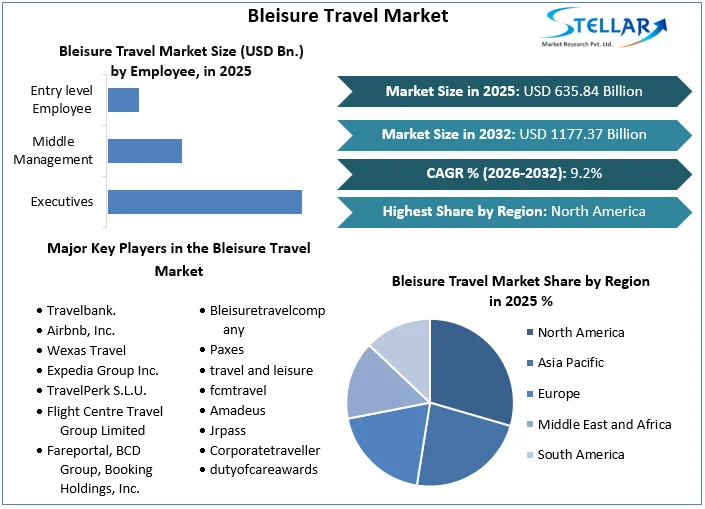
PUNE, India, June 22, 2026 – The Bleisure Travel Market, according to a new study by Stellar Market Research, is entering a new growth phase as hybrid work models, employee wellness priorities, and experience-driven travel preferences continue to blur the lines between business and leisure. The market was valued at USD 635.84 billion in 2025 and is projected to reach nearly USD 1,177.37 billion by 2032, expanding at a CAGR of 9.2% during 2026-2032.
A Structural Shift Is Redefining Corporate Travel
Business travel is no longer limited to meetings and conferences. Professionals are increasingly extending work trips to incorporate leisure experiences, wellness activities, and cultural exploration. The emergence of flexible work arrangements and remote collaboration tools has transformed travel behavior, creating a new class of travelers seeking longer stays and personalized experiences.
Hotels, airlines, travel platforms, and destination management companies are responding by redesigning offerings around work-friendly accommodations, extended-stay packages, and digital services. The shift is also creating opportunities for tourism economies and hospitality providers targeting premium and experience-oriented travelers.
Download Free PDF Brochure: https://www.stellarmr.com/report/req_sample/Bleisure-Travel-Market/1733
Key Findings from the Report
The global Bleisure Travel Market was valued at USD 635.84 billion in 2025.
Market revenue is expected to approach USD 1,177.37 billion by 2032, registering a CAGR of 9.2%.
2025 serves as the base year, while the forecast period extends from 2026 to 2032.
By age group, Millennials accounted for nearly 43% of market share in 2025, making them the dominant segment.
Younger travelers are expected to remain the fastest-growing consumer group owing to digital lifestyles and preference for experiential travel.
North America remains the leading regional market, supported by widespread hybrid work adoption and mature tourism infrastructure.
Asia-Pacific is emerging as a high-growth region driven by rising corporate mobility and expanding middle-class spending.
Market Drivers and Restraints
Key Drivers
Growing Preference for Work-Life Balance
Organizations are increasingly prioritizing employee well-being. Professionals are extending work trips to reduce burnout and enhance productivity. According to industry surveys, leisure-oriented business travelers report higher life satisfaction compared with traditional business travelers.
Expansion of Hybrid and Remote Work Models
Flexible work arrangements are enabling employees to combine work and leisure without affecting productivity. Rising digital connectivity has further accelerated the trend.
Experience-Based Tourism Demand
Travelers increasingly value local culture, wellness experiences, and immersive activities, creating strong demand for customized bleisure packages.
Major Restraints
Restrictive Corporate Travel Policies
Many companies still lack formal guidelines for leisure extensions, creating uncertainty regarding expenses and approvals.
Rising Travel Costs and Economic Uncertainty
Inflationary pressures and fluctuating airfares may affect discretionary spending and limit trip extensions.
Technology, Regulation, and Sustainability Trends
Artificial intelligence-powered travel planning, mobile itinerary management, digital concierge services, and contactless check-ins are improving traveler experiences.
Travel providers are increasingly integrating sustainability initiatives, carbon-offset programs, and eco-friendly accommodation options to meet ESG expectations.
Governments across several countries are supporting digital nomad visas and tourism promotion policies, indirectly strengthening the bleisure ecosystem.
The convergence of hospitality and coworking infrastructure is also becoming a major trend as hotels create spaces optimized for both productivity and leisure.
Regional Insights
North America Leads Global Demand
North America remains the dominant market due to flexible work practices, strong airline connectivity, and a mature hospitality ecosystem. The United States continues to account for a significant share of business-related tourism.
Asia-Pacific Emerges as a High-Growth Hub
Countries such as India, China, Singapore, and Japan are witnessing increased demand owing to expanding business travel, digital infrastructure development, and rising disposable income.
Europe Benefits from Cross-Border Mobility
European countries are capitalizing on strong tourism infrastructure and shorter travel distances that facilitate combining professional engagements with leisure activities.
Recent Industry Developments
Hilton and WeWork Ecosystem Expansion (2025): Hybrid hotel-coworking properties expanded across North America and Europe, improving occupancy and revenue metrics.
Hyatt and IWG Collaboration (2025): Development of workstay-focused properties and access to more than 3,500 coworking locations globally strengthened extended-stay offerings.
Hospitality Sector Investments (2025): Hotels introduced long-stay room formats and apartment-style accommodations to address rising demand for blended travel.
Growth in Family-Oriented Workcations (2025): Hospitality providers launched wellness and family-focused packages targeting shared travel experiences.
Expansion of Short-Term Rental Demand (2025-2026): Remote and hybrid work trends continued to support longer-duration stays and increased demand for alternative accommodation formats.
Competitive Landscape
The market remains highly competitive, with companies emphasizing digital transformation, partnerships, premium experiences, and personalized services.
Leading participants include:
- Travelbank.
- Airbnb, Inc.
- Wexas Travel
- Expedia Group Inc.
- TravelPerk S.L.U.
- Flight Centre Travel Group Limited
- Fareportal, BCD Group, Booking Holdings, Inc.
- Cvent Inc.
- Bleisuretravelcompany
- Paxes
Companies are investing in AI-driven booking technologies, extended-stay products, loyalty ecosystems, and strategic collaborations to enhance customer engagement and profitability.
Download Free PDF Brochure: https://www.stellarmr.com/report/req_sample/Bleisure-Travel-Market/1733
Analyst Commentary
“Bleisure travel is evolving from a niche preference into a strategic pillar of the hospitality and corporate mobility ecosystem. Organizations are increasingly recognizing that employee well-being, flexibility, and experiential travel can contribute to productivity and talent retention. This transformation is expected to reshape tourism infrastructure and business travel models throughout the forecast period,” said a Senior Research Analyst at Stellar Market Research.
Future Outlook
Through 2032, demand for bleisure travel is expected to be driven by hybrid work adoption, digital travel platforms, wellness tourism, and premium hospitality experiences. Investments in AI, sustainability initiatives, and work-friendly accommodations are likely to intensify competition.
As younger professionals become the dominant workforce demographic, destinations and service providers capable of delivering seamless business and leisure experiences are expected to gain a significant competitive advantage.
About Stellar Market Research
Stellar Market Research is a global market research and business consulting company providing strategic intelligence across numerous industries. The company delivers comprehensive market assessments, competitive benchmarking, trend analysis, and forecasting solutions to support informed decision-making. Through a combination of primary research, industry expertise, and data analytics, Stellar Market Research helps organizations identify growth opportunities, evaluate risks, and formulate effective business strategies. Its research serves manufacturers, investors, policymakers, and corporate executives seeking actionable insights into rapidly evolving markets worldwide.
Media Contact
Stellar Market Research
Website: http://stellarmr.com/
Email: sales@stellarmr.com
