Market Overview
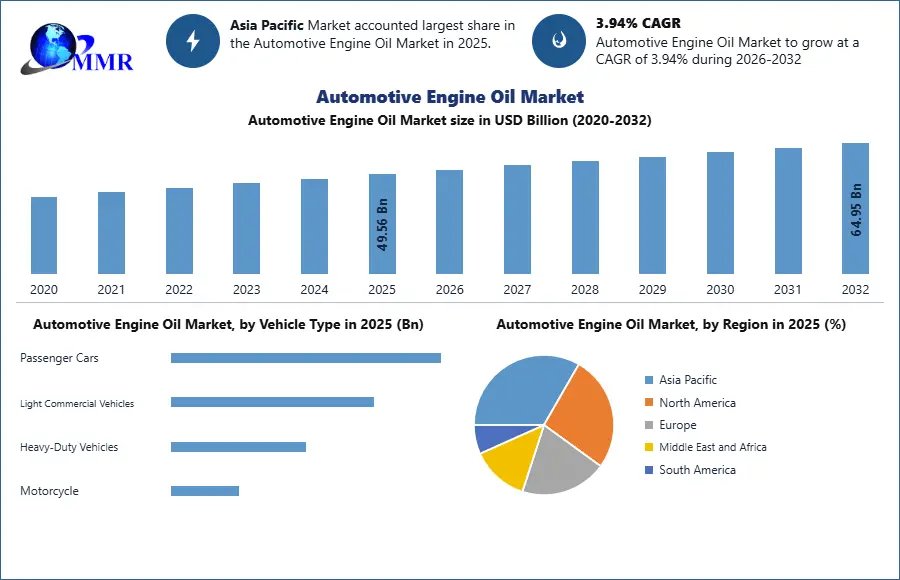
The Global Automotive Engine Oil Market occupies a foundational position within the transportation ecosystem. Engine oils perform critical functions including lubrication, cooling, cleaning, corrosion protection, and wear reduction.
As automotive technologies evolve, lubricant requirements are becoming increasingly complex. Modern engines operate under higher pressures, tighter tolerances, and stricter efficiency requirements than previous generations. These conditions demand advanced formulations capable of supporting both performance and regulatory compliance.
The market’s strategic significance extends beyond vehicle maintenance. Engine oils influence fuel economy, emissions performance, engine durability, and overall operating costs. For fleet operators, lubricant selection directly impacts profitability through maintenance efficiency and asset utilization.
Although electrification is gradually changing long-term market dynamics, internal combustion engines remain deeply embedded across passenger transportation, freight logistics, construction equipment, and emerging mobility markets.
Key Trends Driving Growth
The most important trend shaping the market is the evolution of engine technology. Automakers continue introducing smaller, more efficient engines that operate under demanding conditions. These powertrains require lubricants capable of maintaining performance while supporting fuel economy objectives.
Stricter emissions regulations are creating additional demand for advanced formulations. Regulatory agencies worldwide are encouraging technologies that reduce environmental impact and improve efficiency. Lubricant manufacturers are responding with products designed to minimize friction, reduce emissions, and enhance engine protection.
Synthetic engine oils continue gaining momentum. Their ability to deliver superior thermal stability, extended service intervals, and improved engine protection makes them increasingly attractive for both consumers and commercial operators.
Fleet electrification is creating an interesting market transition. While battery electric vehicles reduce traditional engine oil demand, commercial fleets continue relying heavily on internal combustion technologies. This creates ongoing opportunities for lubricant suppliers serving transportation, logistics, and industrial sectors.
Digitalization is also influencing the industry. Connected vehicles and predictive maintenance technologies allow operators to monitor lubricant performance more effectively, optimizing maintenance schedules and reducing downtime.
Another significant trend is the growing focus on lifecycle economics. Vehicle owners increasingly evaluate products based on total operating costs rather than upfront pricing. High-performance lubricants that extend engine life and reduce maintenance requirements align closely with this shift.
Request a Free Sample Copy or View Report Summary
Segment Insights
- Dominant Segment: Passenger vehicle engine oils continue to represent the largest segment due to the extensive global passenger vehicle fleet and ongoing maintenance requirements.
- Fastest-Growing Segment: Synthetic engine oils are emerging as the fastest-growing segment due to increasing adoption of advanced engine technologies and demand for superior performance characteristics.
- Commercial vehicle applications remain a major contributor as logistics activity and freight transportation continue expanding globally.
- Premium lubricant formulations are benefiting from OEM recommendations and evolving vehicle performance requirements.
- Aftermarket demand continues to generate significant opportunities as vehicle populations age and maintenance requirements increase.
Regional Growth Story
Asia-Pacific remains a critical region for the Automotive Engine Oil Market due to its large vehicle population, expanding automotive manufacturing sector, and growing transportation demand.
China continues influencing global market dynamics through vehicle production, mobility expansion, and ongoing automotive industry development. While EV adoption is accelerating, the country’s large installed base of conventional vehicles continues supporting lubricant demand.
India represents another important growth market. Rising vehicle ownership, expanding transportation infrastructure, and increasing commercial vehicle activity are creating sustained demand for automotive lubricants.
Japan and South Korea remain influential due to advanced automotive technologies and strong manufacturing ecosystems. Their emphasis on engine efficiency and performance continues shaping lubricant innovation globally.
Europe’s market is increasingly influenced by emissions regulations and sustainability objectives. Germany remains particularly significant due to its automotive engineering leadership and premium vehicle manufacturing capabilities.
North America continues generating substantial demand through large vehicle fleets, extensive freight transportation activity, and a mature aftermarket ecosystem.
Across regions, the pace of electrification varies, but the need for advanced lubrication solutions remains significant.
Competitive Landscape
Competition in the Automotive Engine Oil Market is increasingly driven by technology, brand credibility, and OEM relationships.
Leading manufacturers are investing heavily in advanced formulations designed to improve fuel efficiency, support emissions compliance, and extend engine life. Innovation has become a primary differentiator as conventional performance metrics become increasingly standardized.
OEM partnerships remain strategically important. Lubricant suppliers that secure approvals and recommendations from vehicle manufacturers strengthen both market credibility and aftermarket influence.
The competitive landscape is also being shaped by changing mobility trends. As electrification expands, companies are diversifying product portfolios to include thermal management fluids, EV-specific lubricants, and next-generation mobility solutions.
For suppliers, the challenge is balancing current demand from conventional vehicles with future opportunities linked to electrified transportation ecosystems.
Market leadership increasingly depends on technological adaptability rather than legacy scale alone.
Recent Developments
- Lubricant manufacturers continue expanding synthetic and premium engine oil portfolios.
- OEMs are specifying increasingly advanced lubricant requirements for modern engines.
- Emissions regulations are encouraging development of fuel-efficient lubrication technologies.
- Fleet operators are adopting predictive maintenance approaches to optimize lubricant usage.
- Industry participants are investing in next-generation fluid technologies aligned with vehicle electrification trends.
Strategic Implications
The Automotive Engine Oil Market demonstrates how traditional automotive sectors can remain strategically relevant during periods of technological disruption.
While EV adoption will influence long-term demand patterns, the existing global vehicle fleet ensures continued importance for engine oil manufacturers. Success increasingly depends on innovation, premiumization, and alignment with evolving vehicle technologies.
For OEMs, lubricant partnerships contribute to performance optimization and customer satisfaction. For fleet operators, lubricant selection remains a key operational decision affecting maintenance costs and asset reliability.
Investors should recognize that the market’s future value creation will likely emerge from advanced formulations, specialty products, and emerging mobility fluid solutions rather than conventional volume growth alone.
Future Outlook
The future of the Automotive Engine Oil Market will be shaped by two parallel realities: the gradual expansion of electric mobility and the continued global reliance on internal combustion engines. Advanced lubricants will play a critical role in helping conventional vehicles achieve higher efficiency, lower emissions, and longer operational life.
At the same time, lubricant manufacturers will increasingly expand into specialized fluid technologies supporting hybrid and electrified vehicle platforms. The industry’s next competitive chapter will revolve around adaptability, technical innovation, and alignment with changing mobility ecosystems.
The future leaders will be companies that simultaneously optimize lubrication solutions for today’s global vehicle fleet while building the fluid technologies required for tomorrow’s electrified transportation systems, while laggards will remain tied to conventional product strategies in a mobility landscape defined by efficiency, sustainability, and technological convergence.
Analyst Perspective
“The Automotive Engine Oil Market is entering a period where innovation matters more than volume alone. As vehicle technologies evolve and mobility ecosystems diversify, lubricant manufacturers that align with both conventional and emerging powertrain requirements will be best positioned for long-term success.” — Tejaswini Kakade, Analyst
About Maximize Market Research
Maximize Market Research Pvt. Ltd. (MMR) is a global market research and consulting company that provides reliable, data-focused, and practical business insights. The firm serves a wide range of industries, including healthcare, pharmaceuticals, technology, automotive, electronics, chemicals, personal care, and consumer goods. Through market forecasts, competitive analysis, strategic consulting, and industry impact assessments, MMR helps organizations understand changing market conditions, identify growth opportunities, and make informed business decisions for long-term success.
2nd Floor, Navale IT Park Phase 3
Pune Banglore Highway, Narhe
Pune, Maharashtra 411041, India
+91 9607365656
sales@maximizemarketresearch.com
