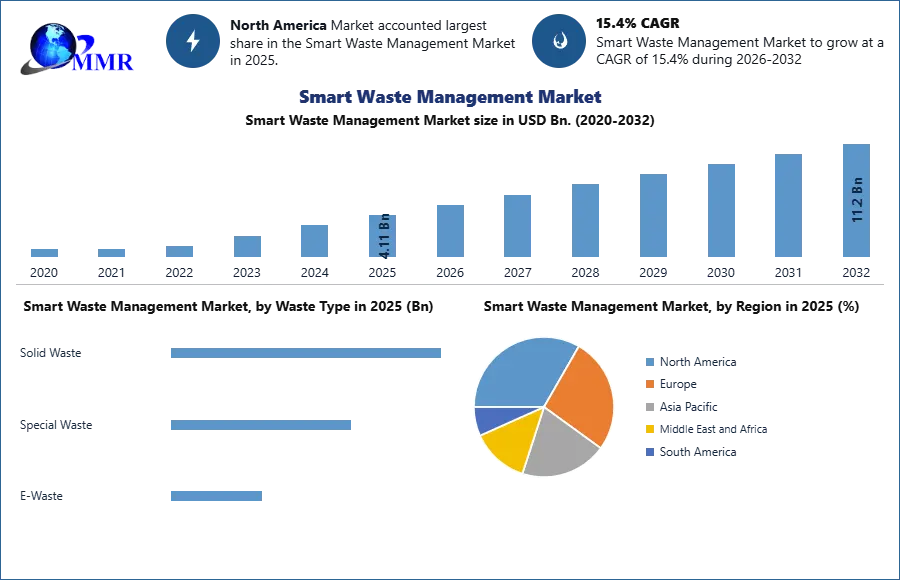
Market Overview
The Smart Waste Management Market sits at the intersection of digital infrastructure, transportation modernization, and urban sustainability. Municipal governments and private operators are increasingly adopting intelligent systems that use sensors, analytics platforms, and connected transportation assets to improve collection performance and resource allocation.
Traditional waste collection models relied on fixed routes and scheduled pickups regardless of actual waste levels. Smart waste management changes that equation. Sensor-enabled containers and real-time monitoring systems allow operators to collect waste based on demand, reducing unnecessary vehicle movements and improving fleet efficiency.
The business implications extend far beyond sanitation services. Every reduction in collection mileage lowers fuel consumption, vehicle wear, maintenance costs, and emissions. As cities face growing sustainability pressures, smart waste management is emerging as an important component of transportation decarbonization strategies.
Key Trends Driving Growth
The strongest market driver is the global expansion of smart city programs. Municipalities are increasingly investing in connected infrastructure capable of generating operational intelligence across transportation, utilities, and public services.
IoT adoption is accelerating throughout the waste management value chain. Sensors embedded in waste containers provide real-time information on fill levels, enabling operators to make dynamic collection decisions. This shift replaces reactive operations with predictive management.
Fleet optimization technologies are becoming central to market development. Advanced routing software helps collection vehicles travel fewer miles while servicing more locations. The result is lower fuel consumption, reduced congestion, and improved asset productivity.
Transportation digitization is also changing procurement priorities. Municipal agencies are increasingly evaluating technology ecosystems rather than standalone equipment purchases. Software platforms, telematics solutions, and analytics capabilities are becoming as important as physical collection assets.
Environmental regulations continue to influence investment decisions. Cities are under increasing pressure to reduce emissions while maintaining service quality. Smart waste systems support both objectives by improving route efficiency and reducing unnecessary transportation activity.
Data analytics is emerging as another competitive differentiator. Operators can use historical collection patterns, predictive forecasting, and operational dashboards to improve decision-making. The ability to transform operational data into actionable insights is becoming a source of long-term value creation.
Request a Free Sample Copy or View Report Summary
Segment Insights
- Dominant Segment: Smart Collection Solutions – Collection-focused technologies represent the largest area of deployment because collection operations account for a significant share of waste management costs. Improving transportation efficiency delivers immediate financial benefits.
- Fastest-Growing Segment: IoT-Enabled Monitoring Systems – Sensor deployment is accelerating as municipalities seek real-time visibility into waste generation patterns and collection requirements.
- Technology Leadership Segment: Integrated software and analytics platforms are becoming increasingly important as operators seek end-to-end operational visibility.
- Transportation Impact Segment: Route optimization and fleet management solutions continue gaining adoption due to their direct impact on operating costs and emissions reduction.
Regional Growth Story
North America remains an important market for smart waste management adoption due to established municipal infrastructure and increasing investment in digital transformation initiatives. Cities across the region are deploying intelligent transportation technologies to improve public service efficiency.
Europe continues to benefit from strong sustainability objectives and environmental regulations. Waste management modernization aligns closely with broader carbon reduction targets and urban mobility strategies.
Asia-Pacific represents a major growth opportunity as rapid urbanization increases pressure on municipal infrastructure. Expanding smart city initiatives across developing and developed economies are creating demand for connected waste management solutions capable of supporting large-scale urban populations.
Emerging markets are increasingly viewing smart waste management as part of broader transportation modernization efforts. The convergence of urban growth, digital infrastructure investment, and sustainability goals is creating favorable conditions for long-term market expansion.
Competitive Landscape
Competition is increasingly centered on data ownership, platform integration, and operational intelligence.
Technology providers are moving beyond hardware deployment toward comprehensive ecosystem strategies. Success depends on combining sensors, software platforms, analytics capabilities, and fleet management solutions into integrated offerings.
The market is also experiencing convergence between transportation technology suppliers and municipal infrastructure providers. Companies capable of connecting waste collection assets with broader smart city platforms gain a strategic advantage because cities increasingly prefer interoperable digital ecosystems.
Software capabilities are becoming a major source of competitive differentiation. Route optimization algorithms, predictive analytics engines, and real-time fleet monitoring platforms create recurring value beyond initial hardware installations.
The competitive landscape signals a broader shift occurring across municipal transportation markets. Data-driven operational models are replacing labor-intensive service frameworks, creating opportunities for technology companies that can demonstrate measurable efficiency gains.
Recent Developments
- Increasing deployment of IoT-enabled waste monitoring systems across urban environments.
- Growing adoption of route optimization software to improve collection fleet productivity.
- Expansion of smart city initiatives supporting intelligent waste management infrastructure.
- Rising integration of analytics platforms with municipal transportation operations.
- Increased focus on sustainability-driven waste collection strategies and emissions reduction initiatives.
Strategic Implications
For fleet operators, the opportunity lies in converting operational data into measurable efficiency improvements. Route optimization, predictive maintenance, and real-time monitoring can significantly improve vehicle utilization.
For technology providers, long-term value increasingly depends on software capabilities rather than hardware sales alone. Municipal customers are seeking integrated platforms capable of supporting multiple operational objectives.
For investors, the market represents exposure to several high-growth themes simultaneously, including digital infrastructure, transportation technology, sustainability, and smart city development.
For transportation planners, smart waste management offers a practical pathway toward reducing congestion and emissions without requiring major infrastructure expansion. Improving operational efficiency often delivers faster results than building new transportation capacity.
Future Outlook
The next phase of market evolution will be defined by deeper integration between connected waste systems, intelligent transportation networks, and broader smart city ecosystems. Data analytics, IoT connectivity, automation, and real-time fleet intelligence will increasingly determine operational performance and municipal procurement decisions.
The future winners will be organizations that transform waste collection into a predictive, connected mobility service, while laggards remain trapped in fixed-route operating models designed for a pre-digital urban economy.
Analyst Perspective
“Smart waste management is evolving into a strategic infrastructure category where digital intelligence, connected transportation assets, and sustainability objectives converge. Organizations that successfully combine operational data, fleet optimization, and smart city integration will capture the greatest long-term value.” — Tejaswini Kakade
About Maximize Market Research
Maximize Market Research Pvt. Ltd. (MMR) is a global market research and consulting company that provides reliable, data-focused, and practical business insights. The firm serves a wide range of industries, including healthcare, pharmaceuticals, technology, automotive, electronics, chemicals, personal care, and consumer goods. Through market forecasts, competitive analysis, strategic consulting, and industry impact assessments, MMR helps organizations understand changing market conditions, identify growth opportunities, and make informed business decisions for long-term success.
2nd Floor, Navale IT Park Phase 3
Pune Banglore Highway, Narhe
Pune, Maharashtra 411041, India
+91 9607365656
sales@maximizemarketresearch.com
