Key Highlights
- Bone morphogenetic proteins are becoming increasingly important in regenerative medicine and advanced orthopedic treatment strategies.
- Growing demand for spinal fusion procedures and bone reconstruction surgeries is supporting market expansion.
- Biotechnology innovation is improving the effectiveness of biologics-based bone healing solutions.
- Healthcare providers are increasingly adopting alternatives to traditional bone graft procedures.
- Tissue engineering and regenerative medicine research continue creating new commercial opportunities.
Why This Matters Now
Healthcare systems worldwide are confronting rising demand for orthopedic interventions driven by aging populations, trauma cases, degenerative disorders, and increasing surgical volumes.
Traditional approaches to bone repair often involve lengthy recovery periods and complex procedures. Bone morphogenetic proteins are helping shift treatment strategies toward biologically driven regeneration. The result is a growing market where biotechnology and orthopedic surgery increasingly intersect.
For healthcare providers, medical device companies, biotechnology innovators, and investors, BMP technologies represent a strategic opportunity to improve patient outcomes while addressing significant unmet clinical needs.
Market Overview
The Bone Morphogenetic Protein Market sits at the center of one of healthcare’s most important transitions: the move from mechanical repair toward biological regeneration.
Bone morphogenetic proteins are naturally occurring growth factors that stimulate bone formation and tissue healing. Their ability to enhance regeneration has made them increasingly valuable in orthopedic surgery, spinal fusion, trauma treatment, and reconstructive procedures.
What changed is the growing acceptance of biologics within mainstream clinical practice. Healthcare providers increasingly seek solutions that promote natural healing mechanisms rather than relying exclusively on structural interventions.
This shift is expanding opportunities across orthopedic surgery, tissue engineering, biomaterials development, and regenerative medicine platforms.
The market’s significance extends beyond clinical applications. It reflects a broader transformation in healthcare where biotechnology-driven therapies are becoming integral to treatment planning and long-term patient management.
Key Trends Driving Growth
One of the most significant growth drivers is the increasing volume of spinal fusion procedures. As healthcare providers seek to improve surgical outcomes and fusion success rates, BMP-based products are gaining greater clinical relevance.
Orthopedic reconstruction remains another major catalyst. Trauma injuries, sports-related conditions, and degenerative bone disorders continue generating demand for advanced healing technologies.
Regenerative medicine is accelerating adoption. The healthcare industry increasingly recognizes the value of therapies that stimulate biological repair mechanisms rather than relying solely on conventional surgical approaches.
Tissue engineering advancements are creating new commercial possibilities. Researchers continue exploring ways to combine growth factors, biomaterials, and scaffold technologies to improve treatment effectiveness.
Healthcare providers are also seeking alternatives to traditional autograft procedures. Bone morphogenetic proteins offer opportunities to reduce dependence on donor-site bone harvesting, potentially improving patient experiences and surgical efficiency.
Biotechnology innovation continues expanding the market’s capabilities. Improvements in protein delivery systems, biomaterials integration, and surgical applications are enhancing the utility of BMP-based therapies.
Another important trend is the growing emphasis on evidence-based healthcare. Clinical outcomes increasingly influence procurement decisions, creating opportunities for biologics-supported solutions that demonstrate measurable therapeutic benefits.
𝐃𝐨𝐰𝐧𝐥𝐨𝐚𝐝 𝐏𝐃𝐅 𝐁𝐫𝐨𝐜𝐡𝐮𝐫𝐞 @ https://www.maximizemarketresearch.com/request-sample/99084/
Segment Insights
- Dominant Segment: Spinal fusion applications remain the dominant segment due to the widespread use of bone morphogenetic proteins in procedures designed to promote successful spinal stabilization and healing.
- Fastest-Growing Segment: Orthopedic trauma and reconstructive applications are emerging as some of the fastest-growing areas as healthcare providers expand the use of regenerative solutions across broader treatment categories.
- Bone graft substitute technologies continue gaining adoption because they offer alternatives to traditional grafting procedures.
- Tissue engineering applications are expanding as research advances support new regenerative medicine opportunities.
Regional Growth Story
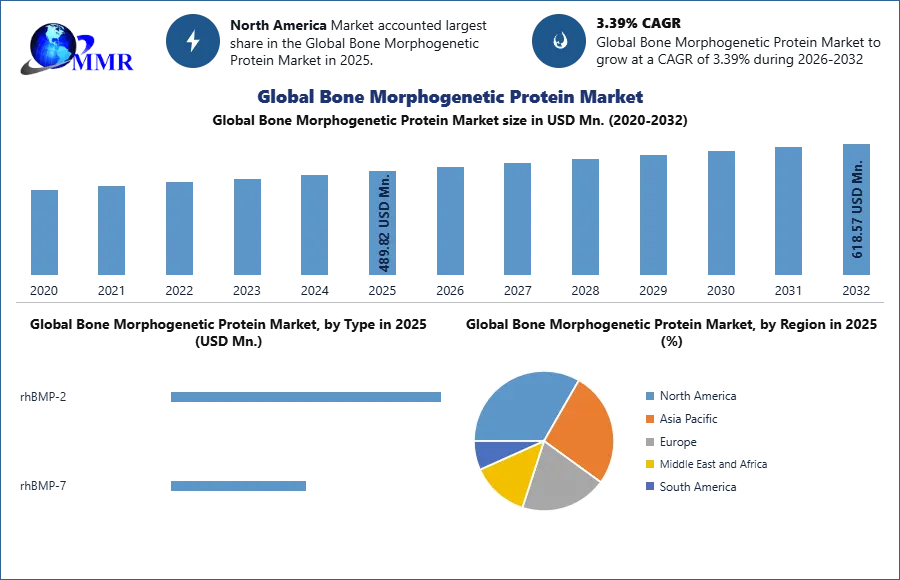
North America remains a leading market due to advanced healthcare infrastructure, high surgical volumes, and strong adoption of innovative medical technologies.
The United States continues to drive industry activity through biotechnology innovation, orthopedic research, and significant investments in regenerative medicine.
Europe maintains a strong position supported by established healthcare systems and growing interest in biologics-based treatment approaches. Germany remains particularly important due to its medical technology expertise and robust healthcare infrastructure.
Asia-Pacific is emerging as a major growth region. China, Japan, South Korea, and India are expanding healthcare investments while increasing access to advanced orthopedic care.
Japan’s aging population is creating sustained demand for musculoskeletal treatments and regenerative medicine solutions. South Korea continues investing in biotechnology innovation and advanced healthcare technologies.
India is becoming increasingly significant as healthcare modernization initiatives improve access to orthopedic procedures and advanced treatment options.
Across all major regions, demographic trends and rising healthcare expenditures continue supporting long-term market development.
Competitive Landscape
Competition is increasingly centered on biologics innovation, clinical evidence, and treatment effectiveness.
Companies such as Medtronic, Zimmer Biomet, Stryker Corporation, DePuy Synthes, Orthofix Medical, and SeaSpine Holdings continue investing in regenerative medicine technologies and orthopedic biologics portfolios.
This signals a broader transformation within orthopedic healthcare. Future leadership will depend on the ability to combine biologics, biomaterials, surgical technologies, and clinical data into integrated treatment solutions.
Strategic investments in research and development are becoming critical. Companies capable of demonstrating superior outcomes and long-term value may gain competitive advantages as healthcare systems prioritize evidence-based care.
Partnerships between biotechnology companies, medical device manufacturers, and research institutions are accelerating innovation while expanding commercialization opportunities.
The competitive landscape increasingly rewards organizations that can translate scientific advances into scalable clinical solutions.
Recent Developments
- Research activity in regenerative medicine continues expanding clinical applications for BMP technologies.
- Healthcare providers are increasing adoption of biologics-based orthopedic treatment approaches.
- Advances in biomaterials and delivery systems are improving therapeutic effectiveness.
- Tissue engineering programs are exploring new opportunities for bone regeneration.
- Strategic investments in orthopedic innovation continue strengthening market competitiveness.
Strategic Implications
For medical device manufacturers, BMP technologies offer opportunities to differentiate product portfolios through biologically enhanced treatment solutions.
For biotechnology firms, regenerative medicine remains one of the most promising innovation pathways within modern healthcare.
For healthcare providers, advanced bone healing technologies may improve surgical outcomes while supporting patient recovery.
For investors, the market represents a convergence of biotechnology, regenerative medicine, orthopedic innovation, and healthcare modernization.
For patients, continued innovation has the potential to improve healing outcomes, reduce complications, and enhance quality of life.
Future Outlook
The future of the Bone Morphogenetic Protein Market will be shaped by the integration of regenerative medicine, tissue engineering, advanced biomaterials, and biologics-based treatment strategies that increasingly replace conventional repair approaches with biological restoration.
Organizations that successfully combine scientific innovation, clinical validation, and scalable regenerative technologies will define the next generation of musculoskeletal healthcare, while those relying on traditional orthopedic treatment models risk losing relevance as regenerative medicine becomes a central pillar of modern patient care.
Analyst Perspective
“Bone morphogenetic proteins represent one of the most important developments in regenerative medicine and orthopedic innovation. Organizations that effectively combine biologics, clinical evidence, and advanced surgical technologies will shape the future of bone healing and musculoskeletal treatment.” — Komal Patil, Research Analyst
About Maximize Market Research
Maximize Market Research Pvt. Ltd. (MMR) is a global market research and consulting company that provides reliable, data-focused, and practical business insights. The firm serves a wide range of industries, including healthcare, pharmaceuticals, technology, automotive, electronics, chemicals, personal care, and consumer goods. Through market forecasts, competitive analysis, strategic consulting, and industry impact assessments, MMR helps organizations understand changing market conditions, identify growth opportunities, and make informed business decisions for long-term success.
2nd Floor, Navale IT Park Phase 3
Pune Banglore Highway, Narhe
Pune, Maharashtra 411041, India
+91 9607365656
sales@maximizemarketresearch.com
