Key Highlights
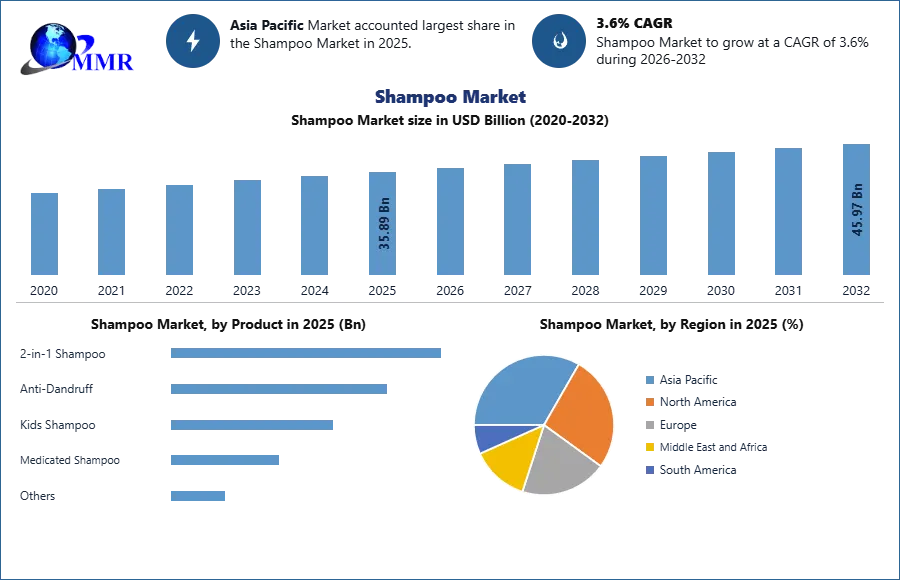
- The Shampoo Market was valued at USD 33.77 billion in 2025 and is expected to reach USD 44.09 billion by 2032, growing at a CAGR of 3.88% from 2026 to 2032.
- Hair Type segment dominated the market in 2025 as consumers increasingly seek products designed for specific hair conditions and needs.
- Online channels are becoming strategically important as digital commerce reshapes beauty product distribution and fulfillment models.
- Asia Pacific leads market growth due to rising personal care consumption, expanding retail networks, and increasing demand from emerging economies.
- Supply-chain efficiency, packaging innovation, and digital retail infrastructure are becoming critical competitive factors for shampoo brands.
Why This Matters Now
The shampoo industry is entering a new logistics cycle where consumer demand is changing faster than traditional distribution networks can adapt. Beauty companies must manage rising product variety, faster delivery expectations, and expanding digital sales channels while maintaining cost control.
For logistics providers, retailers, and manufacturers, shampoo is no longer a simple consumer product category. The market now requires flexible warehousing, efficient inventory management, reliable transportation networks, and stronger last-mile capabilities to serve fragmented customer demand.
Market Overview
The Shampoo Market includes products designed for hair cleansing, treatment, and maintenance across multiple consumer categories. The market reached USD 33.77 billion in 2025 and is forecast to reach USD 44.09 billion by 2032.
Growth is linked to increasing awareness of personal grooming, rising disposable income, and expanding access to branded hair care products. These changes are influencing supply-chain planning because companies must support both large retail volumes and smaller direct-to-consumer orders.
The logistics structure of the shampoo industry depends on efficient movement from manufacturing facilities to warehouses, retailers, and online customers. Packaging stability, inventory availability, and transportation reliability remain important factors for maintaining product accessibility.
Key Trends Driving Growth
E-commerce expansion is reshaping shampoo distribution. Online marketplaces and direct-to-consumer platforms require stronger fulfillment systems, faster order processing, and improved inventory visibility.
Beauty brands are investing in digital supply-chain capabilities to respond to changing consumer demand. Transportation management systems, warehouse automation, and real-time tracking solutions are becoming more important for managing complex product portfolios.
Sustainability is influencing logistics decisions across the personal care sector. Brands are focusing on recyclable packaging, reduced material usage, and efficient transportation models to improve environmental performance while meeting consumer expectations.
Packaging innovation is also affecting transportation efficiency. Lightweight containers, improved designs, and optimized packaging formats help reduce logistics costs and support sustainability goals.
Warehouse operations are becoming more technology-driven. Automated storage systems, inventory management platforms, and data analytics help companies reduce stock issues and improve distribution accuracy.
The growth of premium and specialized shampoo products is increasing supply-chain complexity. Manufacturers must manage multiple product variants, smaller production runs, and targeted distribution strategies.
Request a Free Sample Copy or View Report Summary:
Segment Insights
- Dominant Segment: Hair Type Segment — The Hair Type segment dominated the Shampoo Market in 2025. Demand for products targeting specific hair conditions creates opportunities for manufacturers but requires more complex inventory planning and distribution management.
- Distribution Channel Development — Offline and online channels continue shaping market access. Online distribution is gaining importance as consumers increasingly purchase personal care products through digital platforms.
- Product Category Opportunities — Regular, dry, anti-dandruff, baby, and other shampoo categories require different supply-chain strategies due to varying consumer demand patterns and market positioning.
- Packaging and Logistics Considerations — Bottles and other packaging formats influence transportation efficiency, storage requirements, and sustainability initiatives across the supply chain.
Regional Growth Story
Asia Pacific dominated the Shampoo Market in 2025, supported by rising beauty and personal care consumption, expanding urban populations, and increasing availability of branded products.
China and India represent major opportunities as retail networks, digital commerce platforms, and manufacturing capabilities continue expanding. Logistics providers are benefiting from growing demand for regional distribution centers and improved transportation infrastructure.
Japan and South Korea remain influential markets due to advanced beauty product innovation and strong consumer demand for specialized hair care products. Their supply chains increasingly emphasize efficiency, premium fulfillment, and product differentiation.
North America and Europe continue focusing on sustainability, digital retail, and operational efficiency. The United States, Germany, and the United Kingdom are important markets where brands are adapting logistics networks to support omnichannel sales.
Competitive Landscape
The competitive landscape is shifting from product competition alone toward supply-chain performance and consumer accessibility. Major personal care companies are strengthening distribution networks, digital capabilities, and sustainable operations to maintain market share.
Companies such as Procter & Gamble, L’Oréal, Unilever, Henkel, Kao Corporation, and Shiseido compete through brand strength, innovation, and distribution reach.
Their investments signal a broader industry transformation. Stronger logistics networks improve product availability, while digital fulfillment capabilities support faster response to changing consumer behavior.
Future competition will depend on companies that combine manufacturing scale with flexible supply chains. Brands that improve forecasting, warehouse efficiency, and delivery performance will gain stronger market positions.
Recent Developments
- Beauty and personal care companies are expanding digital commerce capabilities to improve direct consumer access and fulfillment efficiency.
- Manufacturers are increasing focus on sustainable packaging solutions to support environmental targets and reduce logistics impact.
- Companies are strengthening distribution networks to support premium, specialized, and region-specific shampoo product categories.
Strategic Implications
For manufacturers, supply-chain agility is becoming a major business priority. Growing product variety requires stronger demand forecasting, optimized inventory levels, and flexible production planning.
For logistics providers, the shampoo category offers opportunities in FMCG transportation, warehouse management, and e-commerce fulfillment services. Companies capable of supporting faster delivery and better visibility can capture greater value.
Investors should monitor businesses improving operational efficiency, digital capabilities, and sustainability performance. Supply-chain transformation will influence which brands achieve long-term competitiveness.
Future Outlook
The Shampoo Market will continue evolving as consumer expectations, digital commerce, and sustainability requirements reshape distribution models. Future leaders will be those that build resilient, technology-enabled supply chains, while laggards that ignore logistics modernization risk losing speed, efficiency, and market relevance.
Analyst Perspective
“The Shampoo Market is increasingly influenced by changes beyond product innovation. Efficient distribution, digital retail expansion, and sustainable supply-chain practices are becoming essential for brands seeking long-term growth in the global personal care ecosystem,” said Siddhi Dole, Research Analyst.
About Maximize Market Research
Maximize Market Research Pvt. Ltd. (MMR) is a global market research and consulting company that provides reliable, data-focused, and practical business insights. The firm serves a wide range of industries, including healthcare, pharmaceuticals, technology, automotive, electronics, chemicals, personal care, and consumer goods. Through market forecasts, competitive analysis, strategic consulting, and industry impact assessments, MMR helps organizations understand changing market conditions, identify growth opportunities, and make informed business decisions for long-term success.
2nd Floor, Navale IT Park Phase 3
Pune Banglore Highway, Narhe
Pune, Maharashtra 411041, India
+91 9607365656
sales@maximizemarketresearch.com
