Key Highlights
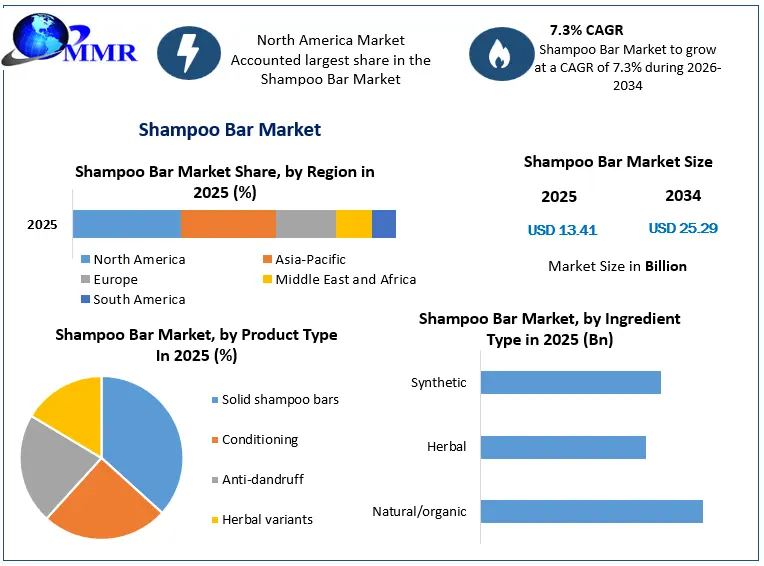
- Global Shampoo Bar Market valued at USD 13.41 billion and projected to reach USD 25.29 billion by 2034.
- Market expected to grow at a 7.3% CAGR during 2024–2030.
- Sustainability concerns are accelerating consumer migration from liquid shampoos to solid formats.
- Longer product lifespan is improving value perception among consumers.
- Plastic-free packaging is becoming a major purchase driver.
- E-commerce is expanding market access and brand visibility.
- Natural and clean-label formulations continue gaining traction.
- Asia-Pacific is emerging as a significant growth opportunity.
Why This Matters Now
The haircare industry is facing a structural shift. Consumers are no longer evaluating shampoos solely on cleansing performance; they are increasingly assessing environmental impact, ingredient transparency, and packaging waste.
That change is creating new winners across the FMCG sector. Companies that once competed on shelf presence and advertising budgets now face competition from sustainability-focused brands capable of building loyal communities through digital channels and eco-conscious positioning.
Market Overview
The Shampoo Bar Market Size is projected to grow from USD 13.41 billion to USD 25.29 billion by 2034, registering a CAGR of 7.3% during the forecast period.
What makes this growth significant is not simply market expansion. Shampoo bars are redefining product economics within personal care. Their longer usage cycle compared with conventional liquid shampoos is reshaping consumer perceptions around value and product efficiency.
For manufacturers, this shift creates opportunities to capture consumers seeking premium, environmentally responsible alternatives while reducing packaging-related costs and waste.
The category has moved beyond niche sustainability circles and is increasingly entering mainstream beauty and personal care routines.
Key Trends Driving Growth
A major growth driver is the increasing demand for environmentally responsible personal care products. Consumers are actively seeking alternatives that reduce plastic waste, creating favorable conditions for shampoo bars and other solid beauty formats.
The clean beauty movement is also influencing purchasing decisions. Buyers are paying closer attention to ingredients, favoring products that align with wellness-oriented lifestyles and natural product preferences.
Consumer behavior is shifting toward products that deliver both sustainability and convenience. Shampoo bars offer portability, durability, and reduced packaging waste, making them attractive for travel and everyday use.
Digital commerce is accelerating category awareness. Online channels allow emerging brands to educate consumers, communicate sustainability credentials, and reach audiences that traditional retail networks may not efficiently serve.
Another notable trend is the growing appeal of minimalist consumption. Consumers increasingly prefer products that reduce household waste while maintaining performance standards comparable to traditional alternatives.
Request a Free Sample Report for Strategic Business and Investment Planning
Segment Insights
Dominant Segment
- Shampoo bars designed for everyday use remain the dominant category due to their broad consumer appeal and suitability across a wide range of hair types.
- Their versatility enables brands to target large customer groups with fewer product variations, improving scalability.
Fastest-Growing Segment
- Products formulated for oily hair are emerging as the fastest-growing segment.
- Rising awareness of sulfate-free formulations and natural ingredients is contributing to increased adoption among consumers seeking scalp-balancing solutions.
Distribution Trends
- Online sales channels continue to gain importance as consumers increasingly research and purchase personal care products digitally.
- Direct-to-consumer strategies are helping brands strengthen customer relationships and improve retention.
Consumer Preference Trends
- Natural ingredients, eco-friendly positioning, and plastic-free packaging remain central purchasing criteria.
- Consumers increasingly view shampoo bars as lifestyle products rather than simple haircare alternatives.
Regional Growth Story
Regional growth patterns highlight how sustainability trends are spreading across different consumer markets.
Developed economies continue to benefit from strong awareness of environmental issues and established demand for premium personal care products. Consumers in these regions are often early adopters of plastic-free beauty solutions.
Meanwhile, Asia-Pacific is emerging as one of the most attractive opportunities for manufacturers. Rising urbanization, expanding middle-class populations, increasing disposable incomes, and growing awareness of sustainable consumption are creating favorable market conditions.
The region’s rapid e-commerce expansion is further accelerating category adoption by improving product accessibility and consumer education.
For global brands, Asia-Pacific represents more than a growth market. It represents a scale opportunity capable of reshaping competitive rankings over the next decade.
Competitive Landscape
Competition in the Shampoo Bar Market is increasingly being shaped by sustainability credentials rather than traditional product claims alone.
Brands are investing in plastic-free packaging, natural formulations, and environmentally responsible sourcing practices. These initiatives signal a broader transformation across the personal care industry, where environmental performance is becoming a competitive differentiator.
The rise of digitally native brands suggests barriers to entry are falling. Smaller companies can now build strong brand identities through sustainability messaging and direct consumer engagement.
For established FMCG players, this trend creates strategic pressure. Companies that fail to modernize product portfolios risk losing relevance among younger, environmentally conscious consumers.
Over the next 12–24 months, competitive intensity is expected to increase as brands expand product innovation, strengthen online distribution, and deepen investments in sustainable packaging technologies.
Recent Developments
- Expansion of plastic-free and minimal-packaging product offerings.
- Increased focus on natural and clean-label ingredient formulations.
- Growing use of digital marketing and direct-to-consumer business models.
- Rising investment in sustainability-led brand positioning.
- Expansion of shampoo bar portfolios targeting specific hair-care needs.
Strategic Implications
The Shampoo Bar Market is becoming a testing ground for broader FMCG sustainability strategies.
Brands that successfully combine performance, convenience, and environmental benefits are likely to gain pricing power and stronger customer loyalty.
Retailers may increasingly allocate shelf space toward sustainable personal care products as consumer demand strengthens.
Manufacturers that invest early in sustainable packaging innovation, supply chain transparency, and digital customer engagement could establish durable competitive advantages.
The category also demonstrates how sustainability can evolve from a compliance requirement into a revenue growth engine.
Future Outlook
The next phase of growth will be driven by the convergence of sustainability, clean beauty, and digital commerce.
As consumers continue seeking environmentally responsible alternatives, shampoo bars are expected to capture a larger share of the global haircare market. Product innovation, premium formulations, and expanding online availability will support continued adoption.
The companies that treat sustainability as a core business strategy will capture growth; those that treat it as a marketing campaign risk losing relevance in one of personal care’s fastest-changing categories.
Analyst Perspective
“The Shampoo Bar Market is moving beyond its niche origins and becoming a mainstream sustainability-driven category within global haircare. Growing environmental awareness, consumer demand for long-lasting products, and increasing adoption of plastic-free alternatives are creating strong momentum for future market expansion.” — Siddhi Dole, Analyst
About Maximize Market Research
Maximize Market Research Pvt. Ltd. (MMR) is a global market research and consulting company that provides reliable, data-focused, and practical business insights. The firm serves a wide range of industries, including healthcare, pharmaceuticals, technology, automotive, electronics, chemicals, personal care, and consumer goods. Through market forecasts, competitive analysis, strategic consulting, and industry impact assessments, MMR helps organizations understand changing market conditions, identify growth opportunities, and make informed business decisions for long-term success.
Contact Us
2nd Floor, Navale IT Park Phase 3
Pune Banglore Highway, Narhe
Pune, Maharashtra 411041, India
+91 9607365656
sales@maximizemarketresearch.com
