Key Highlights
- Global spa demand is accelerating as wellness spending becomes a lifestyle priority rather than a discretionary expense.
- Salon Spa remains the dominant market segment due to accessibility, affordability, and recurring customer engagement.
- Massage therapies continue to lead service demand across consumer demographics.
- Wellness tourism is creating new revenue streams for hotel, resort, and destination spa operators.
- Digital booking platforms and subscription-based packages are increasing customer retention.
- Male grooming and holistic wellness treatments are expanding the addressable customer base.
- Asia-Pacific is emerging as a major growth engine driven by urbanization and rising wellness awareness.
Why This Matters Now
Consumer wellness spending has moved from occasional indulgence to recurring behavior. Companies that once competed on treatment menus are now competing on personalization, convenience, and long-term wellness outcomes.
For operators, investors, hospitality brands, and FMCG companies linked to wellness products, the shift creates a strategic challenge: capture customers earlier in their wellness journey or risk losing them to digitally enabled competitors.
Market Overview
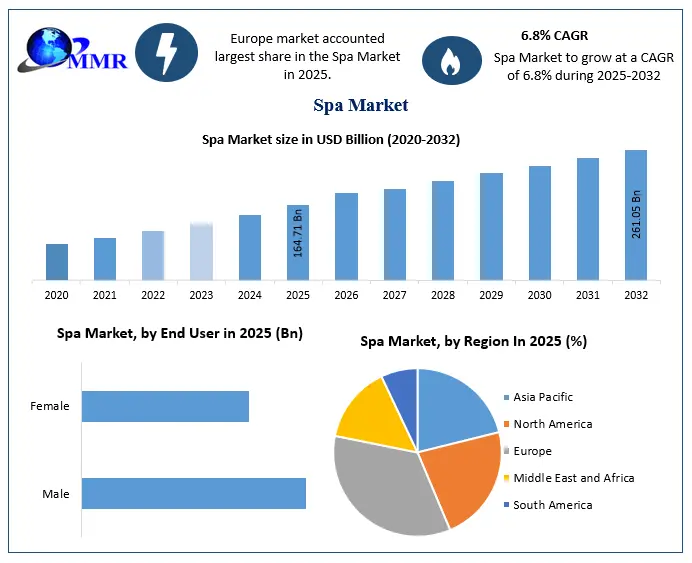
The Spa Market Size is undergoing structural change as wellness, beauty, mental health, and preventive care increasingly converge into a single consumer category. According to Maximize Market Research, the industry continues to benefit from rising demand for relaxation therapies, holistic wellness services, and personalized experiences across both developed and emerging economies.
The market’s expansion is being supported by growing urban populations, increasing disposable income, and greater awareness of stress-related health challenges. What was once considered a luxury service is becoming integrated into mainstream lifestyle spending.
Business implications are significant. Operators are no longer selling individual treatments; they are building recurring wellness ecosystems through memberships, subscription packages, and digital engagement channels.
Key Trends Driving Growth
The strongest growth catalyst is the global focus on physical and mental wellbeing. Consumers increasingly seek services that address stress management, recovery, relaxation, and preventive health simultaneously.
Digitalization is changing how customers discover and purchase spa services. Mobile bookings, digital memberships, loyalty programs, and app-based scheduling are reducing friction and increasing visit frequency. This shift favors organized operators with scalable technology infrastructure.
Wellness tourism is also becoming a major growth engine. Travelers increasingly choose destinations based on wellness experiences, creating opportunities for hotels, resorts, and destination spas to capture premium spending beyond accommodation revenue.
Another notable trend is the growing acceptance of holistic and alternative wellness therapies. Ayurvedic treatments, aromatherapy, meditation-focused programs, and personalized wellness journeys are attracting consumers seeking comprehensive wellbeing solutions.
Download a Market Sample Report Featuring Growth Drivers and Opportunities
Segment Insights
- Dominant Segment: Salon Spa
- Salon Spa is expected to maintain market leadership.
- Broad accessibility across urban and semi-urban areas supports higher customer volumes.
- Lower operating costs enable rapid expansion compared with resort and destination spa formats.
- Digital booking adoption and subscription-based offerings are improving customer retention and repeat visits.
- Fastest-Growing Opportunity Segment: Premium Wellness and Destination Experiences
- Demand for immersive wellness retreats and specialized therapies continues to rise.
- Consumers increasingly seek personalized experiences that combine relaxation, fitness, nutrition, and mental wellness.
- Dominant Service Segment: Massage Therapies
- Massage services remain the industry’s most widely adopted treatment category.
- Demand is driven by stress reduction, muscle recovery, pain management, and mental wellness benefits.
- High repeat-visit potential makes massage services a critical revenue driver for operators.
Regional Growth Story
Asia-Pacific is becoming one of the most important growth regions for the Spa Market. Rising urbanization, increasing disposable incomes, expanding middle-class populations, and greater wellness awareness are driving consumer participation across multiple spa formats.
Markets such as India, China, and Thailand are benefiting from strong demand for holistic therapies, wellness tourism, and traditional wellness practices integrated with modern spa experiences.
North America and Europe continue to provide stability through mature wellness ecosystems and premium consumer spending. However, growth momentum is increasingly shifting toward emerging markets where wellness penetration remains comparatively lower.
Competitive Landscape
Competition is intensifying as traditional spa operators, hospitality groups, wellness brands, and technology-enabled service providers compete for the same consumer wallet.
The growing adoption of digital booking systems signals that convenience is becoming a competitive differentiator rather than a supporting feature. Operators investing in customer data, personalization tools, and subscription models are likely to gain stronger customer lifetime value.
The expansion of wellness tourism suggests hotel and resort operators will increasingly integrate wellness offerings into core business strategies rather than treating spas as ancillary amenities. For competitors, this raises the cost of differentiation.
The rise of specialized wellness treatments also indicates market fragmentation. Operators that develop expertise in specific wellness categories may achieve stronger pricing power than general-purpose service providers over the next 12–24 months.
Recent Developments
- Increased adoption of mobile booking platforms and digital customer engagement tools.
- Growth in subscription-based wellness packages and recurring membership models.
- Expansion of male-focused grooming and wellness offerings.
- Rising integration of Ayurvedic, holistic, and alternative wellness therapies.
- Greater focus on wellness tourism experiences across hospitality and resort sectors.
Strategic Implications
The market is shifting from transactional service delivery to relationship-based wellness management.
Companies that build recurring customer engagement through memberships, digital ecosystems, and personalized treatment pathways are likely to outperform operators dependent on one-time visits.
For FMCG and wellness-product manufacturers, the spa channel is becoming an influential platform for product discovery, premium positioning, and experiential marketing.
For investors, scalable wellness brands with strong digital capabilities may capture a disproportionate share of future value creation.
Future Outlook
The next phase of growth will be shaped by preventive health awareness, wellness tourism expansion, personalization technologies, and holistic wellness adoption.
Operators that combine physical experiences with digital engagement will be positioned to capture higher customer loyalty and stronger recurring revenue streams. Those that continue to rely solely on traditional treatment-based models may face increasing competitive pressure.
In the coming years, winners will build wellness ecosystems; losers will continue selling isolated spa services.
Analyst Perspective
“The Spa Market is evolving from a discretionary lifestyle category into a broader wellness platform. Businesses that align convenience, personalization, and holistic wellbeing with strong digital engagement strategies will be best positioned to capture future growth opportunities across global markets.” — Siddhi Dole, Analyst
About Maximize Market Research
Maximize Market Research Pvt. Ltd. (MMR) is a global market research and consulting company that provides reliable, data-focused, and practical business insights. The firm serves a wide range of industries, including healthcare, pharmaceuticals, technology, automotive, electronics, chemicals, personal care, and consumer goods. Through market forecasts, competitive analysis, strategic consulting, and industry impact assessments, MMR helps organizations understand changing market conditions, identify growth opportunities, and make informed business decisions for long-term success.
Contact Us
2nd Floor, Navale IT Park Phase 3
Pune Banglore Highway, Narhe
Pune, Maharashtra 411041, India
+91 9607365656
sales@maximizemarketresearch.com
