Market Overview
The Luxury Fashion Market is evolving beyond traditional notions of prestige. Consumers continue to value craftsmanship, brand heritage, and exclusivity, but purchasing decisions are increasingly influenced by digital experiences, sustainability credentials, and personalized engagement.
Luxury fashion companies are responding by expanding their digital ecosystems, strengthening direct-to-consumer channels, and investing in customer data capabilities. The result is a market where technology has become as important as creative direction.
The industry’s growth trajectory is supported by rising disposable incomes, increasing urbanization, expanding luxury consumer populations, and greater access to premium brands through online platforms. These drivers are broadening luxury consumption while maintaining the category’s premium positioning.
Key Trends Driving Growth
Digital transformation has become one of the industry’s most powerful growth drivers. Luxury brands are investing heavily in e-commerce platforms, virtual shopping experiences, and omnichannel retail strategies. This is changing how luxury products are discovered, evaluated, and purchased.
Consumer demographics are also shifting. Millennials and Generation Z are becoming increasingly influential within luxury purchasing decisions. Their expectations differ from traditional luxury buyers, placing greater emphasis on authenticity, social engagement, digital convenience, and sustainability.
Sustainability is moving from a marketing message to a strategic requirement. Luxury consumers increasingly evaluate sourcing practices, production transparency, material selection, and environmental commitments. This creates competitive advantages for brands capable of combining luxury positioning with responsible business practices.
Personalization continues to gain momentum. Luxury consumers increasingly expect tailored product recommendations, customized experiences, and direct engagement with brands. Companies investing in customer relationship technologies are strengthening retention and lifetime value.
Global tourism recovery and international luxury spending are creating additional opportunities for premium brands. Luxury retailers are increasingly aligning physical retail strategies with global consumer mobility patterns to capture high-value purchases.
Request a Free Sample Copy or View Report Summary
Segment Insights
- Dominant Segment: Luxury apparel remains a major revenue-generating category within the luxury fashion market, supported by strong consumer demand for premium clothing and established brand recognition.
- Fastest-Growing Segment: Digital luxury retail and online luxury purchasing channels are emerging as key growth areas as consumers increasingly engage with premium brands through e-commerce platforms.
- Luxury accessories continue to play an important role in consumer acquisition due to their accessibility relative to higher-ticket luxury products.
- Premium footwear remains a strategically important category, benefiting from fashion innovation and growing demand among younger consumers.
- Direct-to-consumer channels are becoming increasingly important as brands seek greater control over customer relationships and pricing strategies.
Regional Growth Story
Europe remains central to the global luxury fashion ecosystem due to its concentration of heritage luxury brands, established craftsmanship traditions, and strong international consumer appeal.
North America continues to generate significant demand driven by affluent consumers, digital commerce adoption, and premium lifestyle spending. The region’s luxury consumers are increasingly prioritizing convenience, personalized experiences, and direct engagement with brands.
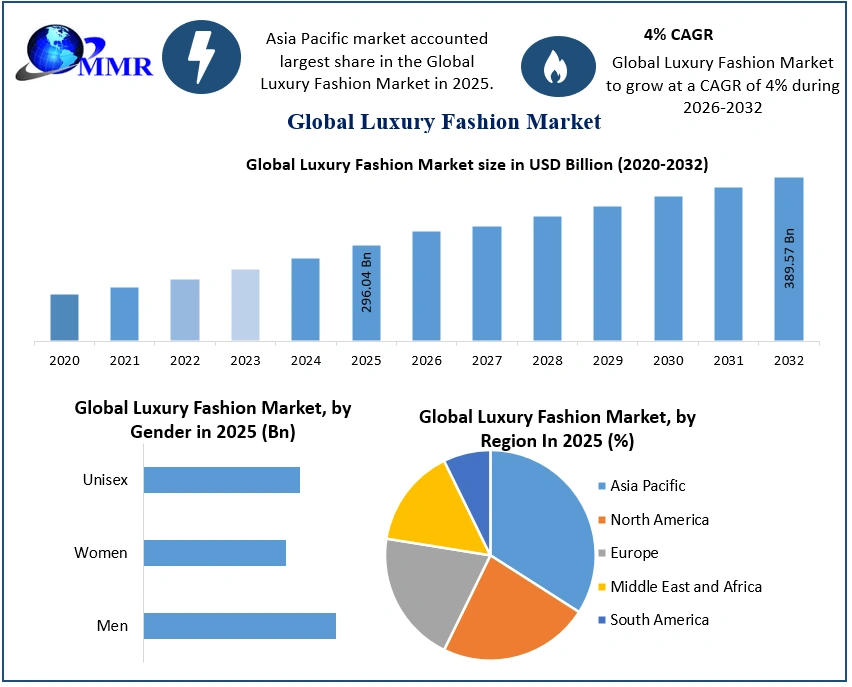
Asia-Pacific is becoming one of the most strategically important regions for luxury companies. Rising disposable incomes, expanding affluent populations, and growing interest in premium lifestyle products are attracting increased investment from global luxury brands.
The regional story is no longer simply about geographic expansion. It is about identifying where luxury consumers are emerging, how they engage with brands, and which channels influence purchasing behavior.
Competitive Landscape
Competition in luxury fashion is increasingly defined by ecosystem strength rather than product portfolios alone.
Leading companies are investing in digital platforms, customer engagement technologies, sustainability initiatives, and brand portfolio optimization. These investments signal a shift toward long-term customer ownership rather than transactional retail growth.
For rivals, the message is clear. Heritage alone is no longer sufficient. Brands must combine storytelling, innovation, and operational agility to maintain relevance.
The industry’s ongoing investments in digital commerce suggest that the next 12–24 months will see intensified competition around customer experience. Companies that successfully integrate physical stores, online platforms, and personalized services are likely to strengthen market positions.
Sustainability commitments are becoming another competitive differentiator. As consumers scrutinize supply chains more closely, brands with credible environmental and social initiatives may gain advantages in customer acquisition and retention.
Recent Developments
- Luxury brands continue expanding digital commerce capabilities to strengthen direct consumer engagement.
- Sustainability initiatives are becoming increasingly integrated into product development and sourcing strategies.
- Omnichannel retail investments are improving customer experience across physical and digital touchpoints.
- Premium brands are targeting younger luxury consumers through digital marketing and social engagement strategies.
- Customer personalization technologies are receiving increased investment across the luxury retail ecosystem.
Strategic Implications
Luxury fashion is entering a period where competitive advantage depends on balancing exclusivity with accessibility.
Executives must simultaneously protect brand equity, accelerate digital transformation, strengthen sustainability credentials, and deepen customer relationships. Success requires coordination across marketing, operations, technology, and product development.
Investment priorities are shifting toward customer data, omnichannel infrastructure, sustainability programs, and direct-to-consumer capabilities. These areas increasingly determine long-term profitability and market relevance.
The luxury companies best positioned for growth are those that view digital transformation as a brand-enhancing tool rather than a distribution channel alone.
Future Outlook
The Luxury Fashion Market is expected to continue evolving as digital engagement, sustainability expectations, and premium consumer spending reshape competitive dynamics.
Luxury brands that successfully combine craftsmanship, innovation, personalization, and responsible business practices will be positioned to capture future growth opportunities. The industry’s next phase will not be defined by who sells the most products, but by who builds the strongest relationships with premium consumers.
The winners will transform luxury into a connected experience ecosystem; the losers will remain dependent on legacy prestige in a market increasingly driven by engagement, transparency, and innovation.
Analyst Perspective
“The luxury fashion industry is undergoing a structural transformation. Consumer expectations now extend beyond product quality to include digital experiences, sustainability commitments, and personalized engagement. Companies that align heritage brand value with modern consumer demands will be best positioned to capture long-term growth opportunities.” — Siddhi Dole, Analyst
About Maximize Market Research
Maximize Market Research Pvt. Ltd. (MMR) is a global market research and consulting company that provides reliable, data-focused, and practical business insights. The firm serves a wide range of industries, including healthcare, pharmaceuticals, technology, automotive, electronics, chemicals, personal care, and consumer goods. Through market forecasts, competitive analysis, strategic consulting, and industry impact assessments, MMR helps organizations understand changing market conditions, identify growth opportunities, and make informed business decisions for long-term success.
2nd Floor, Navale IT Park Phase 3
Pune Banglore Highway, Narhe
Pune, Maharashtra 411041, India
+91 9607365656
sales@maximizemarketresearch.com
