Key Highlights
- The handbag market continues expanding as fashion and lifestyle spending increases globally.
- Premium and luxury handbags remain key revenue generators across major markets.
- E-commerce is transforming product discovery, purchasing behavior, and brand engagement.
- Sustainability initiatives are increasingly influencing product development and consumer decisions.
- Fashion-conscious consumers continue driving demand for innovative designs.
- Digital marketing and social media influence purchasing decisions across demographic groups.
- Manufacturers are investing in product differentiation and brand positioning.
- Emerging markets are creating new growth opportunities for global handbag brands.
Why This Matters Now
Consumer expectations in fashion are changing faster than many brands can adapt. Handbags are no longer purchased solely for utility. They are increasingly used to signal lifestyle, identity, and personal values.
For manufacturers and retailers, this creates both opportunity and risk. The brands winning market share are those successfully balancing design innovation, premium experiences, sustainability commitments, and digital engagement. Companies relying solely on heritage or brand recognition may find it harder to maintain relevance in a rapidly evolving marketplace.
Market Overview
The handbag market sits at the center of the global fashion accessories industry. Products range from luxury designer collections to affordable lifestyle offerings, serving diverse consumer segments across multiple regions.
The category’s strength comes from its unique combination of practicality and emotional appeal. Unlike many fashion products, handbags serve both functional and aspirational purposes. This dual value proposition supports recurring demand and enables brands to compete across multiple price tiers.
The market continues benefiting from rising disposable incomes, increasing fashion awareness, and growing consumer willingness to invest in premium accessories. These factors are expanding the category’s influence across both developed and emerging economies.
Key Trends Driving Growth
Premiumization remains one of the industry’s strongest growth drivers. Consumers increasingly seek products that combine craftsmanship, quality materials, and distinctive design. This trend is allowing brands to strengthen margins while building stronger customer loyalty.
Consumer behavior is shifting toward lifestyle-driven purchasing. Buyers are evaluating handbags based on versatility, durability, brand values, and social relevance. The product itself is becoming part of a broader personal branding strategy.
Sustainability is gaining importance throughout the industry. Consumers increasingly expect brands to demonstrate responsible sourcing, ethical production practices, and environmentally conscious material selection. Sustainability is evolving from a niche preference into a competitive requirement.
Digital commerce is reshaping customer acquisition. E-commerce platforms enable brands to reach broader audiences, provide personalized shopping experiences, and build direct consumer relationships. Digital channels are becoming central to growth strategies across both luxury and mainstream segments.
Social media continues influencing purchasing behavior. Fashion trends now spread globally within days rather than seasons, accelerating product cycles and increasing the importance of digital brand visibility.
𝐃𝐨𝐰𝐧𝐥𝐨𝐚𝐝 𝐏𝐃𝐅 𝐁𝐫𝐨𝐜𝐡𝐮𝐫𝐞 @ https://www.maximizemarketresearch.com/request-sample/147819/
Segment Insights
- Dominant Segment: Luxury and Premium Handbags
Luxury and premium handbags continue generating substantial market value due to strong brand equity, consumer aspiration, and demand for high-quality craftsmanship. - Fastest-Growing Segment: Sustainable and Eco-Friendly Handbags
Products developed using environmentally responsible materials and ethical production methods are attracting increasing consumer attention and creating new opportunities for differentiation. - Distribution Insight
E-commerce channels are rapidly expanding market access, enabling brands to connect directly with consumers while reducing dependence on traditional retail formats. - Consumer Insight
Younger consumers increasingly prioritize design authenticity, sustainability commitments, and digital engagement when making purchasing decisions.
Regional Growth Story
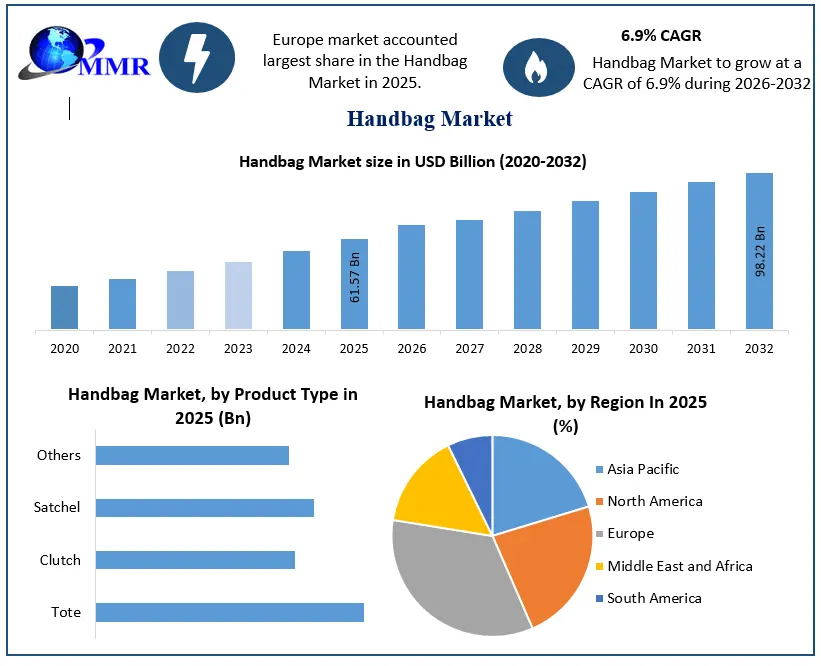
North America remains a major market for handbags due to strong consumer spending, established fashion retail infrastructure, and significant demand for premium accessories.
The region’s consumers continue to support both luxury and lifestyle-oriented brands. This creates opportunities for companies capable of balancing exclusivity with accessibility.
Europe maintains a critical position within the global market. The region’s heritage fashion houses, strong luxury traditions, and global influence on design trends support sustained demand across premium segments.
Asia-Pacific represents one of the industry’s most attractive growth opportunities. Rising disposable incomes, expanding middle-class populations, and increasing fashion awareness are encouraging higher spending on branded accessories. International brands are increasingly focusing investment efforts on these markets.
Competitive Landscape
The handbag market includes leading global brands competing through design innovation, brand heritage, sustainability initiatives, and digital engagement strategies.
Competitive activity signals an important shift. The market is moving beyond traditional luxury positioning toward value systems that include sustainability, personalization, and consumer experience. Brands that fail to evolve risk losing relevance among younger buyers.
For rivals, the message is clear. Success increasingly depends on balancing exclusivity with accessibility and tradition with innovation. Companies that effectively integrate sustainability, digital commerce, and premium design are likely to strengthen market positions over the next 12–24 months.
Competition is also intensifying around direct-to-consumer business models. Brands are seeking closer consumer relationships to improve customer retention, gather purchasing insights, and reduce dependence on third-party retail partners.
Recent Developments
- Expansion of sustainable handbag collections.
- Increased investment in digital commerce platforms.
- Growing adoption of ethically sourced materials.
- Rising emphasis on premium craftsmanship and customization.
- Enhanced use of social media and influencer marketing.
- Development of direct-to-consumer sales strategies.
Strategic Implications
Several strategic themes are emerging across the industry.
First, premiumization continues creating opportunities for value creation. Consumers increasingly reward quality, craftsmanship, and distinctive brand identity.
Second, sustainability is becoming a business imperative rather than a marketing initiative. Companies that successfully integrate environmental responsibility into product development may strengthen long-term competitiveness.
Third, digital capabilities are now central to market success. Brands that leverage e-commerce, personalization, and data-driven consumer engagement can improve both growth and profitability.
Finally, emerging markets will become increasingly important sources of future demand. Companies that establish strong brand positioning early may gain meaningful competitive advantages.
Future Outlook
The handbag market is entering a phase where design excellence alone will not determine success. Future growth will increasingly depend on a brand’s ability to combine fashion relevance, sustainability commitments, digital engagement, and consumer trust.
Manufacturers that align their strategies with changing consumer expectations will be well positioned to capture long-term opportunities. As competition intensifies, differentiation will depend less on products alone and more on the overall brand experience.
The winners will be brands that combine luxury, sustainability, and digital intimacy; the losers will be those that remain tied to outdated models of fashion retail.
Analyst Perspective
“The handbag market is evolving beyond traditional fashion cycles. Consumers increasingly seek products that combine quality, functionality, sustainability, and personal expression. Companies that align with these priorities will be best positioned to capture future growth opportunities.” — Siddhi Dole, Research Analyst
About Maximize Market Research
Maximize Market Research Pvt. Ltd. (MMR) is a global market research and consulting company that provides reliable, data-focused, and practical business insights. The firm serves a wide range of industries, including healthcare, pharmaceuticals, technology, automotive, electronics, chemicals, personal care, and consumer goods. Through market forecasts, competitive analysis, strategic consulting, and industry impact assessments, MMR helps organizations understand changing market conditions, identify growth opportunities, and make informed business decisions for long-term success.
2nd Floor, Navale IT Park Phase 3
Pune Banglore Highway, Narhe
Pune, Maharashtra 411041, India
+91 9607365656
sales@maximizemarketresearch.com
