Key Highlights
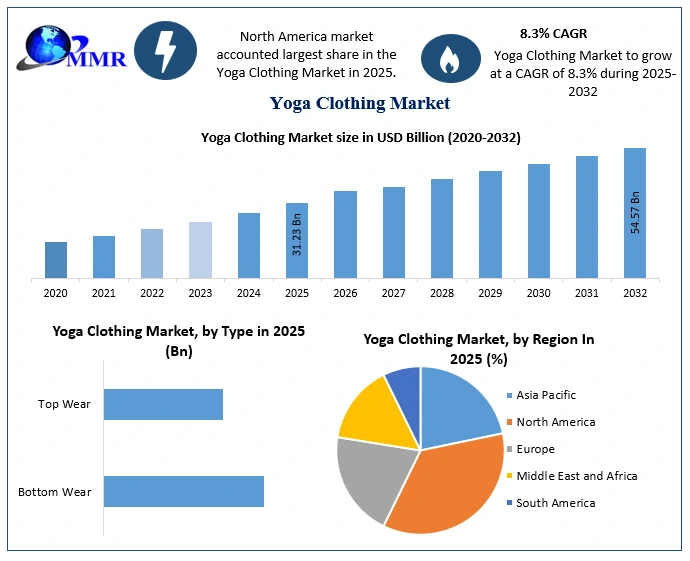
- Market projected to grow from USD 31.23 billion in 2025 to USD 54.57 billion by 2032.
- Health and wellness adoption is expanding the consumer base beyond traditional yoga practitioners.
- Athleisure continues to blur the line between fitness apparel and everyday fashion.
- Sustainability is becoming a major purchasing criterion among consumers.
- Digital-first brands are gaining market share through direct-to-consumer channels.
- Premiumization is creating new revenue opportunities across developed and emerging markets.
- Asia-Pacific is emerging as a critical growth engine due to rising fitness participation and disposable incomes.
Why This Matters Now
The yoga clothing business is no longer competing only within sportswear. It is competing for a share of the global wellness economy.
Consumers increasingly view activewear as everyday apparel rather than workout-specific clothing. That shift changes purchasing frequency, expands addressable markets, and raises expectations around style, sustainability, and functionality. For apparel brands, the opportunity extends far beyond yoga studios.
Market Overview
The Yoga Clothing Market has evolved from a niche category into a mainstream segment within the broader activewear industry. Rising awareness of physical fitness, mental well-being, and preventive healthcare is pushing yoga participation higher across multiple demographics.
The market’s projected expansion to USD 54.57 billion by 2032 signals more than volume growth. It indicates a structural change in consumer spending patterns, where wellness-oriented products command increasing wallet share.
Brands are responding by introducing advanced fabrics, improved comfort features, and versatile designs that serve both exercise and casual lifestyles. The result is a category that increasingly overlaps with fashion, wellness, and lifestyle retail.
Key Trends Driving Growth
A major growth catalyst is the global wellness movement. Consumers are allocating more spending toward products that support healthy lifestyles, creating sustained demand for yoga apparel.
Athleisure remains another powerful force. Yoga clothing is increasingly worn for work-from-home environments, travel, shopping, and social activities. This broadens use cases and increases replacement cycles.
Sustainability is becoming a competitive differentiator. Consumers are seeking products made from recycled materials, organic fibers, and environmentally responsible manufacturing processes. Brands investing early in sustainable supply chains are strengthening customer loyalty.
E-commerce penetration continues to reshape market dynamics. Digital channels provide broader product access, personalized shopping experiences, and direct consumer engagement. This allows emerging brands to compete with established players without relying heavily on physical retail networks.
Premiumization is also influencing purchasing behavior. Consumers increasingly favor apparel that combines performance, comfort, durability, and style, creating opportunities for higher-margin offerings.
Download a Free Sample Copy for In-Depth Market Evaluation
Segment Insights
Dominant Segment
- Women’s Yoga Clothing Segment
- Women continue to represent the largest consumer group in the market.
- Strong participation in yoga, fitness, and wellness activities supports sustained demand.
- Product innovation in leggings, sports bras, tops, and coordinated apparel sets drives category expansion.
Fastest-Growing Segment
- Online Distribution Channel
- Digital retail is recording the fastest growth.
- Consumers increasingly prefer convenience, wider product selection, and direct-to-consumer purchasing models.
- Social commerce, influencer marketing, and mobile shopping are accelerating adoption.
Additional Segment Insights
- Premium product categories are gaining traction among wellness-focused consumers.
- Sustainable fabric-based apparel is attracting growing consumer attention.
- Multifunctional activewear suitable for both exercise and casual wear is expanding rapidly.
Regional Growth Story
North America continues to maintain a significant position in the Yoga Clothing Market due to strong fitness culture, established activewear brands, and high consumer spending on wellness products.
Europe is witnessing increasing demand for sustainable and ethically produced apparel. Consumers are placing greater emphasis on product quality, environmental responsibility, and premium design.
Asia-Pacific represents one of the most attractive growth opportunities. Rising disposable incomes, expanding urban populations, growing awareness of fitness, and increasing participation in yoga are creating favorable market conditions.
Countries such as India and China are particularly important because of their large consumer bases and rapidly expanding wellness ecosystems. As yoga adoption becomes more mainstream, apparel demand is expected to rise alongside it.
Competitive Landscape
Competition is intensifying as traditional sportswear companies, premium activewear brands, and digital-native startups compete for market share.
Leading players are investing heavily in product innovation, sustainable materials, brand communities, and omnichannel retail strategies. The objective is clear: build long-term customer relationships rather than compete solely on price.
Recent industry activity suggests that brand positioning is becoming as important as product performance. Companies are increasingly marketing yoga apparel as part of a broader wellness lifestyle rather than a standalone clothing category.
For rivals, this signals a shift toward ecosystem competition. Brands that can integrate apparel, wellness content, community engagement, and digital experiences may hold a significant advantage over product-focused competitors during the next 12–24 months.
Recent Developments
- Expansion of sustainable and recycled-fabric product lines.
- Increased investment in direct-to-consumer digital platforms.
- Launch of premium athleisure collections targeting lifestyle consumers.
- Strong focus on product innovation involving comfort, flexibility, and moisture-management technologies.
- Growth of influencer-led marketing and community-based brand engagement initiatives.
Strategic Implications
The next phase of competition will likely be defined by three factors: sustainability, digital engagement, and premium brand positioning.
Companies relying solely on traditional retail channels may face growing pressure as consumers shift online. Similarly, brands lacking clear sustainability commitments could encounter increasing resistance from environmentally conscious buyers.
Organizations that successfully combine functional performance with lifestyle branding are likely to capture higher-value customers and strengthen pricing power.
Future Outlook
The Yoga Clothing Market is moving from fitness specialization toward lifestyle integration. Wellness spending, digital commerce expansion, and sustainability expectations will continue shaping purchasing decisions throughout the forecast period.
As the market approaches USD 53.63 billion by 2032, growth opportunities will increasingly favor brands capable of delivering performance, purpose, and personalization simultaneously.
The winners will build wellness ecosystems around their brands; the losers will remain apparel suppliers in a market that increasingly rewards lifestyle leadership.
Analyst Perspective
“The Yoga Clothing Market is evolving beyond traditional sportswear. Consumer demand is increasingly influenced by wellness lifestyles, sustainability expectations, and digital-first shopping experiences. Companies that align innovation, brand authenticity, and omnichannel capabilities will be best positioned to capitalize on the market’s next growth cycle.” — Siddhi Dole, Analyst
About Maximize Market Research
Maximize Market Research Pvt. Ltd. (MMR) is a global market research and consulting company that provides reliable, data-focused, and practical business insights. The firm serves a wide range of industries, including healthcare, pharmaceuticals, technology, automotive, electronics, chemicals, personal care, and consumer goods. Through market forecasts, competitive analysis, strategic consulting, and industry impact assessments, MMR helps organizations understand changing market conditions, identify growth opportunities, and make informed business decisions for long-term success.
Contact Us
2nd Floor, Navale IT Park Phase 3
Pune Banglore Highway, Narhe
Pune, Maharashtra 411041, India
+91 9607365656
sales@maximizemarketresearch.com
