Key Highlights
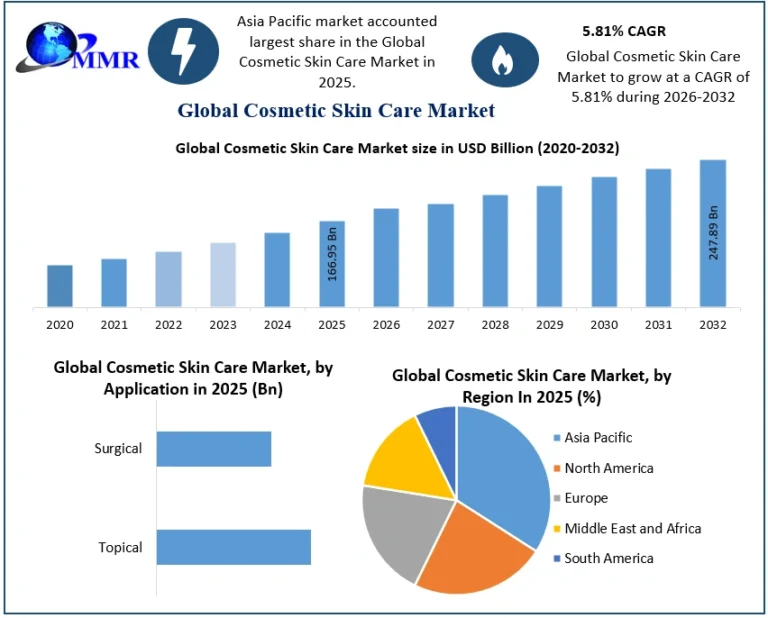
- Global Cosmetic Skin Care Market size reached USD 166.95 billion in 2025.
- Market revenue is projected to reach USD 247.89 billion by 2032.
- The industry is expected to expand at a 5.81% CAGR from 2026 to 2032.
- Rising focus on skin health is shifting demand toward science-backed formulations.
- Premiumization and personalization are creating new revenue pools across consumer segments.
- E-commerce is accelerating product discovery, consumer education, and direct-to-consumer growth.
- Sustainability, ingredient transparency, and clean-label positioning are influencing purchasing decisions.
- Competitive activity is increasingly focused on innovation, digital engagement, and portfolio expansion.
Why This Matters Now
The battle for consumer attention in beauty is becoming more expensive and more complex. Brands that fail to prove efficacy, sustainability, and authenticity risk losing relevance in a market where consumers research ingredients as carefully as they compare prices.
The global Cosmetic Skin Care Market was valued at USD 166.95 billion in 2025 and is expected to reach USD 247.89 billion by 2032, growing at a CAGR of 5.81%. That growth signals more than rising demand. It signals a structural shift toward skincare as a daily wellness investment rather than a discretionary beauty purchase.
Market Overview
The Cosmetic Skin Care Market has moved beyond basic moisturizers and cleansing products. Consumers increasingly view skincare as part of preventive health, self-care, and long-term appearance management.
Demand is being fueled by growing awareness of skin health, increasing exposure to environmental stressors, and the desire for products that deliver measurable results. This is creating opportunities for brands that combine scientific credibility with strong consumer engagement.
The market’s projected expansion to nearly USD 247.89 billion by 2032 indicates that skincare remains one of the most resilient categories within the broader beauty and personal care industry. For manufacturers, retailers, and investors, the implication is clear: skincare continues to command consumer spending even during periods of economic uncertainty.
Key Trends Driving Growth
Health and wellness are reshaping consumer priorities. Buyers increasingly seek products that support skin barrier health, hydration, sun protection, and long-term skin maintenance rather than purely cosmetic benefits. This trend is pushing brands toward clinically supported ingredients and dermatology-inspired formulations.
Clean-label demand is becoming a competitive requirement rather than a niche differentiator. Consumers want transparency around ingredients, sourcing, and product safety. Natural, organic, and toxin-free formulations continue gaining attention across both developed and emerging markets.
Sustainability is influencing purchase decisions across younger consumer groups. Companies are investing in responsible sourcing, environmentally conscious packaging, and reduced environmental impact to strengthen brand loyalty.
Digital commerce is transforming how skincare products are discovered and purchased. Online platforms provide ingredient information, expert reviews, comparison tools, and personalized recommendations that influence buying behavior. The result is faster product adoption and shorter innovation cycles.
Personalization is also emerging as a major growth engine. Consumers increasingly expect targeted solutions for aging, pigmentation, sensitivity, acne, and environmental damage, creating opportunities for premium and specialized brands.
Download a Research Sample with Detailed Competitive Landscape Analysis
Segment Insights
- Dominant Segment: Moisturizers remain among the most established categories due to their broad consumer adoption and everyday usage patterns.
- Fastest-Growing Segment: Advanced treatment products such as serums, targeted skincare solutions, and science-driven formulations are gaining momentum as consumers seek higher efficacy.
- Rising demand for anti-aging products continues to support premium product categories.
- Products focused on hydration, skin repair, and environmental protection are attracting strong consumer interest.
- Online distribution channels continue to gain share as consumers increasingly research and purchase skincare products digitally.
- Premium skincare is expanding faster than mass-market categories as consumers view skincare as a long-term investment in personal wellness.
Regional Growth Story
Developed markets continue to generate significant demand through premiumization, innovation, and high consumer awareness. Consumers in these regions are increasingly willing to pay for clinically validated products and specialized skincare solutions.
Meanwhile, emerging markets are benefiting from rising disposable incomes, urbanization, expanding beauty awareness, and greater access to global brands through digital channels. The combination of demographic growth and increasing skincare adoption is creating substantial long-term opportunities.
Asia-Pacific remains a major center of growth due to expanding middle-class populations, strong beauty culture influences, and increasing demand for both premium and mass-market skincare products.
Competitive Landscape
Competition is intensifying as established beauty companies, digital-native brands, and specialized skincare players compete for consumer loyalty.
The strategic focus has shifted from simply launching new products to building complete skincare ecosystems. Companies are investing in ingredient innovation, dermatological research, personalization capabilities, and direct consumer engagement.
For rivals, this signals a higher barrier to entry. Brand awareness alone is no longer sufficient. Companies must demonstrate measurable product performance, transparency, and digital excellence.
Over the next 12–24 months, competitive advantage is likely to favor organizations that integrate science-backed product development with strong digital commerce capabilities. Brands that fail to modernize their consumer engagement models may face increasing pressure from agile, digitally focused challengers.
Recent Developments
- Increased investment in research-driven skincare formulations.
- Expansion of clean beauty and ingredient-transparent product portfolios.
- Greater focus on sustainability initiatives and eco-conscious packaging.
- Accelerated adoption of direct-to-consumer digital business models.
- Rising emphasis on personalized skincare recommendations and targeted treatments.
- Stronger integration of wellness positioning into skincare marketing strategies.
Strategic Implications
The next phase of market growth will be defined by trust.
Consumers increasingly reward brands that combine scientific validation with transparent communication. Product efficacy, ingredient transparency, sustainability commitments, and digital accessibility are becoming interconnected competitive factors.
Retailers must adapt by creating omnichannel experiences that merge education, personalization, and convenience. Manufacturers must accelerate innovation while maintaining credibility and regulatory compliance.
Investors should closely watch premium skincare, personalized beauty technologies, and digital-first brands, as these areas are likely to capture disproportionate value creation over the forecast period.
Future Outlook
The Cosmetic Skin Care Market is transitioning from a beauty-driven category to a wellness-oriented industry. Growth will increasingly be driven by consumers seeking prevention, personalization, and scientifically supported outcomes.
As the market approaches USD 247.89 billion by 2032, companies that combine innovation, sustainability, and digital execution will capture the greatest share of growth, while those relying solely on legacy brand strength risk losing relevance in an increasingly informed consumer marketplace.
Analyst Perspective
“The Cosmetic Skin Care Market is entering a phase where consumer trust, scientific innovation, and digital accessibility will determine market leadership. Companies that successfully align product efficacy with sustainability and personalized consumer experiences are expected to create the strongest competitive advantage over the coming decade.” — Siddhi Dole, Analyst
About Maximize Market Research
Maximize Market Research Pvt. Ltd. (MMR) is a global market research and consulting company that provides reliable, data-focused, and practical business insights. The firm serves a wide range of industries, including healthcare, pharmaceuticals, technology, automotive, electronics, chemicals, personal care, and consumer goods. Through market forecasts, competitive analysis, strategic consulting, and industry impact assessments, MMR helps organizations understand changing market conditions, identify growth opportunities, and make informed business decisions for long-term success.
Contact Us
2nd Floor, Navale IT Park Phase 3
Pune Banglore Highway, Narhe
Pune, Maharashtra 411041, India
+91 9607365656
sales@maximizemarketresearch.com
