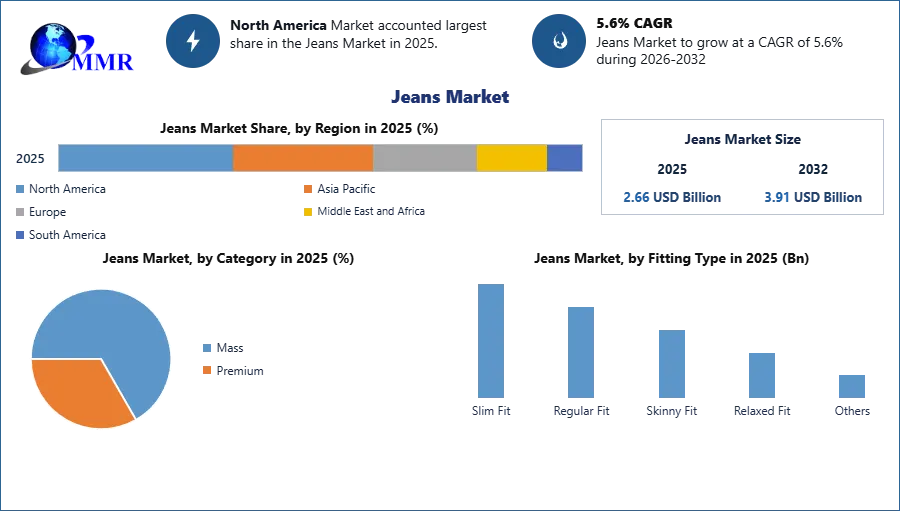
Key Highlights
- The Jeans Market is expanding through rising demand for casual apparel, fashion versatility, and durable clothing products.
- Sustainable denim production is becoming a strategic priority as brands respond to environmental concerns.
- E-commerce growth is reshaping how consumers discover, compare, and purchase jeans.
- Premiumization is increasing demand for better-quality fabrics, innovative fits, and branded denim.
- Asia Pacific and North American markets continue to provide major opportunities for denim companies.
Why This Matters Now
The denim industry is facing a major transformation. Consumers are no longer choosing jeans only for durability; they are evaluating comfort, design, sustainability, and brand values before purchase.
For apparel companies, the next competitive battle will be fought across product innovation, supply chain efficiency, and digital consumer engagement. Brands that adapt quickly to changing fashion cycles can capture new demand while traditional players face pressure from fast-moving competitors.
Market Overview
The Jeans Market represents one of the largest segments of global apparel, covering denim products across casual wear, lifestyle fashion, and everyday clothing categories.
Jeans remain a core wardrobe product because of their versatility, long product life, and broad consumer acceptance. The market continues to benefit from demand among multiple consumer groups, including younger shoppers seeking fashion-driven styles and customers prioritizing comfort.
Manufacturers are shifting strategies from volume-based production toward differentiated offerings. Product development now focuses on fabric technology, improved fits, sustainable materials, and customized consumer experiences.
Key Trends Driving Growth
Consumer lifestyle changes are supporting jeans demand. The growth of casual dressing in workplaces, social settings, and daily activities has expanded the role of denim beyond traditional fashion categories.
Sustainability has become a major industry focus. Denim manufacturers are exploring reduced water usage, responsible sourcing, recycled materials, and cleaner production methods to meet environmental expectations.
Premium denim is gaining momentum. Consumers are increasingly willing to invest in products with better comfort, durability, and brand recognition.
E-commerce has accelerated denim accessibility. Online platforms allow consumers to explore wider product ranges, access international brands, and use digital tools for purchasing decisions.
Fashion personalization is influencing product strategies. Brands are introducing multiple fits, designs, washes, and styles to target different consumer segments.
Supply chain modernization is becoming essential. Apparel companies are improving manufacturing efficiency, inventory management, and distribution networks to respond faster to market demand.
Innovation in denim materials is creating new opportunities. Stretch fabrics, lightweight denim, and performance-oriented designs are helping brands expand usage across different consumer needs.
Segment Insights
- Dominant Segment: Casual Jeans Segment — Casual denim remains a leading category due to its everyday usability, broad consumer acceptance, and strong presence across global markets.
- Fastest-Growing Segment: Sustainable and Premium Denim Products — Increasing environmental awareness and demand for higher-quality apparel are accelerating growth opportunities in responsible and premium denim categories.
- Product Opportunity — Manufacturers are focusing on improved fabrics, comfort-focused designs, and lifestyle-oriented collections.
- Distribution Opportunity — Online retail channels are becoming important for reaching consumers and improving brand visibility.
Regional Growth Story
North America remains a key region for the Jeans Market due to strong denim culture, established retail networks, and high consumer demand for casual apparel.
The United States continues to influence global denim trends through fashion innovation, brand development, and premium product adoption. Retailers are expanding digital channels to strengthen customer engagement.
Asia Pacific represents a major growth opportunity. Countries such as China and India are seeing increasing apparel consumption, rising disposable incomes, and expanding online fashion platforms.
Japan and South Korea continue driving innovation through fashion-forward designs and premium denim adoption. These markets influence global trends in style, quality, and consumer preferences.
Europe is focusing strongly on sustainable fashion practices. Countries such as Germany and the United Kingdom are increasing attention toward responsible sourcing, circular fashion, and environmentally conscious products.
Competitive Landscape
Competition in the Jeans Market is shifting from traditional brand strength toward innovation, sustainability, and digital capability.
Major apparel companies are investing in sustainable materials, advanced manufacturing processes, and direct-to-consumer strategies. These moves signal that future growth will depend on the ability to combine brand identity with responsible production.
Companies such as Levi Strauss & Co. and other global denim brands continue focusing on product innovation and consumer engagement. Their strategies highlight the importance of maintaining brand loyalty while responding to environmental expectations.
Fast-fashion players are increasing pressure through rapid product launches and competitive pricing. This forces established denim companies to improve speed, supply chain flexibility, and product differentiation.
Over the next 12–24 months, companies with stronger digital ecosystems, sustainable sourcing models, and efficient production networks are likely to gain an advantage.
Recent Developments
- Denim brands are increasing investment in sustainable production methods and responsible sourcing.
- Apparel companies are expanding online sales channels to improve consumer access.
- Manufacturers are developing new denim fabrics focused on comfort, performance, and environmental impact.
Strategic Implications
For apparel manufacturers, sustainability is moving from a marketing message to a competitive requirement. Companies must improve material efficiency, transparency, and production practices to meet changing expectations.
For retailers, omnichannel strategies are becoming critical. Combining physical stores with digital shopping experiences can improve customer retention and increase sales opportunities.
For investors, opportunities are emerging in brands with strong consumer loyalty, innovative product portfolios, and scalable digital platforms.
For supply chain leaders, flexibility will determine competitiveness. Faster response times, better inventory planning, and efficient sourcing networks can help companies manage changing fashion cycles.
The denim industry is also becoming more technology-driven. Digital design tools, data-based demand forecasting, and online consumer analytics are influencing product development decisions.
Future Outlook
The Jeans Market is entering a new phase where sustainability, digital commerce, and product innovation will define competitive advantage. Future leaders will be brands that deliver responsible manufacturing, strong consumer connections, and differentiated products, while companies that fail to modernize their supply chains and sustainability strategies risk losing relevance.
Analyst Perspective
“The Jeans Market is evolving as consumers demand greater value from everyday apparel. Brands that combine sustainable practices, product innovation, and digital engagement will be positioned to capture future opportunities,” said Siddhi Dole, Research Analyst.
About Maximize Market Research
Maximize Market Research Pvt. Ltd. (MMR) is a global market research and consulting company that provides reliable, data-focused, and practical business insights. The firm serves a wide range of industries, including healthcare, pharmaceuticals, technology, automotive, electronics, chemicals, personal care, and consumer goods. Through market forecasts, competitive analysis, strategic consulting, and industry impact assessments, MMR helps organizations understand changing market conditions, identify growth opportunities, and make informed business decisions for long-term success.
2nd Floor, Navale IT Park Phase 3
Pune Banglore Highway, Narhe
Pune, Maharashtra 411041, India
+91 9607365656
sales@maximizemarketresearch.com
