Key Highlights
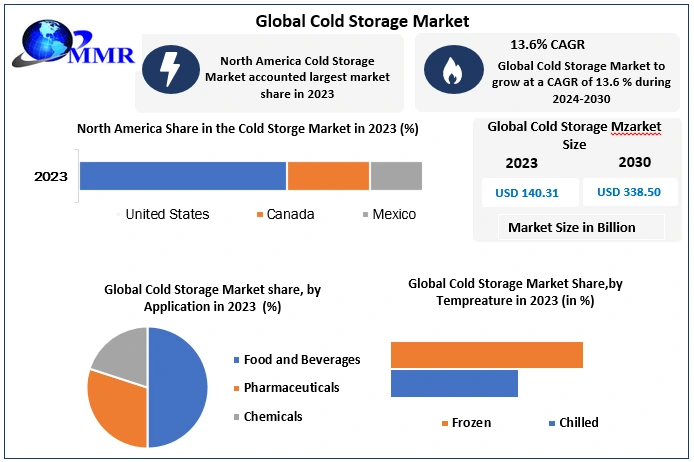
Global Cold Storage Market valued at USD 181.07 billion in 2025, signaling large-scale infrastructure investment across logistics and temperature-controlled supply chains.
The market is projected to reach USD 442.07 billion by 2032, creating significant opportunities for infrastructure developers, utilities, refrigeration technology providers, and logistics operators.
The market is expected to grow at a CAGR of 13.6% between 2025 and 2032, indicating sustained long-term capital expenditure rather than cyclical expansion.
Energy efficiency, warehouse automation, digital monitoring, and sustainable refrigeration are becoming central competitive differentiators.
Food security, pharmaceutical distribution, and global trade continue to strengthen demand for advanced cold chain infrastructure.
Why This Matters Now
Cold storage is no longer viewed as a logistics asset alone. It has become critical infrastructure supporting food security, pharmaceutical distribution, healthcare resilience, and international trade. That shift is changing investment priorities for utilities, infrastructure developers, institutional investors, and policymakers.
The market’s valuation of USD 181.07 billion in 2025 demonstrates that cold storage has become a strategic component of industrial infrastructure. Its projected rise to USD 442.07 billion by 2032 signals an accelerated build-out of energy-efficient facilities capable of supporting expanding global supply chains.
Market Overview
The global Cold Storage Market is entering a new phase of infrastructure development driven by rising demand for temperature-controlled logistics and resilient supply chains. According to Maximize Market Research, the market is expected to expand from USD 181.07 billion in 2025 to USD 442.07 billion by 2032, registering a 13.6% CAGR during the forecast period. That pace of growth implies sustained investment across warehouse construction, refrigeration technology, digital monitoring, and energy management systems.
What changed is the role of cold storage itself. Facilities are increasingly designed as technology-enabled logistics hubs rather than traditional warehouses. Automation, real-time monitoring, predictive maintenance, and intelligent energy management are becoming standard investment priorities.
Energy consumption is also moving into sharper focus. Refrigeration remains one of the largest operating expenses for cold storage operators, encouraging investment in efficient cooling systems, renewable electricity procurement, digital controls, and smart energy optimization. These initiatives align operational efficiency with carbon reduction strategies.
Key Trends Driving Growth
Cold storage infrastructure is expanding alongside modernization of food distribution and pharmaceutical logistics. Consumers increasingly expect year-round product availability while healthcare systems require reliable temperature-controlled storage for medicines and vaccines. These structural shifts are driving long-term investment rather than temporary capacity additions.
Digitalization is transforming facility management. Automated storage systems, warehouse management software, sensors, and remote monitoring improve inventory visibility while reducing operational costs. Investors increasingly view digital capability as essential for maximizing asset utilization.
Sustainability has also become a strategic priority. Operators are adopting energy-efficient refrigeration technologies, improving insulation, optimizing power consumption, and integrating renewable electricity where feasible. Utilities benefit from smarter electricity demand management while operators reduce operating costs.
Infrastructure investment is becoming more coordinated across logistics networks. Rather than expanding isolated facilities, companies are strengthening integrated cold chain ecosystems connecting production, transportation, distribution, and retail. That approach improves resilience while reducing product loss.
Request a Free Sample Copy or View Report Summary: https://www.maximizemarketresearch.com/request-sample/17444/
Segment Insights
Dominant Segment: Information not available in the supplied source.
Fastest-Growing Segment: Information not available in the supplied source.
Digital warehouse technologies continue gaining strategic importance as operators pursue higher productivity and lower operating costs.
Energy-efficient refrigeration systems remain a major investment priority due to their direct impact on operating expenses.
Temperature-controlled logistics supporting food and pharmaceutical industries continue expanding infrastructure requirements.
Regional Growth Story
Major economies continue strengthening cold chain infrastructure as governments and private investors prioritize supply chain resilience.
The United States remains an important market supported by sophisticated food distribution networks, pharmaceutical manufacturing, and logistics investments. Modern warehouse automation and energy management technologies continue improving operational efficiency.
Germany and the United Kingdom are emphasizing sustainable industrial infrastructure, encouraging investment in energy-efficient refrigeration and environmentally responsible logistics facilities. Carbon reduction initiatives increasingly influence facility design and operational standards.
China continues investing in logistics infrastructure to support urbanization, food distribution, and expanding domestic consumption. Large-scale warehouse development is reinforcing national supply chain capabilities while supporting industrial modernization.
India is strengthening cold storage capacity to reduce post-harvest losses, improve agricultural value chains, and expand pharmaceutical logistics. Infrastructure investment continues supporting food security and industrial development objectives.
Japan and South Korea continue emphasizing technology-driven warehouse operations through automation, digital monitoring, and efficient refrigeration systems. These markets demonstrate how operational excellence can offset higher energy and labor costs.
Competitive Landscape
Competition is shifting from warehouse ownership toward integrated operational capability. Market participants are increasingly differentiating themselves through automation, digital infrastructure, sustainability performance, and network scale rather than storage capacity alone.
Energy efficiency is emerging as a competitive advantage. Companies capable of reducing refrigeration costs while maintaining operational reliability will strengthen profitability and improve long-term competitiveness as electricity costs remain an important operational consideration.
Technology deployment is also reshaping market leadership. Operators investing in predictive analytics, intelligent warehouse management, automated material handling, and digital monitoring are improving asset utilization while enhancing customer service.
The competitive landscape increasingly favors organizations capable of combining infrastructure investment with operational excellence, sustainability performance, and scalable logistics networks.
Recent Developments
Energy-efficient refrigeration technologies continue receiving greater investment across new and existing facilities.
Digital warehouse management and automation solutions are improving operational efficiency.
Cold chain infrastructure expansion continues supporting food and pharmaceutical logistics.
Sustainability initiatives increasingly influence facility design and operational investment decisions.
Integrated logistics networks are strengthening resilience across global supply chains.
Strategic Implications
Utilities will play an increasingly important role as cold storage operators seek reliable, affordable, and cleaner electricity supplies. Growing electricity demand from refrigeration systems creates opportunities for demand-response programs, renewable energy integration, and smart grid participation.
Infrastructure investors benefit from stable long-term demand supported by food security, healthcare, and global trade. Unlike cyclical industrial assets, cold storage facilities increasingly serve essential economic functions with resilient utilization.
Technology providers are positioned to capture additional value through intelligent monitoring, automation, advanced refrigeration systems, and digital energy management solutions. Operational efficiency is becoming as important as physical capacity expansion.
Policymakers also gain from continued investment because stronger cold chain infrastructure supports agricultural productivity, reduces food waste, strengthens healthcare logistics, and improves national supply chain resilience.
Future Outlook
The Cold Storage Market is moving beyond warehouse expansion toward intelligent, energy-efficient infrastructure integrated with digital logistics networks. Rising investment in sustainable refrigeration, automation, and resilient supply chains will increasingly determine competitive positioning across global markets.
The companies that combine energy efficiency, digital intelligence, and scalable cold chain infrastructure will define the next generation of market leadership, while operators relying solely on capacity expansion risk falling behind as the industry transitions toward technology-driven logistics ecosystems.
Analyst Perspective
“The Cold Storage Market is entering a period where infrastructure investment, operational efficiency, and sustainability are becoming inseparable competitive priorities. Organizations that modernize their cold chain capabilities while improving energy performance will be best positioned to capitalize on long-term industry expansion,” – Neha Nalawade, Analyst
About Maximize Market Research
Maximize Market Research Pvt. Ltd. (MMR) is a global market research and consulting company that provides reliable, data-focused, and practical business insights. The firm serves a wide range of industries, including healthcare, pharmaceuticals, technology, automotive, electronics, chemicals, personal care, and consumer goods. Through market forecasts, competitive analysis, strategic consulting, and industry impact assessments, MMR helps organizations understand changing market conditions, identify growth opportunities, and make informed business decisions for long-term success.
2nd Floor, Navale IT Park Phase 3
Pune Banglore Highway, Narhe
Pune, Maharashtra 411041, India
+91 9607365656
sales@maximizemarketresearch.com
