Key Highlights
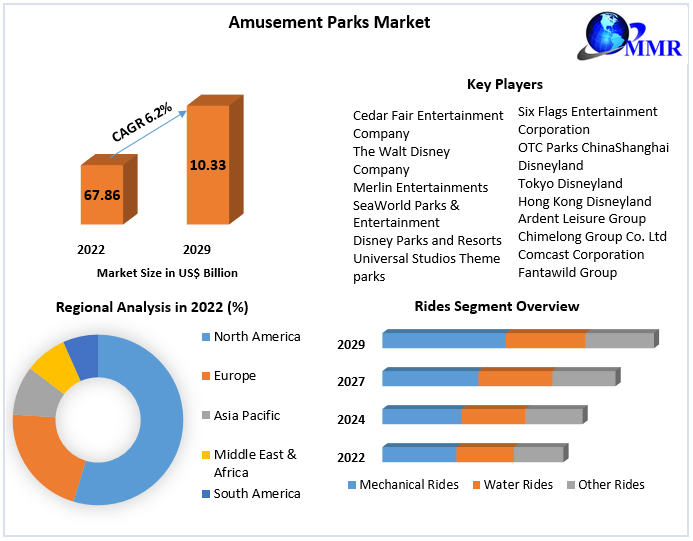
- Market Size: The Amusement Parks Market was valued at USD 59.2 Billion in 2025.
- Forecast: The market is expected to reach USD 91.39 Billion by 2032.
- Growth Rate: Revenue is projected to grow at a CAGR of 6.4% between 2025 and 2032.
- Rising tourism and increasing consumer spending on leisure continue to support market expansion.
- Technology-enabled attractions are becoming a competitive differentiator.
- Operators are investing in immersive experiences to increase visitor engagement and repeat visits.
Why This Matters Now
Consumer expectations have changed faster than many operators anticipated. Visitors are no longer paying only for rides—they are seeking immersive, personalized, and digitally connected entertainment experiences.
With the market expected to expand from USD 59.2 Billion in 2025 to USD 91.39 Billion by 2032, investment decisions made today will determine which operators capture the next generation of visitors. The industry’s growth trajectory signals expanding opportunities for developers, technology providers, hospitality companies, and tourism ecosystems.
Market Overview
The Amusement Parks Market is entering a new phase of sustainable expansion as tourism rebounds, disposable incomes improve, and consumers increasingly prioritize experiences over material purchases.
Valued at USD 59.2 Billion in 2025, the market is forecast to reach USD 91.39 Billion by 2032, registering a 6.4% CAGR during the forecast period. For operators, this growth means larger revenue pools but also greater pressure to continuously innovate. Traditional attractions alone are no longer sufficient to maintain competitive advantage.
The market is increasingly being shaped by investments in advanced rides, themed entertainment, digital engagement platforms, and integrated visitor experiences that encourage longer stays and higher per-capita spending.
Key Trends Driving Growth
The recovery of domestic and international tourism continues to strengthen visitor traffic across amusement parks. Higher travel activity directly translates into stronger attendance, creating opportunities for operators to increase ticket revenues and ancillary spending.
Digital transformation is also changing how parks engage customers before, during, and after visits. Smart ticketing, mobile applications, virtual queue management, and personalized visitor engagement improve operational efficiency while enhancing customer satisfaction.
Consumer demand is shifting toward immersive entertainment rather than standalone rides. Theme-based attractions, interactive experiences, and technology-enabled entertainment are becoming increasingly important in attracting repeat visitors and differentiating brands.
Operators are also investing in larger destination experiences that combine entertainment, hospitality, retail, and food offerings. This diversification creates multiple revenue streams while extending visitor dwell time.
Request a Sample to Discover Market Dynamics and Future Opportunities
Segment Insights
- Dominant Segment: Information not specified in the supplied report.
- Fastest-Growing Segment: Information not specified in the supplied report.
- Technology-enabled attractions continue to strengthen visitor engagement.
- Experience-focused entertainment is becoming increasingly important for attracting repeat customers.
- Integrated entertainment destinations are creating additional revenue opportunities beyond ticket sales.
Regional Growth Story
Regional markets are benefiting from increasing tourism activity, expanding urban populations, and rising consumer expenditure on recreation and leisure.
Developed markets continue investing in attraction upgrades and digital transformation to enhance visitor experiences. Emerging economies, meanwhile, are witnessing new opportunities as tourism infrastructure expands and middle-class spending on entertainment increases.
For investors, regional expansion is becoming less about geographic presence alone and more about adapting attractions to local consumer preferences while maintaining globally competitive visitor experiences.
Competitive Landscape
Competition in the amusement parks industry is shifting beyond ride installations toward experience ecosystems. Operators are increasingly competing through technology adoption, themed environments, customer engagement strategies, and integrated entertainment offerings.
This competitive shift signals that future market leadership will depend less on physical scale and more on continuous innovation. Companies capable of combining immersive attractions with digital customer experiences are likely to strengthen visitor loyalty and improve revenue per guest.
For rivals, the competitive message is clear: investments in digital capabilities, operational efficiency, and differentiated entertainment experiences are rapidly becoming strategic necessities rather than optional upgrades.
Over the next 12–24 months, competition is expected to intensify around visitor personalization, premium attractions, operational technologies, and destination-based entertainment models that encourage longer stays and repeat visitation.
Recent Developments
- Continued investment in immersive entertainment experiences.
- Expansion of digital visitor engagement capabilities.
- Greater focus on enhancing operational efficiency through technology.
- Increased emphasis on delivering differentiated customer experiences.
Strategic Implications
The next growth phase will reward operators that combine operational excellence with continuous innovation. Capital allocation is increasingly shifting toward attractions capable of generating repeat visitation instead of one-time novelty.
Technology providers, hospitality companies, food service operators, and tourism stakeholders also stand to benefit as amusement parks evolve into integrated entertainment destinations rather than standalone venues.
Businesses entering the ecosystem should prioritize scalable digital infrastructure, guest personalization, and experience-led revenue strategies to remain competitive.
Future Outlook
The Amusement Parks Market is expected to maintain steady expansion through 2032, supported by tourism growth, rising leisure spending, and continuous investment in immersive entertainment experiences.
As operators continue modernizing attractions and adopting digital technologies, competitive differentiation will increasingly depend on the quality of visitor experiences rather than the quantity of rides. Companies that invest early in innovation, operational excellence, and customer engagement will capture a disproportionate share of future growth, while those relying solely on traditional park models risk losing relevance in an increasingly experience-driven industry.
Analyst Perspective
“The Amusement Parks Market continues to demonstrate strong long-term potential as operators invest in innovative attractions, technology-enabled experiences, and evolving visitor expectations. Organizations that align investment strategies with changing consumer behavior will be best positioned to capitalize on future growth opportunities.” — Siddhi Dole, Analyst
About Maximize Market Research
Maximize Market Research Pvt. Ltd. (MMR) is a global market research and consulting company that provides reliable, data-focused, and practical business insights. The firm serves a wide range of industries, including healthcare, pharmaceuticals, technology, automotive, electronics, chemicals, personal care, and consumer goods. Through market forecasts, competitive analysis, strategic consulting, and industry impact assessments, MMR helps organizations understand changing market conditions, identify growth opportunities, and make informed business decisions for long-term success.
Contact Us
2nd Floor, Navale IT Park Phase 3
Pune Banglore Highway, Narhe
Pune, Maharashtra 411041, India
+91 9607365656
sales@maximizemarketresearch.com
