Key Highlights
- Rising adoption of plant-based nutrition is accelerating demand for pea protein across FMCG categories.
- Clean-label formulations are pushing manufacturers to replace synthetic and allergen-heavy protein sources.
- Food & beverage companies are integrating pea protein into beverages, bakery, snacks, and meat alternatives.
- Sustainability pressures are reshaping ingredient procurement strategies across global supply chains.
- Demand is expanding beyond vegan consumers into mainstream protein enrichment segments.
Why This Matters Now
Food manufacturers are facing a dual pressure cycle: reformulate faster and label cleaner. At the center of this shift sits pea protein, now moving from niche plant-based positioning into mainstream industrial adoption.
The urgency is no longer driven solely by vegan or vegetarian demand. It is being dictated by regulatory scrutiny, retailer clean-label mandates, and consumer skepticism toward ultra-processed proteins. FMCG leaders are treating protein sourcing as a strategic risk category rather than a formulation choice.
Market Overview
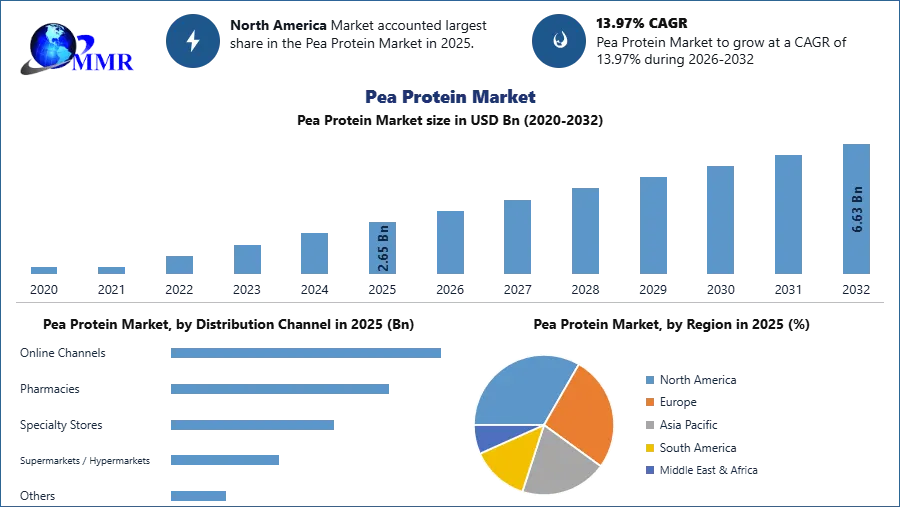
The Pea Protein Market is evolving as a core ingredient layer in the global plant-based food economy. It is increasingly positioned as a functional protein source due to its digestibility profile, non-allergen positioning compared to soy and dairy, and compatibility across multiple food systems.
Food and beverage manufacturers are integrating pea protein into reformulation pipelines to meet shifting consumer expectations around transparency and nutrition density. The market’s trajectory is strongly tied to the expansion of plant-based diets, but its industrial relevance now extends into hybrid products targeting flexitarian consumers.
The MMR report emphasizes broadening application scope across processed foods, nutritional supplements, and beverage innovation. This signals a structural rather than cyclical demand shift within FMCG ingredient sourcing strategies.
Key Trends Driving Growth
Clean-label demand is the most immediate force reshaping procurement decisions. Brands are under pressure to eliminate artificial additives and allergenic proteins, positioning pea protein as a preferred alternative.
Health and wellness trends are accelerating protein fortification across everyday food products. Consumers are no longer limiting protein intake to sports nutrition; it is now embedded in daily consumption patterns across snacks, dairy alternatives, and beverages.
Sustainability considerations are influencing ingredient selection at the corporate level. Pea protein is gaining traction due to its comparatively lower environmental footprint in plant-based protein production systems.
E-commerce expansion is amplifying product discovery for plant-based nutrition products. Digital-first FMCG brands are leveraging pea protein formulations to target health-conscious demographics directly, bypassing traditional retail constraints.
Get a free sample:https://www.maximizemarketresearch.com/request-sample/26472/
Segment Insights
- Dominant Segment: Not explicitly specified in the provided MMR report extract. However, food & beverage applications remain the central adoption area for pea protein usage.
- Fastest-Growing Segment: Not explicitly specified in the provided MMR report extract. Growth is broadly supported across functional food and beverage innovation categories.
Across applications, beverage formulation and meat alternative products are emerging as key integration points. Pea protein’s functional properties—such as emulsification and texturization—are driving its expansion into processed food systems.
Industrial buyers are prioritizing ingredient stability, taste masking performance, and scalability. These factors are increasingly defining competitive differentiation among protein ingredient suppliers.
Regional Growth Story
North America and Europe continue to represent mature adoption regions, driven by strong plant-based dietary penetration and regulatory alignment toward clean-label food standards.
Asia-Pacific is emerging as a structurally important demand center, supported by rising urbanization, dietary diversification, and growing interest in protein-enriched functional foods.
Latin America and the Middle East are gradually integrating plant-based protein trends through imported FMCG brands and expanding retail penetration of health-focused food products.
Regional expansion is closely tied to retail modernization and consumer education around alternative protein sources. Markets with higher processed food consumption are demonstrating faster integration cycles for pea protein-based formulations.
Competitive Landscape
Competition in the pea protein space is increasingly defined by supply chain control rather than branding alone. Ingredient manufacturers are prioritizing upstream integration to secure raw material stability and cost predictability.
The strategic direction of the market signals consolidation pressure. Larger ingredient suppliers are strengthening their positions through capacity expansion and technology investments in protein extraction and refinement processes.
For smaller players, differentiation is shifting toward specialty applications such as high-purity isolates and customized functional blends. This fragmentation suggests a two-tier market structure emerging over the next 12–24 months.
The competitive signal is clear: pea protein is transitioning from a commodity ingredient to a controlled input in global food manufacturing systems. Companies unable to secure scalable production or application-specific innovation risk marginalization as FMCG giants standardize sourcing contracts.
Recent Developments
- Expansion of plant-based product portfolios incorporating pea protein across FMCG categories.
- Increased investment in clean-label and allergen-free protein formulation technologies.
- Strategic focus on scaling production capacity for plant-derived protein ingredients.
- Growth in partnerships between food manufacturers and ingredient technology providers.
- Rising innovation in texture and taste optimization for plant-based meat alternatives.
Strategic Implications
Food manufacturers are entering a phase where protein sourcing becomes a board-level decision linked to brand positioning and regulatory risk management.
Pea protein adoption is no longer limited to niche product lines. It is becoming embedded in core product development pipelines across global FMCG portfolios. This shifts bargaining power toward ingredient suppliers capable of ensuring consistency, traceability, and scalability.
Retailers are also tightening requirements around ingredient transparency. This will accelerate reformulation cycles and increase switching costs for brands dependent on traditional protein systems.
The next competitive frontier lies in functional performance parity with animal-based proteins. Companies that close this gap will define the next generation of mainstream food innovation.
Future Outlook
The pea protein market is expected to deepen its integration into global food systems as FMCG companies restructure portfolios around health, sustainability, and transparency mandates. The pace of adoption will be shaped by cost competitiveness and sensory performance improvements.
Over the next 12–24 months, ingredient suppliers will either evolve into strategic partners for global food brands or be displaced by vertically integrated competitors controlling plant-based protein ecosystems.
Winners will industrialize pea protein into a standard formulation input. Losers will remain trapped in niche positioning as the market scales beyond specialty nutrition.
Analyst Perspective
“Pea protein is moving beyond alternative nutrition positioning into a foundational ingredient layer for FMCG reformulation strategies. The shift is being driven less by trend adoption and more by structural changes in consumer expectations and supply chain design,” says Siddhi Dole, Analyst, Maximize Market Research.
About Maximize Market Research
Maximize Market Research Pvt. Ltd. (MMR) is a global market research and consulting company that provides reliable, data-focused, and practical business insights. The firm serves a wide range of industries, including healthcare, pharmaceuticals, technology, automotive, electronics, chemicals, personal care, and consumer goods. Through market forecasts, competitive analysis, strategic consulting, and industry impact assessments, MMR helps organizations understand changing market conditions, identify growth opportunities, and make informed business decisions for long-term success.
2nd Floor, Navale IT Park Phase 3
Pune Banglore Highway, Narhe
Pune, Maharashtra 411041, India
+91 9607365656
sales@maximizemarketresearch.com
