Key Highlights
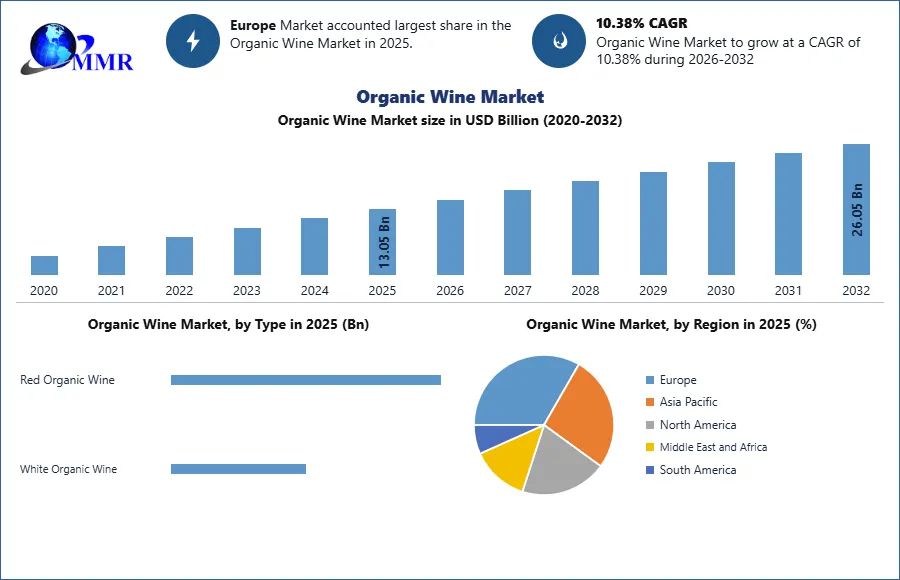
- The market reached USD 13.05 billion in 2025, confirming strong consumer demand for certified organic wines.
- Revenue is forecast to reach USD 26.05 billion by 2032, highlighting continued premiumization across the global wine industry.
- A 10.38% CAGR indicates sustained momentum for organic and sustainable wine production.
- Europe accounts for 35% of the global market, supported by established organic vineyards and strong consumer demand.
- Red organic wine remains the leading product category.
- Off-trade channels continue dominating distribution as retail and online sales expand.
- Sustainable packaging and biodynamic farming are emerging competitive differentiators.
Why This Matters Now
Consumers are no longer purchasing premium wine based solely on origin or vintage. Sustainability credentials, organic certification, ingredient transparency, and environmentally responsible production increasingly influence buying decisions.
For producers, this shift extends beyond marketing. Vineyard management, packaging innovation, distribution strategy, and certification now determine long-term competitive advantage.
Market Overview
Organic wine Market Size is produced using grapes cultivated without synthetic pesticides or fertilizers while complying with certified organic production standards such as USDA Organic and EU Organic requirements. Winemakers are increasingly adopting natural fermentation methods, organic vineyard management, and biodynamic practices to meet evolving consumer expectations.
Growing awareness of health, environmental sustainability, and premium product quality continues supporting market expansion. Producers are also diversifying packaging formats and distribution channels to reach younger, convenience-oriented consumers.
Key Trends Driving Growth
Changing winemaking methods remain the industry’s strongest growth catalyst. Consumer demand for natural products has encouraged wineries to reduce synthetic inputs while adopting sustainable vineyard management and minimalist production techniques.
Health and wellness trends continue strengthening demand for organic beverages. Consumers increasingly associate organic wine with cleaner production methods, greater transparency, and environmentally responsible agriculture.
Clean-label purchasing behavior is reinforcing premium positioning across the category. Certifications and sustainable production practices provide measurable differentiation in increasingly competitive retail environments.
Packaging innovation is reshaping consumer engagement. Lightweight glass bottles, biodegradable closures, recycled labels, and canned organic wines improve convenience while reducing environmental impact.
Online retail continues expanding market access through off-trade distribution channels. Growing e-commerce adoption allows wineries to reach broader consumer audiences while supporting premium product positioning.
Despite positive momentum, higher production costs and certification expenses remain significant barriers. Climate variability, pests, fungal diseases, and inconsistent regulatory frameworks continue creating operational challenges for organic wine producers.
Explore detailed analysis, insights, and growth opportunities
Segment Insights
- Dominant Segment: Red Organic Wine maintained market leadership in 2025, supported by widespread consumer preference, established vineyard production across Europe, and perceived health benefits.
- White organic wine continues expanding as lighter wine styles gain popularity, although it remains smaller than the red wine segment.
- Dominant Packaging: Glass Bottles remain the preferred packaging format due to recyclability, product preservation, and premium brand positioning.
- Dominant Distribution Channel: Off-Trade leads the market through supermarkets, liquor stores, specialty retailers, and expanding online sales.
- Fastest-Growing Trend: Organic sparkling wines, canned wines, and environmentally friendly packaging continue gaining traction among younger consumers seeking convenience and sustainability.
Regional Growth Story
Europe accounts for 35% of the global Organic Wine Market, making it the industry’s largest regional market. Strong wine traditions across France, Italy, Spain, and Germany, combined with advanced organic vineyard development, continue supporting regional leadership.
Consumer demand for transparency and sustainable food production further strengthens Europe’s position as producers expand certified organic vineyard acreage.
Other wine-producing regions continue increasing investment in organic cultivation as premium demand expands internationally, creating broader opportunities for global market growth.
Competitive Landscape
Competition has shifted beyond vineyard ownership toward sustainability leadership. Producers are differentiating through regenerative agriculture, biodynamic certifications, renewable energy investments, and premium organic branding.
Banfi continues strengthening its Italian organic portfolio through sustainable vineyard management and regenerative farming partnerships. Boisset combines biodynamic certification with renewable energy initiatives across both European and American vineyards, appealing to environmentally conscious premium consumers.
Recent market activity indicates that sustainability credentials are becoming strategic assets rather than marketing claims. Over the next 12–24 months, companies investing in regenerative agriculture, premium certifications, and expanded distribution partnerships are likely to strengthen competitive positioning, while producers slow to modernize operations may face increasing pressure in premium wine segments.
Recent Developments
- February 2026: Emiliana Organic Vineyards received the “Organic Initiative of the Year” award for its large-scale soil regeneration and vermicomposting program.
- February 2026: Tamburlaine Organic Wines earned major recognition at the Sakura Japan Women’s Wine Awards, strengthening its Asia-Pacific presence.
- February 2026: Banfi Vintners expanded its U.S. partnership with Emiliana Organic Vineyards to broaden premium organic wine distribution.
- January 2026: King Estate Winery received the American Wine Legend award, highlighting leadership in biodynamic and organic viticulture.
- March 2026: Bonterra Organic Estate reported 3.7% revenue growth in 2025, supporting additional investment in regenerative organic production.
- January 2026: Constellation Brands continued portfolio optimization following major wine brand divestitures, increasing focus on higher-margin premium categories.
Strategic Implications
Organic wine is becoming a strategic premium category where sustainability directly influences commercial value. Producers investing in regenerative farming, eco-friendly packaging, premium certifications, and digital retail capabilities are better positioned to capture long-term demand.
For distributors and investors, competitive differentiation increasingly depends on supply chain transparency, environmental performance, and premium brand credibility rather than production volume alone.
Future Outlook
The Organic Wine Market is expected to sustain double-digit growth as consumers increasingly prioritize health, sustainability, and premium product quality. Producers that successfully combine certified organic production, sustainable innovation, and modern retail strategies will define the next generation of premium wine leadership, while those relying solely on traditional branding risk losing relevance in an increasingly sustainability-driven market.
Analyst Perspective
“Organic wine is evolving beyond a premium niche into a strategic growth category where sustainability, certification, and consumer trust are becoming decisive competitive advantages. Producers investing in regenerative practices and premium positioning will be best placed to capture long-term market growth,” — Siddhi Dole, Analyst
About Maximize Market Research
Maximize Market Research Pvt. Ltd. (MMR) is a global market research and consulting company that provides reliable, data-focused, and practical business insights. The firm serves a wide range of industries, including healthcare, pharmaceuticals, technology, automotive, electronics, chemicals, personal care, and consumer goods. Through market forecasts, competitive analysis, strategic consulting, and industry impact assessments, MMR helps organizations understand changing market conditions, identify growth opportunities, and make informed business decisions for long-term success.
Contact Us :
2nd Floor, Navale IT Park Phase 3
Pune Banglore Highway, Narhe
Pune, Maharashtra 411041, India
+91 9607365656
sales@maximizemarketresearch.com
