Organ Transplant Immunosuppressant Drugs Market
Key Highlights
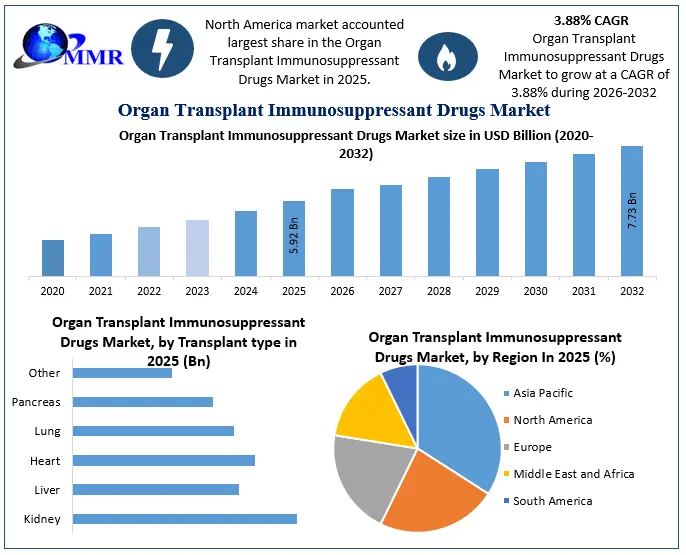
- The Organ Transplant Immunosuppressant Drugs Market was valued at USD 5.92 Billion in 2025.
- The market is projected to reach USD 7.73 Billion by 2032.
- Revenue is expected to expand at a CAGR of 3.88% during 2026–2032.
- Rising organ transplant procedures continue to support sustained demand for long-term immunosuppressive therapies.
- Pharmaceutical companies are investing in therapies that improve graft survival while reducing adverse effects.
- Advances in precision medicine and transplant monitoring are reshaping post-transplant patient management. (Source: Maximize Market Research Report)
Why This Matters Now
Healthcare providers are facing growing pressure to improve transplant outcomes while managing lifelong treatment costs. Every successful transplant creates decades of demand for immunosuppressive therapies, making this market strategically important for pharmaceutical companies, hospital systems, payers, and investors.
The business landscape is shifting from simply preventing organ rejection toward optimizing long-term patient survival, minimizing complications, and improving quality of life. Companies capable of delivering safer and more personalized immunosuppressive therapies are positioned to strengthen both clinical value and commercial performance.
Market Overview
The Organ Transplant Immunosuppressant Drugs Market was valued at USD 5.92 Billion in 2025 and is expected to reach USD 7.73 Billion by 2032, growing at a CAGR of 3.88% during the forecast period.
Demand is supported by increasing organ transplant procedures worldwide and the need for lifelong immunosuppressive therapy following transplantation. Every transplant recipient requires carefully managed medication regimens to reduce rejection risk while maintaining immune balance, creating recurring demand for advanced pharmaceutical therapies.
The market also benefits from improvements in transplant success rates. As surgical techniques, donor management, and post-operative care continue to advance, more patients become eligible for transplantation, expanding the long-term patient population requiring maintenance immunosuppressive treatment.
Healthcare systems are simultaneously emphasizing better patient outcomes and cost-effective care. Drug manufacturers therefore face increasing expectations to deliver therapies that improve efficacy while reducing infection risks, toxicity, and hospitalization rates.
Key Trends Driving Growth
Precision medicine is becoming increasingly important in transplant care. Clinicians are adopting individualized treatment approaches that optimize immunosuppressive therapy according to patient characteristics, transplant type, and clinical response.
Biotechnology innovation continues to reshape pharmaceutical development. Drug manufacturers are investing in therapies designed to improve long-term graft survival while reducing complications associated with prolonged immunosuppression.
Digital health technologies are also supporting transplant management. Remote patient monitoring, electronic medication adherence programs, and digital clinical decision support systems help physicians manage complex post-transplant treatment pathways more efficiently.
Healthcare providers continue strengthening multidisciplinary transplant programs that integrate surgery, pharmacy, diagnostics, and long-term patient monitoring. This integrated care model supports greater treatment adherence and improved clinical outcomes.
Regulatory agencies continue evaluating innovative therapies intended to improve transplant success and reduce adverse events. Continued pharmaceutical innovation is expected to expand treatment options available to clinicians managing complex transplant patients.
Growing healthcare expenditure across both developed and emerging economies also supports broader access to transplant procedures and associated lifelong pharmaceutical therapies.
𝐃𝐨𝐰𝐧𝐥𝐨𝐚𝐝 𝐏𝐃𝐅 𝐁𝐫𝐨𝐜𝐡𝐮𝐫𝐞 @https://www.maximizemarketresearch.com/request-sample/38792/
Segment Insights
- Dominant Segment: Information not available in the supplied Maximize Market Research report.
- Fastest-Growing Segment: Information not available in the supplied Maximize Market Research report.
- Lifelong maintenance immunosuppressive therapy continues to represent the foundation of post-transplant patient care.
- Pharmaceutical innovation increasingly focuses on improving long-term efficacy, reducing toxicity, and supporting individualized treatment strategies.
Regional Growth Story
North America continues to lead the Organ Transplant Immunosuppressant Drugs Market due to advanced transplant infrastructure, high healthcare expenditure, favorable reimbursement systems, and strong adoption of innovative pharmaceutical therapies. The United States remains a major center for transplant procedures and clinical research.
Germany and the United Kingdom continue investing in transplant medicine through well-established healthcare systems that support long-term patient management and access to immunosuppressive medications. Regulatory oversight and reimbursement frameworks encourage adoption of clinically validated therapies.
China continues expanding healthcare infrastructure while increasing access to advanced transplantation services. Investments in pharmaceutical innovation and hospital modernization are strengthening long-term growth opportunities.
Japan’s aging population contributes to increasing demand for transplant care and chronic disease management. Advanced healthcare systems continue supporting high-quality post-transplant treatment protocols.
India is expanding transplant capabilities through investments in tertiary healthcare facilities, specialist hospitals, and broader access to transplant procedures. Rising awareness and healthcare infrastructure improvements are supporting market expansion.
South Korea continues adopting advanced transplant technologies supported by sophisticated healthcare delivery systems and ongoing medical innovation.
Across all major markets, healthcare expenditure, reimbursement policies, and improved transplant outcomes remain important factors influencing long-term pharmaceutical demand.
Competitive Landscape
Competition increasingly centers on clinical differentiation rather than product availability alone. Pharmaceutical companies are investing in therapies that improve graft survival, reduce adverse events, and enhance long-term patient adherence.
Research and development strategies increasingly emphasize precision medicine, biologic innovation, and individualized treatment protocols. Companies capable of demonstrating superior clinical outcomes alongside improved safety profiles are expected to strengthen competitive positioning.
Strategic partnerships between pharmaceutical manufacturers, biotechnology companies, research institutions, and transplant centers continue supporting clinical development and commercialization efforts. These collaborations accelerate innovation while expanding access to advanced transplant therapies.
Manufacturers also compete by strengthening global regulatory approvals, expanding geographic reach, and improving patient support programs that encourage long-term treatment adherence.
Recent Developments
- Continued pharmaceutical research focuses on improving long-term transplant outcomes through advanced immunosuppressive therapies.
- Precision medicine approaches are gaining greater attention in post-transplant patient management.
- Healthcare providers continue investing in integrated transplant programs that improve monitoring and long-term treatment adherence.
- Digital health tools are increasingly supporting medication management and remote monitoring for transplant recipients.
Strategic Implications
For pharmaceutical companies, the market presents steady long-term revenue opportunities supported by lifelong treatment requirements rather than short-duration therapies. Innovation focused on safety, personalized medicine, and patient adherence will increasingly determine commercial success.
Healthcare providers benefit from therapies that reduce rejection rates while minimizing complications, supporting improved patient outcomes and lower long-term healthcare costs.
Investors should monitor companies expanding pipelines through biologics, precision medicine, and next-generation immunosuppressive therapies capable of addressing unmet clinical needs.
Healthcare policymakers can improve transplant outcomes by supporting reimbursement models that encourage access to effective long-term immunosuppressive treatment while strengthening transplant infrastructure.
Future Outlook
The Organ Transplant Immunosuppressant Drugs Market will increasingly be shaped by precision medicine, biotechnology innovation, digital patient management, and long-term outcome optimization, with future market leaders distinguished by their ability to deliver safer, personalized therapies that improve graft survival while reducing lifetime treatment burden.
Analyst Perspective
“The Organ Transplant Immunosuppressant Drugs Market continues to evolve as healthcare providers prioritize better long-term transplant outcomes through personalized therapy, pharmaceutical innovation, and integrated patient management. Companies that combine clinical innovation with improved safety profiles will be best positioned for sustained growth,” — Komal Patil, Analyst
About Maximize Market Research
Maximize Market Research Pvt. Ltd. (MMR) is a global market research and consulting company that provides reliable, data-focused, and practical business insights. The firm serves a wide range of industries, including healthcare, pharmaceuticals, technology, automotive, electronics, chemicals, personal care, and consumer goods. Through market forecasts, competitive analysis, strategic consulting, and industry impact assessments, MMR helps organizations understand changing market conditions, identify growth opportunities, and make informed business decisions for long-term success.
2nd Floor, Navale IT Park Phase 3
Pune Banglore Highway, Narhe
Pune, Maharashtra 411041, India
+91 9607365656
sales@maximizemarketresearch.com
