Healthcare systems are accelerating biologics adoption as chronic diseases, cancer, and autoimmune disorders place increasing pressure on conventional treatment pathways. Pharmaceutical companies, biotechnology firms, hospital networks, investors, and regulators are responding because biologics now represent one of the fastest-growing segments of modern therapeutics with significant commercial and clinical impact.
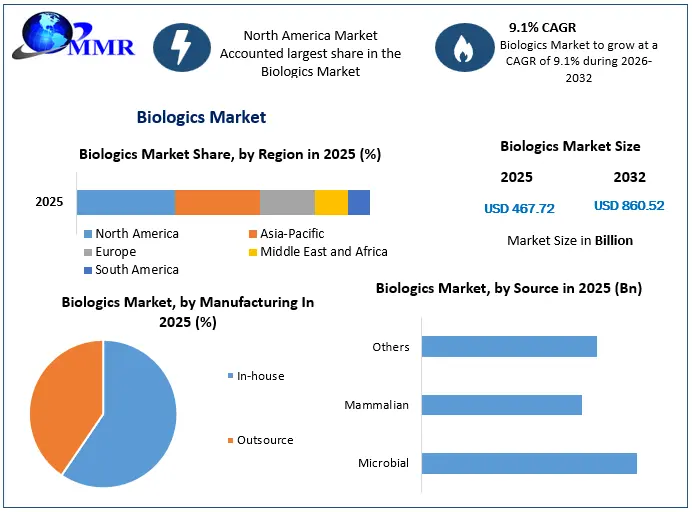
The Global Biologics Market was valued at USD 467.72 Billion in 2025 and is projected to reach USD 860.52 Billion by 2032, growing at a 9.1% CAGR during the forecast period. The market’s expansion highlights sustained investment in innovative therapies, advanced manufacturing, precision medicine, and biotechnology research that continues to reshape patient care worldwide.
Key Highlights
- Market valued at USD 467.72 Billion in 2025
- Projected to reach USD 860.52 Billion by 2032
- Forecast CAGR: 9.1% (2025–2032)
- Rising chronic disease burden continues increasing biologics demand.
- Precision medicine supports broader adoption of targeted biologic therapies.
- Biopharmaceutical companies continue expanding research and manufacturing capacity.
- Digital technologies improve biologics development and patient management.
- Regulatory approvals and biosimilar adoption continue strengthening market accessibility.
- Investment in biotechnology innovation remains a major industry growth driver.
Why This Matters Now
Healthcare providers increasingly require therapies capable of treating complex diseases with greater precision than traditional pharmaceuticals. Biologics have become central to managing cancer, autoimmune diseases, inflammatory disorders, diabetes, and several rare diseases where targeted therapies improve patient outcomes.
For pharmaceutical companies, biologics generate significant long-term revenue opportunities supported by intellectual property, specialized manufacturing, and expanding clinical applications. Healthcare payers simultaneously balance growing biologics utilization with reimbursement strategies designed to improve patient access while controlling treatment costs.
Governments also recognize biotechnology as a strategic healthcare sector. Investments in research, manufacturing capacity, regulatory modernization, and domestic biopharmaceutical production continue strengthening healthcare resilience while supporting innovation-driven economic growth.
Market Overview
Biologics are complex medicines produced from living organisms using advanced biotechnology processes. They include monoclonal antibodies, recombinant proteins, vaccines, cell therapies, gene therapies, and other biotechnology-derived treatments addressing diseases that remain difficult to manage through conventional pharmaceuticals.
The biologics market continues expanding because healthcare providers increasingly adopt targeted therapies capable of improving clinical outcomes while reducing disease progression for chronic and life-threatening conditions. Growing disease prevalence, aging populations, and improved diagnostic capabilities further strengthen demand.
Continuous innovation across biotechnology research has expanded biologics applications into oncology, immunology, endocrinology, infectious diseases, and rare genetic disorders. Pharmaceutical companies continue investing heavily in research pipelines that support future therapeutic innovation and commercial growth.
Manufacturing capabilities also continue advancing through improved bioprocessing technologies, automation, and quality management systems. These improvements strengthen production efficiency while supporting greater global biologics availability.
Key Trends Driving Growth
Precision medicine continues transforming therapeutic decision-making. Improved genomic analysis, molecular diagnostics, and biomarker identification enable clinicians to match biologic therapies with individual patient characteristics, improving treatment effectiveness while reducing unnecessary interventions.
Artificial intelligence increasingly supports biologics research and development. AI applications improve drug discovery, clinical trial optimization, molecular analysis, and manufacturing efficiency. Pharmaceutical companies adopting AI-enabled research platforms shorten development timelines while improving candidate selection.
Digital health technologies strengthen biologics treatment management throughout the patient journey. Remote monitoring, digital adherence platforms, electronic health records, and telemedicine improve long-term disease management while supporting value-based healthcare delivery.
Biosimilars continue expanding global treatment accessibility. As regulatory pathways mature, healthcare systems increasingly adopt biosimilars to improve affordability while maintaining therapeutic effectiveness. Broader biosimilar availability also intensifies competition, encouraging manufacturers to invest in next-generation biologic innovation.
Healthcare infrastructure investment remains another important catalyst. Hospitals continue expanding infusion centers, specialty pharmacies, advanced diagnostics, and biologics administration capabilities to accommodate growing patient volumes requiring specialized therapies.
Biopharmaceutical innovation also continues accelerating across cell therapy, gene therapy, immunotherapy, and next-generation biologic platforms. These technologies broaden treatment options while creating new commercial opportunities across biotechnology ecosystems.
𝐃𝐨𝐰𝐧𝐥𝐨𝐚𝐝 𝐏𝐃𝐅 𝐁𝐫𝐨𝐜𝐡𝐮𝐫𝐞 @https://www.maximizemarketresearch.com/request-sample/37255/
Segment Insights
- Dominant Segment: Not specified in the supplied MMR report.
- Fastest-Growing Segment: Not specified in the supplied MMR report.
- Monoclonal antibodies, vaccines, recombinant proteins, cell therapies, and gene therapies remain important biologic categories.
- Precision medicine supports broader biologics utilization across multiple therapeutic areas.
- Expanding biologics manufacturing improves global treatment availability.
- Advanced diagnostics strengthen patient selection and treatment optimization.
Regional Growth Story
The United States continues leading biologics innovation through substantial pharmaceutical research investment, advanced biotechnology infrastructure, strong regulatory support, and widespread precision medicine adoption. Healthcare expenditure continues supporting rapid commercialization of innovative biologic therapies.
Germany and the United Kingdom maintain strong positions through advanced healthcare systems, biotechnology research, and regulatory frameworks supporting biologic approvals and biosimilar adoption. Reimbursement policies increasingly balance innovation with long-term healthcare sustainability.
China continues rapidly expanding biotechnology manufacturing, pharmaceutical innovation, and domestic biologics production through sustained healthcare investment and supportive industrial policies.
Japan remains a major biologics market supported by advanced pharmaceutical research, aging demographics, and strong healthcare infrastructure. India continues expanding biopharmaceutical manufacturing capacity while strengthening biosimilar production and biotechnology research capabilities. South Korea maintains significant momentum through biotechnology innovation, advanced biologics manufacturing, and increasing global competitiveness within biopharmaceutical exports.
Across all major healthcare markets, regulatory modernization, biotechnology investment, and expanding patient access continue strengthening biologics adoption.
Competitive Landscape
Competition increasingly depends on research productivity, manufacturing excellence, regulatory execution, and commercial pipeline strength rather than product portfolios alone.
Pharmaceutical companies continue investing heavily in biologics research, manufacturing expansion, and strategic collaborations to strengthen competitive positioning. Investments in next-generation biologics, cell therapies, gene therapies, and precision medicine platforms indicate a broader industry transition toward highly specialized therapeutic solutions.
Regulatory approvals represent more than commercial milestones. Each approval expands treatment options, strengthens reimbursement opportunities, improves physician confidence, and raises competitive expectations across therapeutic categories.
Strategic partnerships between biotechnology companies, pharmaceutical manufacturers, academic research organizations, and healthcare providers continue accelerating biologics development while improving commercialization efficiency.
Recent Developments
- Continued investment in biologics research and development.
- Expansion of biopharmaceutical manufacturing capabilities.
- Growing adoption of biosimilars across major healthcare markets.
- Increased application of AI in biologics discovery and development.
- Ongoing regulatory approvals supporting innovative biologic therapies.
- Continued investment in precision medicine and advanced diagnostics.
Strategic Implications
The biologics market increasingly defines pharmaceutical competitiveness. Companies capable of combining scientific innovation, manufacturing excellence, regulatory expertise, and commercial execution will strengthen long-term leadership.
Healthcare providers benefit from expanding treatment options that improve patient outcomes across oncology, autoimmune diseases, and chronic illnesses. Payers continue evaluating value-based reimbursement models that reward improved clinical performance while expanding patient access.
Biotechnology firms specializing in advanced therapeutics, manufacturing technologies, digital health integration, and precision diagnostics also benefit from growing demand throughout the biologics value chain.
Organizations investing in integrated biotechnology ecosystems—including AI-enabled research, advanced manufacturing, diagnostics, and personalized medicine—are positioned to capture sustained industry growth.
Future Outlook
The Global Biologics Market is expected to sustain robust expansion as chronic disease prevalence, precision medicine, biotechnology innovation, biosimilar adoption, and advanced manufacturing continue transforming healthcare delivery. Companies that combine scientific leadership, scalable manufacturing, digital innovation, and patient-centered therapeutic development will define the industry’s next decade, while slower innovators risk losing competitive relevance in the rapidly evolving biopharmaceutical landscape.
Analyst Perspective
“Biologics are becoming the foundation of next-generation healthcare by enabling more targeted, personalized, and clinically effective treatments across multiple disease areas. Organizations investing in biotechnology innovation, manufacturing excellence, and precision medicine capabilities will be best positioned to capture future market opportunities.” — Komal Patil, Analyst
About Maximize Market Research
Maximize Market Research Pvt. Ltd. (MMR) is a global market research and consulting company that provides reliable, data-focused, and practical business insights. The firm serves a wide range of industries, including healthcare, pharmaceuticals, technology, automotive, electronics, chemicals, personal care, and consumer goods. Through market forecasts, competitive analysis, strategic consulting, and industry impact assessments, MMR helps organizations understand changing market conditions, identify growth opportunities, and make informed business decisions for long-term success.
2nd Floor, Navale IT Park Phase 3
Pune Banglore Highway, Narhe
Pune, Maharashtra 411041, India
+91 9607365656
sales@maximizemarketresearch.com
