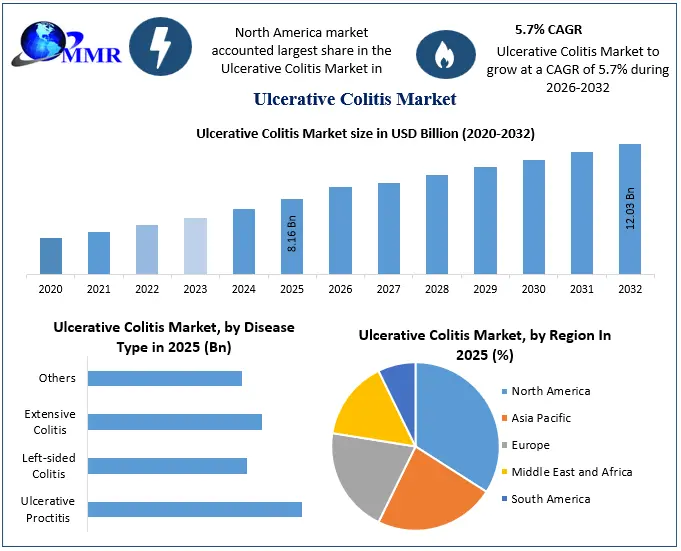
Healthcare providers and pharmaceutical companies are accelerating investment in inflammatory bowel disease therapies as ulcerative colitis continues to place growing pressure on healthcare systems worldwide. Regulators, hospital networks, biotechnology companies, and investors are responding because long-term disease management increasingly depends on innovative biologic therapies, precision medicine, and integrated patient care.
The Global Ulcerative Colitis Market was valued at USD 8.16 Billion in 2025 and is expected to reach USD 12.03 Billion by 2032, growing at a 5.7% CAGR during the forecast period. The market’s steady expansion highlights sustained demand for advanced therapies that improve clinical outcomes while reducing disease progression and healthcare utilization.
Key Highlights
- Market valued at USD 8.16 Billion in 2025
- Projected to reach USD 12.03 Billion by 2032
- Forecast CAGR: 5.7% (2025–2032)
- Rising inflammatory bowel disease prevalence continues driving treatment demand.
- Biologic therapies strengthen long-term disease management.
- Precision medicine improves treatment personalization.
- Pharmaceutical innovation expands therapeutic options.
- Digital health supports patient monitoring and treatment adherence.
- Healthcare infrastructure investments improve access to specialized gastroenterology care.
Why This Matters Now
Ulcerative colitis is a chronic inflammatory bowel disease requiring lifelong management, continuous monitoring, and individualized treatment strategies. Rising diagnosis rates and growing awareness are increasing demand for effective therapies capable of maintaining remission while improving patient quality of life.
Healthcare providers increasingly require advanced therapeutic options as conventional treatments may not adequately control moderate-to-severe disease. Pharmaceutical companies continue investing in innovative biologics and targeted therapies to address unmet clinical needs while expanding commercial opportunities within gastroenterology.
Healthcare systems also face growing pressure to balance treatment effectiveness with long-term healthcare expenditure. Earlier diagnosis, optimized treatment selection, and improved disease management help reduce hospitalizations and complications while supporting value-based healthcare delivery.
Market Overview
Ulcerative colitis is a chronic inflammatory condition affecting the colon and rectum. The disease requires continuous medical management through anti-inflammatory therapies, biologics, immunomodulators, and supportive clinical monitoring aimed at controlling inflammation and maintaining remission.
The market continues expanding because increasing disease prevalence and improved diagnostic capabilities enable earlier identification and treatment. Growing awareness among patients and healthcare providers also contributes to higher treatment adoption across developed and emerging healthcare markets.
Biologic therapies have significantly changed treatment strategies by targeting specific immune pathways responsible for chronic inflammation. Their expanding use continues improving outcomes for patients with moderate-to-severe disease while creating sustained growth opportunities for pharmaceutical manufacturers.
Advances in diagnostics, laboratory testing, and disease monitoring further strengthen clinical decision-making. Earlier intervention allows physicians to implement more effective treatment strategies before disease progression leads to severe complications.
Key Trends Driving Growth
Biologic therapies remain among the most important growth drivers. Continued innovation across monoclonal antibodies and targeted immunotherapies expands therapeutic options for patients who require advanced disease management beyond conventional medications.
Precision medicine is improving treatment selection by enabling physicians to better match therapies with individual patient characteristics. Personalized treatment approaches support improved clinical outcomes while reducing unnecessary treatment changes.
Digital health technologies continue improving disease monitoring. Remote patient management, telehealth consultations, electronic medical records, and digital adherence tools strengthen long-term patient engagement while supporting continuity of care.
Artificial intelligence is gradually supporting gastroenterology through advanced diagnostics, imaging analysis, clinical decision support, and healthcare analytics. Although adoption continues developing, AI applications improve diagnostic efficiency and treatment planning.
Healthcare infrastructure investment also strengthens market growth. Hospitals continue expanding gastroenterology departments, infusion centers, and specialty clinics to accommodate increasing patient volumes requiring advanced biologic therapies.
Pharmaceutical and biotechnology companies remain highly active across inflammatory bowel disease research. Continued investment in innovative therapies, clinical development, and biologic manufacturing strengthens future treatment availability while expanding commercial opportunities.
𝐃𝐨𝐰𝐧𝐥𝐨𝐚𝐝 𝐏𝐃𝐅 𝐁𝐫𝐨𝐜𝐡𝐮𝐫𝐞 @https://www.maximizemarketresearch.com/request-sample/148434/
Segment Insights
- Dominant Segment: Not specified in the supplied MMR report.
- Fastest-Growing Segment: Not specified in the supplied MMR report.
- Biologic therapies continue expanding treatment options for moderate-to-severe ulcerative colitis.
- Advanced diagnostics improve disease detection and clinical decision-making.
- Precision medicine supports individualized therapeutic strategies.
- Specialty gastroenterology care strengthens long-term disease management.
Regional Growth Story
The United States continues leading the ulcerative colitis market through substantial healthcare expenditure, advanced biologic therapy adoption, strong pharmaceutical innovation, and broad access to specialized gastroenterology services.
Germany and the United Kingdom maintain well-established inflammatory bowel disease treatment programs supported by advanced healthcare infrastructure and reimbursement systems that facilitate access to innovative therapies.
China continues expanding healthcare investment while strengthening diagnostic capabilities and pharmaceutical innovation. Increasing disease awareness contributes to broader treatment adoption across its healthcare system.
Japan benefits from advanced medical research, sophisticated healthcare delivery, and increasing utilization of biologic therapies for chronic inflammatory diseases. India continues expanding gastroenterology services and pharmaceutical manufacturing while improving patient access to advanced treatments. South Korea strengthens market growth through biotechnology innovation, digital healthcare adoption, and expanding specialty medical services.
Across these major healthcare markets, healthcare investment, regulatory modernization, and continuous therapeutic innovation continue improving patient outcomes.
Competitive Landscape
Competition increasingly depends on innovation rather than product availability alone. Pharmaceutical companies continue investing in biologic therapies, targeted immunology treatments, clinical research, and precision medicine platforms to strengthen long-term market leadership.
Product approvals represent more than commercial achievements. Each regulatory authorization expands treatment choices, strengthens physician confidence, improves reimbursement opportunities, and raises competitive expectations across inflammatory bowel disease care.
Strategic investments in biotechnology, biologic manufacturing, and digital health platforms also indicate continued industry commitment to improving patient outcomes while supporting healthcare system efficiency.
Healthcare providers increasingly collaborate with pharmaceutical companies, research institutions, and technology providers to strengthen treatment pathways and accelerate adoption of innovative therapies.
Recent Developments
- Continued investment in biologic therapy research and development.
- Expansion of precision medicine approaches for inflammatory bowel disease.
- Increasing adoption of digital health technologies supporting patient monitoring.
- Ongoing pharmaceutical innovation across targeted immunology therapies.
- Continued healthcare infrastructure investment supporting specialized gastroenterology services.
- Regulatory progress supporting access to advanced ulcerative colitis treatments.
Strategic Implications
The ulcerative colitis market increasingly demonstrates how targeted therapies are transforming chronic disease management. Pharmaceutical companies investing in biologic innovation, precision medicine, and next-generation immunology therapies strengthen long-term competitive positioning while addressing growing patient needs.
Hospitals and specialty care providers benefit from expanding access to advanced therapies that improve disease control and reduce hospitalization rates. Healthcare payers increasingly evaluate reimbursement strategies balancing innovative treatments with long-term cost effectiveness and improved patient outcomes.
Biotechnology companies specializing in biologics, diagnostics, digital health, and precision medicine also gain opportunities as integrated inflammatory bowel disease management continues expanding.
Organizations capable of combining scientific innovation, patient-centered care, digital health integration, and regulatory execution will be positioned to lead the next phase of gastroenterology innovation.
Future Outlook
The Global Ulcerative Colitis Market is expected to maintain steady growth as biologic therapies, precision medicine, pharmaceutical innovation, digital health, and improved disease management continue transforming inflammatory bowel disease treatment. Organizations combining clinical innovation, advanced therapeutics, digital patient engagement, and evidence-based care will define future market leadership, while slower innovators risk losing relevance in an increasingly competitive specialty therapeutics landscape.
Analyst Perspective
“Ulcerative colitis treatment is shifting toward more personalized, biologic-driven care supported by advances in immunology, diagnostics, and digital health. Healthcare organizations and pharmaceutical companies investing in innovative therapies and integrated disease management strategies will be best positioned to improve patient outcomes while capturing long-term market opportunities.” — Komal Patil, Analyst
About Maximize Market Research
Maximize Market Research Pvt. Ltd. (MMR) is a global market research and consulting company that provides reliable, data-focused, and practical business insights. The firm serves a wide range of industries, including healthcare, pharmaceuticals, technology, automotive, electronics, chemicals, personal care, and consumer goods. Through market forecasts, competitive analysis, strategic consulting, and industry impact assessments, MMR helps organizations understand changing market conditions, identify growth opportunities, and make informed business decisions for long-term success.
2nd Floor, Navale IT Park Phase 3
Pune Banglore Highway, Narhe
Pune, Maharashtra 411041, India
+91 9607365656
sales@maximizemarketresearch.com
