Key Highlights
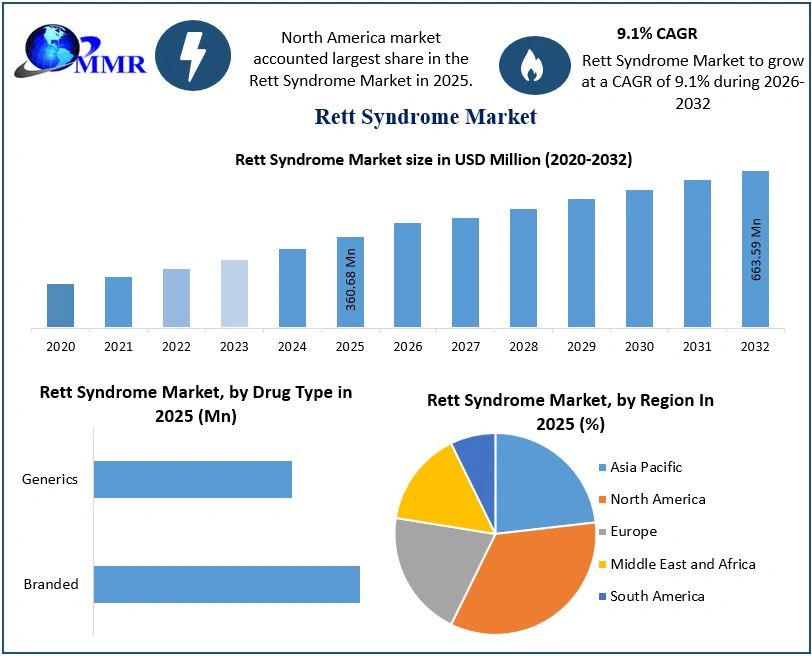
Market Valuation: Valued at USD 225.02 million in 2022, intensified drug development pipelines will propel the global market to USD 515.06 million by 2029.
Compounded Growth: Accelerating clinical trials and expanded patient identification yield a strong 10.23% CAGR across the 2023–2029 forecast window.
Demographic Focus: The disease burden predominantly affects females, driving specialized diagnostic workflows and targeted clinical intervention models.
Pipeline Focus: Corporate strategies are shifting focus away from purely managing symptoms toward reversing underlying genetic defects and improving long-term cognitive function.
Support Frameworks: Non-profit organizations are building critical, supportive networks connecting families, which directly fuels global patient registry enrollment.
Why This Matters Now
Operating costs within specialized healthcare systems are escalating as families battle complex rare neurodevelopmental disorders without adequate therapeutic options. For years, Rett syndrome left clinical networks with few tools outside of palliative care, creating significant long-term hospitalization and caregiving expenses.
The entry of targeted molecular therapeutics alters this structural dynamic, offering high-value treatment pathways that change patient outcomes. Deploying these novel pharmaceutical therapies allows specialized pediatric neurology clinics to actively transition from chronic symptom management to decisive disease modification.
Market Overview
The global Rett syndrome market is experiencing a profound transition from basic supportive care to targeted, mechanism-based pharmacological interventions. Rett syndrome represents a severe, rare neurodevelopmental disorder that predominantly affects female patients, characterized by slowed growth, compromised mobility, and severe cognitive impairment. Historically, medical interventions were restricted to non-specific behavioral support, physical therapy, and basic anti-epileptic drugs to mitigate secondary symptoms.
According to data compiled by Maximize Market Research, the global market reached a valuation of USD 225.02 million in 2022. Spurred by expanding investments in clinical trials and rare disease fast-track programs, total revenue will grow at a 10.23% CAGR to reach USD 515.06 million by 2029. This growth represents an active, industry-wide push to commercialize specialized orphan drugs that improve cognitive function and address underlying genetic alterations.
Key Trends Driving Growth
Heightened clinical awareness combined with advanced investigative modalities serves as a primary catalyst expanding the addressable Rett syndrome patient pool. Advocacy groups and non-profit organizations are educating medical practitioners to correctly identify subtle features of the syndrome early in life. Improved diagnostic techniques, including targeted genetic testing and high-resolution brain imaging, empower clinicians to differentiate Rett syndrome from autism and other mimicking neurodevelopmental conditions.
Simultaneously, regulatory agencies are offering orphan drug designations, fast-track approvals, and rolling review pathways to lower developmental risks for pharmaceutical developers. These incentives attract vital biotech venture capital, converting academic genetic insights into formalized commercial drug development programs. Furthermore, the establishment of comprehensive patient registries gives developers instant access to well-characterized cohorts, substantially reducing clinical trial recruitment timelines.
𝐃𝐨𝐰𝐧𝐥𝐨𝐚𝐝 𝐏𝐃𝐅 𝐁𝐫𝐨𝐜𝐡𝐮𝐫𝐞 @ https://www.maximizemarketresearch.com/request-sample/187774/
Segment Insights
Drug Development (Dominant Segment): Capturing a major share of active capital allocation, drug development serves as the foundational segment driving market revenue. Pharmaceutical developers are investing heavily to move candidate molecules through early-stage safety assessments into pivotal multi-center trials.
Production of Medications (Fastest-Growing Segment): As novel candidate compounds transition out of clinical trials toward commercial scaling, manufacturing and formulation scale-up represents the fastest-growing operational segment.
Managing Symptoms (Dominant Application): Traditional symptom management, which addresses immediate physical needs via anti-seizure agents and muscle relaxants, remains a dominant expenditure bucket for families.
Reversing Underlying Genetic Defects (Fastest-Growing Application): Therapeutic strategies aimed at the genetic roots of the disease represent the fastest-growing application segment, backed by rising corporate R&D funding.
Communication Aids (Dominant Assistive Tech): Specialized eye-gaze tracking hardware and communication boards lead the assistive technology segment to offset non-verbal barriers.
Mobility Devices (Fastest-Growing Assistive Tech): Lightweight, specialized wheelset systems and adaptive pediatric furniture are expanding rapidly to improve independent movement.
Regional Growth Story
North America commands the largest share of the global Rett syndrome market, supported by massive healthcare expenditure, established rare disease legislation, and an integrated network of specialized pediatric neurology centers. The presence of core biotech hubs in the United States accelerates the transition of experimental molecules into clinical validation phases. Furthermore, favorable commercial insurance reimbursement policies and robust Medicaid coverage models for rare genetic conditions ensure high institutional adoption rates for newly approved, high-cost therapies.
Europe functions as another critical pillar, with countries like Germany and the United Kingdom executing well-funded public research programs and clinical registries. European single-payer health networks prioritize therapies that lower permanent institutionalization costs, facilitating value-based pricing discussions. Across the Asia-Pacific region, nations including China, Japan, India, and South Korea present a major expansion frontier for orphan drug commercialization. While historical barriers included low genetic screening rates and restricted budgets, expanding middle-class demographics and updated rare-disease guidelines are driving the regional adoption of modern genetic testing.
Competitive Landscape
The global arena features a highly concentrated ecosystem where specialized biopharmaceutical companies dominate development through targeted pipeline investments. Success in this rare disease space requires manufacturers to maintain close relationships with international clinical research networks and global patient advocacy organizations. Because the total patient population is small, leading corporations focus on maximizing the clinical efficacy and safety profiles of their assets to justify premium pricing structures.
To establish competitive positioning, major biopharma entities are increasingly utilizing strategic licensing deals to acquire early-stage assets from university laboratories. This pipeline acquisition strategy allows large enterprises to diversify their central nervous system portfolios while mitigating early-stage discovery failures. Furthermore, developers are investing in specialized manufacturing capabilities to ensure stable, contaminated-free production of low-volume orphan biologics, building deep technical moats against future market entrants.
Recent Developments
Clinical Allocation: Global research pipelines are expanding funding for multi-center pediatric CNS clinical trials to confirm safety profiles across wider age ranges.
Awareness Campaigns: International non-profit advocacy networks are launching centralized provider toolkits to shorten the timeframe between initial symptom presentation and definitive genetic confirmation.
Targeted Monogenic Research: Biotech firms are scaling molecular research programs explicitly targeting MECP2 gene mutations to discover potential curative mechanisms.
Assistive Infrastructure: Medical device developers are introducing cloud-connected eye-tracking software suites to capture real-time cognitive responses during therapy.
Registry Expansion: Global health networks are harmonizing patient registry data across North America and Europe to streamline upcoming phase 2 and phase 3 trial recruitment.
Strategic Implications
The ongoing expansion of clinical pipelines demonstrates that simple symptom management is no longer a viable long-term commercial strategy for pharmaceutical companies. The shift toward genetic targets indicates that payers are prioritizing disease-modifying therapies that can demonstrably reduce downstream institutional care burdens. Hospital networks are adjusting budgets to accommodate advanced molecular diagnostics, knowing that early identification unlocks optimized therapeutic pathways.
Consequently, collaborations between pharmaceutical manufacturers and diagnostic companies are becoming an absolute necessity to secure market share. Ensuring that genetic testing panels routinely include comprehensive MECP2 screening helps companies identify patients who would benefit from targeted therapies. For investors, capital will continue to favor developers who pair therapeutic candidates with robust, cloud-enabled companion diagnostics to track clinical progression objectively.
Future Outlook
Advancing toward 2029, the global Rett syndrome market will undergo a major transformation as early clinical concepts complete regulatory reviews and achieve commercial status. Classic, un-targeted symptom-mitigation approaches will lose financial prominence as health systems transition budgets toward high-value, disease-modifying molecules. Long-term commercial leadership will belong to developers who successfully establish sustainable global supply chains for specialized pediatric formulations while navigating international public reimbursement constraints. The market will ultimately separate forward-thinking leaders who deliver definitive genetic and molecular therapies from laggards who rely on generic, palliative care models.
Analyst Perspective
“The commercial expansion of the global Rett syndrome market highlights a critical pivot toward precision medicine within the pediatric neurology sector. Developing therapeutic options that target the underlying genetic drivers allows pharmaceutical innovators to offer genuine disease modification, changing the clinical options available to healthcare networks worldwide.” — Komal Patil, Research Analyst, Maximize Market Research
About Maximize Market Research
Maximize Market Research Pvt. Ltd. (MMR) is a global market research and consulting company that provides reliable, data-focused, and practical business insights. The firm serves a wide range of industries, including healthcare, pharmaceuticals, technology, automotive, electronics, chemicals, personal care, and consumer goods. Through market forecasts, competitive analysis, strategic consulting, and industry impact assessments, MMR helps organizations understand changing market conditions, identify growth opportunities, and make informed business decisions for long-term success.
2nd Floor, Navale IT Park Phase 3
Pune Banglore Highway, Narhe
Pune, Maharashtra 411041, India
+91 9607365656
sales@maximizemarketresearch.com
