Key Highlights
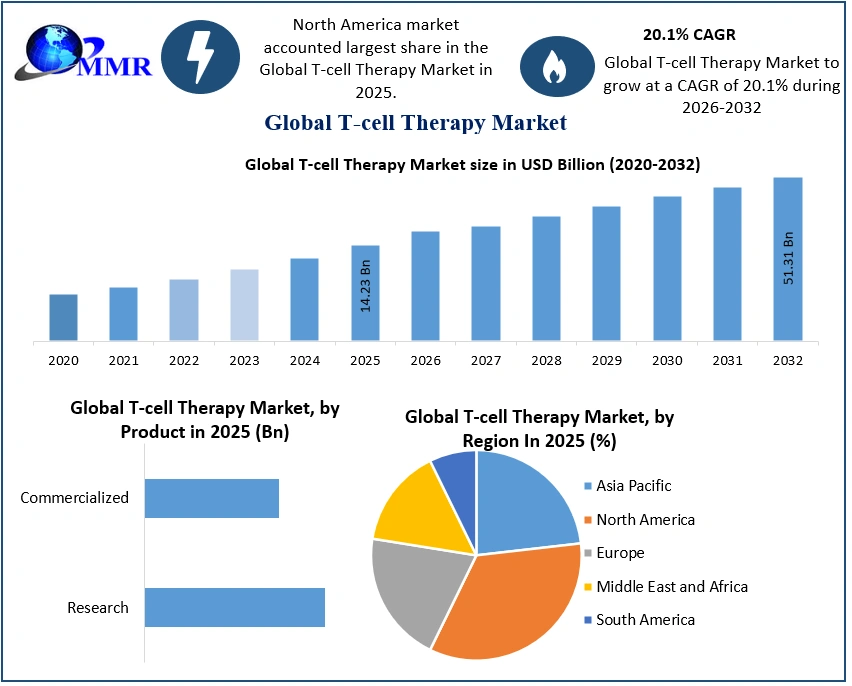
Market Valuation: Valued at USD 6.37 billion in 2025, intensive capital deployment in clinical oncological assets will propel the global market to USD 17.15 billion by 2032.
Compounded Growth: Fleet industrialization and next-generation gene editing yield a robust 15.2% CAGR over the 2026–2032 forecast window.
Target Dominance: CD19-targeted cell architectures lead commercial revenue pipelines due to extensive clinical validation across aggressive B-cell lymphomas and acute leukemias.
Technology Shift: Autologous therapies command current market volumes, but allogeneic platforms are scaling rapidly to eliminate extensive vein-to-vein logistical delays.
Infrastructure Utilization: Specialized hospital networks and accredited bone marrow transplant centers remain the dominant delivery channels for administering cellular immunotherapies.
Why This Matters Now
Operating margins across global oncology networks and specialized clinical centers are facing unprecedented pressure from rising cancer incidence and high manufacturing overheads. Healthcare providers cannot sustain clinical viability using slow, centralized manufacturing structures that risk patient disease progression during long ex vivo processing periods.
The immediate integration of automated, closed-system bioreactors allows biopharmaceutical developers to compress vein-to-vein delivery times, directly elevating institutional patient throughput. Lowering production latency and minimizing cell exhaustion transforms precision cellular medicine from an experimental, cost-prohibitive intervention into a scalable, high-efficiency therapeutic framework.
Market Overview
The global T-cell therapy market represents a fundamental transition from broad, non-specific chemotherapy treatments toward targeted, genetically reprogrammed cellular immunotherapies. Modern cellular medicine relies on harvesting immune cells to express specific Chimeric Antigen Receptors (CAR) or T-Cell Receptors (TCR), allowing the modified cells to bind and eradicate malignant cells with extreme precision. These specialized platforms eliminate reliance on systemic cytotoxic drugs, reducing long-term tissue damage while offering durable remission rates for relapsed or refractory patients.
According to market metrics verified by Maximize Market Research, the global industry achieved a valuation of USD 6.37 billion in 2025. Driven by expanding label indications and a continuous wave of regulatory clearances, total market revenue will expand at a 15.2% CAGR to reach USD 17.15 billion by 2032. This financial acceleration tracks an industry-wide push to overcome solid tumor barriers and establish highly automated, decentralized manufacturing channels.
Key Trends Driving Growth
The rising global prevalence of hematological malignancies and rare chronic disorders acts as a primary demand driver across specialized oncology networks. Widespread clinical data demonstrating high overall response rates in patients who have failed multiple conventional lines of therapy encourage payers and providers to adopt advanced cellular platforms early. This clinical validation prompts national healthcare systems to integrate cellular therapies directly into frontline treatment guidelines for complex blood cancers.
Simultaneously, the integration of advanced gene-editing tools like CRISPR-Cas9 is allowing developers to manufacture armored, multi-targeted cell lines that resist premature exhaustion in the tumor microenvironment. These molecular enhancements allow cells to maintain long-term in vivo persistence, minimizing the necessity for secondary dosing cycles. Furthermore, biopharma developers are investing heavily in automated bioreactors and closed-system processing environments, directly lowering contamination risks and mitigating the global shortage of trained cellular pathologists.
𝐃𝐨𝐰𝐧𝐥𝐨𝐚𝐝 𝐏𝐃𝐅 𝐁𝐫𝐨𝐜𝐡𝐮𝐫𝐞 @ https://www.maximizemarketresearch.com/request-sample/124121/
Segment Insights
Autologous Platforms (Dominant Segment): Holding the largest overall share of active installations due to a deep history of clinical validation, autologous therapies utilize the patient’s own immune cells to eliminate graft-versus-host rejection risks.
Allogeneic Platforms (Fastest-Growing Segment): Driven by institutional demands for immediate, off-the-shelf therapeutic availability, allogeneic systems represent the fastest-growing technology segment by completely bypassing patient leukapheresis steps.
CD19 / CD22 Targets (Dominant Antigen): Capturing the biggest share of commercial revenue, CD19-targeted therapies anchor standard clinical workflows for non-Hodgkin lymphoma and acute lymphoblastic leukemia.
BCMA Targets (Fastest-Growing Antigen): B-cell maturation antigen (BCMA) applications are expanding at the highest compound rate, fueled by soaring global diagnoses of multiple myeloma and rapid market penetration of next-generation therapies.
Hospitals (Dominant End-User): Accredited hospital networks command the primary delivery market share because managing intensive patient conditioning, cytokine release syndrome (CRS), and post-infusion neurotoxicity requires specialized, multi-disciplinary intensive care infrastructure.
Oncology Treatment Centers (Fastest-Growing End-User): Specialized, standalone cancer treatment networks are expanding their footprints at the fastest rate, utilizing point-of-care digital infrastructure to administer therapies outside traditional multi-department settings.
Regional Growth Story
North America leads the global T-cell therapy market, sustained by heavy public-private research funding and a mature network of cellular processing laboratories. The United States represents the primary geographic revenue engine, supported by targeted federal grants—such as the USD 1.8 billion Cancer Moonshot funding initiative—and proactive FDA fast-track review pathways. These structural advantages allow local hospital groups to deploy newly cleared therapies into commercial distribution networks far faster than other global territories.
Europe represents the second-largest marketplace, where clinical research groups across nations like Germany and the United Kingdom lead global patent filings for advanced cellular engineering designs. European single-payer health systems focus heavily on reducing hospitalization times, forcing a gradual expansion of regional manufacturing hubs to minimize cross-border transport friction. Meanwhile, the Asia-Pacific region stands as the fastest-growing geographical sector; countries like China and South Korea are rapidly expanding clinical trial registries, leveraging local academic collaborations and state-backed healthcare reforms to build massive, low-cost cell production capacity.
Competitive Landscape
The global arena is highly consolidated and intensely competitive, with a core tier of multi-national biopharmaceutical companies utilizing aggressive product development and manufacturing footprint expansion to safeguard their market shares. Success requires continuous capital allocation toward scaling proprietary automated platforms to defend long-term profit margins against emerging generic bioprocessors. Leading enterprises are shifting their corporate focus away from raw hardware acquisition toward integrated, digital cell-tracking software ecosystems that guarantee chain-of-custody verification from vein to vein.
To secure long-term competitive positioning, market leaders are actively acquiring smaller, specialized biotech firms that possess unique gene-editing intellectual property or novel single-chain variable fragment (scFv) design architectures. These targeted acquisitions allow larger entities to expand their therapeutic portfolios into solid tumor applications and non-oncology indications, such as severe autoimmune disorders. By bundling proprietary automated hardware with long-term software licensing and cell-processing service agreements, global manufacturers build high technical barriers that insulate their core clinical accounts from low-cost market entrants.
Recent Developments
Long-Term Follicular Validation: On February 12, 2026, Novartis reported positive long-term follow-up clinical data for Kymriah (tisagenlecleucel), reinforcing the durability of response for relapsed or refractory follicular lymphoma.
Automated European Scaling: On January 10, 2026, Gilead Sciences (Kite Pharma) inaugurated a new automated manufacturing facility in the Netherlands, significantly increasing regional production capacity for Yescarta and Tecartus.
Indication Label Expansion: On December 4, 2025, Bristol Myers Squibb secured FDA approval for the expansion of Breyanzi (lisocabtagene maraleucel) to treat relapsed or refractory marginal zone lymphoma after two prior lines of therapy.
Next-Generation Pipeline Inception: On November 18, 2025, Legend Biotech initiated a Phase II clinical study for a next-generation cell candidate engineered to overcome tumor resistance mechanisms and enhance long-term patient survival.
Commercialization Capital Injection: International cell therapy networks expanded series-level venture funding for automated manufacturing platforms, accelerating the rollout of closed-system bioreactors to global biopharma producers.
Strategic Implications
The recent wave of automated facility openings and expanded indication approvals demonstrates that hardware capability alone no longer dictates market leadership. Gilead’s investment in automated manufacturing in the Netherlands proves that companies must prioritize infrastructure scalability and localized processing to maintain commercial viability across international borders. Reducing manufacturing lead times allows developers to defend their market shares against fast-moving clinical competitors.
Furthermore, Bristol Myers Squibb’s continuous label expansion for Breyanzi signals an industry shift toward positioning cellular therapies in earlier lines of cancer treatment. As clinical validation moves therapies from third-line salvage operations into second-line settings, the eligible patient volume increases exponentially. Hospital networks must reallocate capital budgets to construct specialized apheresis units and expanded cryopreservation facilities to handle this incoming wave of non-Hodgkin and marginal zone lymphoma patients.
Future Outlook
Moving toward 2032, the T-cell therapy market will witness a decisive shift away from manual, open-cleanroom workflows as automated, closed-system bioreactors achieve total operational parity across global production networks. Value-based care reimbursement frameworks will increasingly penalize therapies with high failure-to-manufacture rates, forcing biopharma developers to perfect allogeneic, off-the-shelf platforms that eliminate patient-specific manufacturing risks. The long-term future belongs to decentralized, point-of-care manufacturing networks capable of engineering specific, mutation-resistant cell lines directly within hospital pharmacy environments. The global market will ultimately separate forward-thinking leaders who invest heavily in automated, scalable allogeneic architectures from lagging operators who remain tied to slow, centralized autologous processing pipelines.
Analyst Perspective
“The massive industrial transition toward automated, closed-system manufacturing is completely transforming the economic realities of the cellular immunotherapy sector. By removing manual processing variations and expanding allogeneic development pipelines, biopharmaceutical innovators can eliminate traditional vein-to-vein delays, lower per-patient costs, and deliver scalable precision medicine to oncology networks worldwide.” — Komal Patil, Research Analyst, Maximize Market Research
