Key Highlights
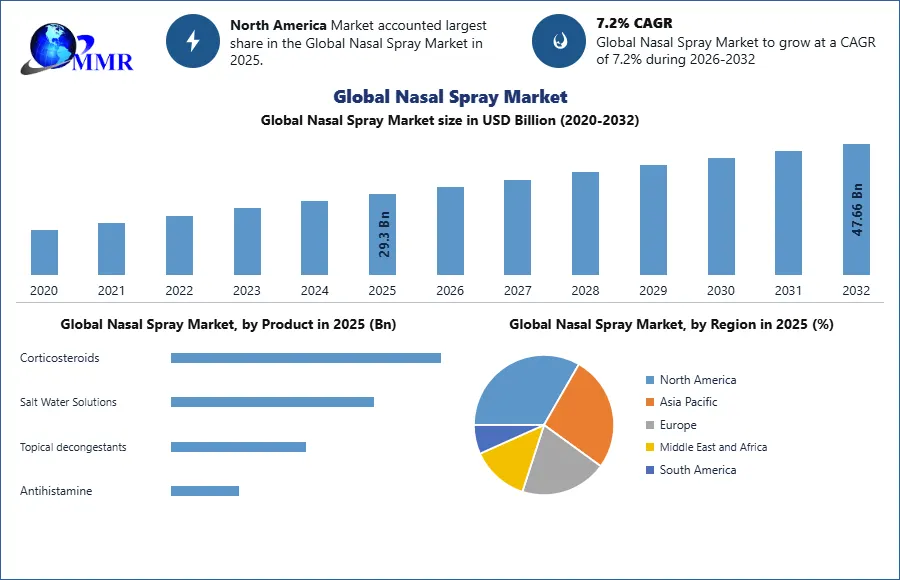
- Nasal Spray Market was valued at USD 29.3 billion in 2025 and is projected to reach USD 47.54 billion by 2032, growing at a 7.2% CAGR.
- North America remains the leading regional market due to high respiratory disease prevalence and mature healthcare infrastructure.
- Corticosteroid nasal sprays dominate product demand, while saline formulations continue expanding rapidly through preventive healthcare adoption.
- Digital health-enabled delivery devices and preservative-free formulations are becoming important competitive differentiators.
- Regulatory approvals are expanding nasal delivery beyond allergy management into vaccines and specialty therapeutics.
Why This Matters Now
Healthcare providers are facing rising respiratory disease incidence while patients increasingly demand treatments that are fast, convenient, and non-invasive. Pharmaceutical companies are responding by investing in nasal drug delivery platforms that improve adherence and broaden therapeutic applications.
For investors and healthcare executives, the business story extends beyond allergy relief. Nasal sprays are evolving into strategic drug delivery systems supporting vaccines, biologics, emergency therapies, and chronic disease management. Companies able to combine formulation innovation with digital health capabilities are positioning themselves for stronger long-term growth.
Market Overview
The Nasal Spray Market was valued at USD 29.3 billion in 2025 and is expected to reach USD 47.54 billion by 2032, expanding at a CAGR of 7.2% during the forecast period. Growth is being driven by increasing cases of allergic rhinitis, sinusitis, asthma, and other chronic respiratory disorders alongside growing preference for rapid, localized drug delivery.
Patient behavior is changing. Consumers increasingly favor therapies that avoid injections, reduce systemic side effects, and improve treatment convenience. This trend is expanding demand across prescription medicines as well as over-the-counter products.
Healthcare systems also benefit. Effective nasal therapies can reduce physician visits for routine symptom management while supporting home-based care and preventive treatment strategies. These dynamics are creating commercial opportunities across pharmaceutical manufacturers, hospital networks, retail pharmacies, and digital health providers.
Innovation is broadening the technology’s clinical potential. Intranasal delivery is increasingly being evaluated for vaccines, neurological therapies, emergency medicines, and targeted biologics, expanding the addressable market beyond traditional allergy treatment.
Key Trends Driving Growth
Respiratory disease prevalence remains the primary demand catalyst. Rising exposure to environmental pollution, airborne allergens, changing lifestyles, and aging populations continues to increase the number of patients requiring long-term symptom management. Growing awareness of allergic rhinitis and sinusitis further supports diagnosis and treatment adoption.
Technological innovation is accelerating product differentiation. Manufacturers are developing improved nozzle designs, pump-based delivery systems, preservative-free formulations, recyclable packaging, and dose-controlled devices that enhance patient experience while meeting evolving regulatory expectations.
Digital health integration represents another competitive shift. Smart nasal spray devices capable of monitoring dosage adherence and connecting with mobile applications create opportunities for chronic disease management and remote patient monitoring. These capabilities align with broader healthcare trends emphasizing personalized medicine and value-based care.
Consumer preference is also moving toward natural and saline-based products. Drug-free formulations appeal to pediatric, elderly, and preventive care populations seeking daily nasal hygiene without prolonged medication exposure. This trend creates additional opportunities for OTC manufacturers and retail pharmacy channels.
Get a free sample:https://www.maximizemarketresearch.com/request-sample/198570/
Segment Insights
- Dominant Segment: Corticosteroids lead the market because they remain first-line therapy for allergic rhinitis, chronic nasal inflammation, and sinusitis, delivering proven clinical effectiveness and broad physician acceptance.
- Fastest-Growing Segment: Salt Water Solutions (Saline Sprays) are experiencing strong growth as consumers increasingly adopt natural, non-medicated products for preventive respiratory care and routine nasal hygiene.
- Leading Distribution Channel: Drug Stores and Retail Pharmacies dominate due to convenient access, pharmacist guidance, and wide availability of both prescription and OTC products.
Regional Growth Story
North America continues to lead the global market because of advanced healthcare infrastructure, high healthcare expenditure, widespread diagnosis of respiratory diseases, and strong pharmaceutical innovation. The region benefits from significant adoption of allergy treatments and broad availability of advanced nasal therapies.
The United States remains the largest contributor through extensive investment in pharmaceutical R&D, favorable commercialization pathways, and expanding self-care adoption. Germany and the UK continue strengthening respiratory care through established reimbursement systems and innovation-focused healthcare environments.
China, Japan, India, and South Korea represent important long-term growth markets. Rising healthcare spending, expanding hospital infrastructure, increasing diagnosis rates, and broader access to OTC medicines are supporting demand. Growing pharmaceutical manufacturing capabilities across Asia-Pacific are also improving product availability while encouraging regional innovation.
As governments continue investing in preventive healthcare and respiratory disease management, emerging markets are expected to capture increasing industry attention.
Competitive Landscape
Competition is shifting from product portfolios toward integrated drug delivery platforms. Leading companies including GSK plc, Johnson & Johnson, Bayer AG, AstraZeneca, Cipla Ltd., Haleon plc, Pfizer Inc., Sanofi, Viatris Inc., Dr. Reddy’s Laboratories, Sun Pharmaceutical Industries, and Teva Pharmaceutical Industries are expanding investments in advanced formulations, sustainable manufacturing, and patient-friendly delivery technologies.
Strategically, recent investments indicate companies are preparing for broader therapeutic applications rather than competing solely in allergy management. Development of smart devices, eco-friendly packaging, and preservative-free products strengthens competitive positioning while supporting regulatory compliance and consumer expectations.
For payers, improved adherence technologies could reduce long-term healthcare costs through better disease management. For providers, broader therapeutic applications create opportunities to improve patient outcomes without increasing procedural complexity.
Recent Developments
- GSK highlighted anticipated FDA milestones for depemokimab targeting severe asthma and nasal polyps during 2025.
- Cipla advanced commercialization plans for its epinephrine nasal spray following FDA-related regulatory progress.
- Bayer maintained strong positioning in OTC antihistamine and decongestant nasal spray portfolios.
- AstraZeneca’s FluMist received FDA approval for home self-administration, expanding patient access to intranasal vaccination.
Strategic Implications
The industry is entering a broader pharmaceutical transformation. Nasal sprays are becoming delivery platforms for complex therapeutics rather than products limited to congestion relief.
Healthcare providers benefit through improved patient adherence and expanded treatment options. Pharmaceutical companies gain access to differentiated product pipelines and premium therapeutic categories. Investors should monitor companies successfully integrating AI-enabled adherence technologies, precision delivery systems, sustainable manufacturing, and expanded regulatory approvals.
Organizations capable of combining clinical effectiveness with digital engagement and environmentally responsible production are likely to strengthen pricing power while improving reimbursement prospects.
Future Outlook
Future growth will increasingly depend on innovation beyond conventional respiratory care. Expansion into vaccines, biologics, emergency medicine, precision drug delivery, and digitally connected therapeutic platforms will reshape competitive dynamics across the pharmaceutical industry.
The companies that combine advanced formulation science, regulatory execution, digital health capabilities, and scalable manufacturing will define the next generation of leaders, while those relying solely on traditional OTC portfolios risk losing strategic relevance.
Analyst Perspective
“The Nasal Spray Market is transitioning from conventional respiratory symptom management to a broader drug delivery ecosystem. Companies investing in advanced formulations, digital delivery technologies, and expanded therapeutic applications will be best positioned to capture long-term healthcare value while improving patient outcomes.” — Komal Patil
About Maximize Market Research
Maximize Market Research Pvt. Ltd. (MMR) is a global market research and consulting company that provides reliable, data-focused, and practical business insights. The firm serves a wide range of industries, including healthcare, pharmaceuticals, technology, automotive, electronics, chemicals, personal care, and consumer goods. Through market forecasts, competitive analysis, strategic consulting, and industry impact assessments, MMR helps organizations understand changing market conditions, identify growth opportunities, and make informed business decisions for long-term success.
2nd Floor, Navale IT Park Phase 3
Pune Banglore Highway, Narhe
Pune, Maharashtra 411041, India
+91 9607365656
sales@maximizemarketresearch.com
