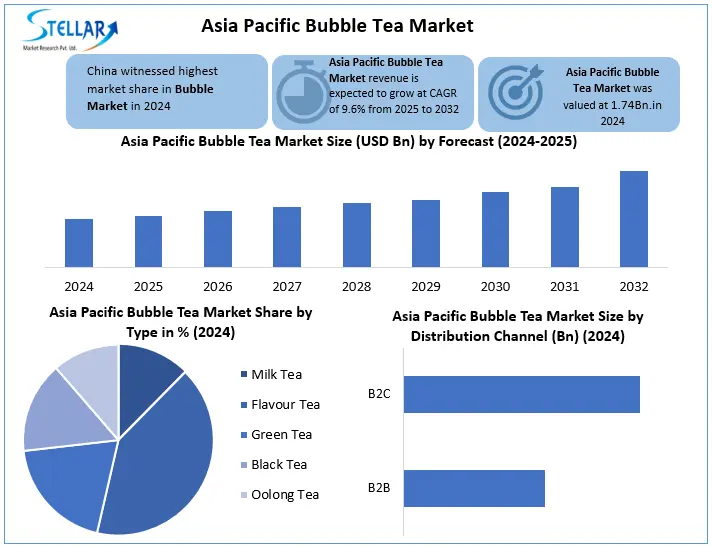
Asia Pacific Bubble Tea Market was valued at USD 1.74 Bn. in 2024 and the total Asia Pacific Bubble Tea Market revenue is expected to grow at CAGR of 9.6% from 2025-2032 and reaching nearly USD 3.63 Bn. by 2032.
Bubble tea, once considered a niche Taiwanese beverage, has evolved into one of the fastest-growing segments in the global food and beverage industry. Across the Asia-Pacific region, consumers are embracing bubble tea not only as a refreshing drink but also as a lifestyle product that blends taste, customization, and social experiences.
The growing popularity of premium beverages, increasing disposable incomes, and rapid urbanization have transformed the Asia Pacific Bubble Tea Market into a dynamic and highly competitive industry. Manufacturers, café chains, and beverage brands are continuously introducing innovative flavors, healthier formulations, and digital customer engagement strategies to capture expanding consumer demand.
Rising Urbanization and Café Culture Fuel Market Growth
One of the primary factors driving the Asia Pacific Bubble Tea Market is the rapid expansion of urban populations and modern café culture. Young consumers increasingly seek unique beverage experiences that combine premium ingredients with personalized customization.
Bubble tea shops have become popular social destinations, particularly among Gen Z and millennials, who value aesthetically appealing drinks and interactive dining experiences. Shopping malls, commercial districts, universities, and transportation hubs have become key locations for bubble tea outlets, supporting consistent market expansion.
𝐃𝐨𝐰𝐧𝐥𝐨𝐚𝐝 𝐅𝐫𝐞𝐞 𝐏𝐃𝐅 𝐁𝐫𝐨𝐜𝐡𝐮𝐫𝐞: https://www.stellarmr.com/report/req_sample/apac-bubble-tea-market/2888
The growth of organized retail and franchise models has also enabled leading brands to expand rapidly across metropolitan cities and emerging urban centers throughout Asia-Pacific.
Consumer Demand for Customization Drives Innovation
Modern consumers expect beverages that reflect their individual preferences. Bubble tea brands now offer extensive customization options, including:
Sugar-free and reduced-sugar formulations
Plant-based and dairy-free milk alternatives
Fruit-based teas and herbal infusions
Multiple topping choices such as tapioca pearls, popping boba, aloe vera, pudding, grass jelly, and cheese foam
Functional ingredients including collagen, probiotics, vitamins, and protein
This flexibility has transformed bubble tea into a highly personalized beverage category, helping brands strengthen customer loyalty while attracting new consumers.
Health-Conscious Consumers Are Reshaping Product Development
Health and wellness trends are encouraging manufacturers to develop better-for-you bubble tea options. Consumers increasingly prefer beverages made with natural flavors, real fruit extracts, organic tea leaves, and clean-label ingredients.
Many companies are reducing sugar content, eliminating artificial additives, and introducing low-calorie beverages to appeal to health-conscious buyers. Plant-based milk alternatives such as oat, almond, coconut, and soy milk are becoming standard menu options as vegan and lactose-intolerant consumers seek greater choice.
Premium ingredients and transparent sourcing are also helping brands differentiate themselves in an increasingly competitive marketplace.
Digital Transformation Enhances Customer Experience
Technology has become a major competitive advantage within the Asia Pacific Bubble Tea Market. Mobile ordering, digital payment platforms, AI-driven customer analytics, and loyalty applications have improved convenience while strengthening customer engagement.
Food delivery services have further expanded market reach, allowing brands to serve consumers beyond traditional retail locations. Data analytics enables businesses to personalize promotions, optimize inventory, forecast demand, and improve operational efficiency.
Social media platforms such as Instagram, TikTok, and regional influencer networks continue to shape purchasing behavior by promoting visually appealing beverages and limited-edition product launches.
Sustainability Becomes a Key Business Strategy
Environmental responsibility is becoming increasingly important for bubble tea brands across Asia-Pacific. Businesses are responding by introducing:
Biodegradable and recyclable cups
Paper straws and reusable alternatives
Sustainable tea sourcing
Reduced plastic packaging
Energy-efficient store operations
Responsible waste management practices
Consumers are increasingly rewarding brands that demonstrate strong environmental commitments, making sustainability a critical component of long-term competitiveness.
𝐃𝐨𝐰𝐧𝐥𝐨𝐚𝐝 𝐅𝐫𝐞𝐞 𝐏𝐃𝐅 𝐁𝐫𝐨𝐜𝐡𝐮𝐫𝐞: https://www.stellarmr.com/report/req_sample/apac-bubble-tea-market/2888
Regional Market Highlights
China
China represents one of the largest bubble tea markets globally, supported by an extensive café network, strong consumer purchasing power, and rapid product innovation. Premium tea chains continue expanding through digital retail strategies and omnichannel customer engagement.
Taiwan
As the birthplace of bubble tea, Taiwan remains a center for innovation, premium product development, and international franchise expansion. Local brands continue introducing new flavors and beverage concepts that influence global market trends.
Japan
Japanese consumers value premium ingredients, seasonal offerings, and high-quality customer experiences. Bubble tea brands increasingly focus on premium positioning and limited-edition menu innovations.
India
India is emerging as one of the fastest-growing markets due to rising disposable incomes, expanding café culture, increasing youth population, and growing awareness of international beverage trends. Domestic brands and international franchises are rapidly expanding across Tier I and Tier II cities.
Southeast Asia
Countries including Thailand, Vietnam, Indonesia, Malaysia, Singapore, and the Philippines are experiencing strong demand driven by urbanization, tourism, and expanding organized retail networks. Local flavor innovation and digital delivery platforms continue supporting market growth.
Competitive Landscape
The Asia Pacific Bubble Tea Market remains highly competitive, with international chains, regional brands, independent cafés, and franchise operators competing through product innovation, premium ingredients, digital marketing, and customer experience.
Companies are investing in automated beverage preparation systems, AI-driven inventory management, loyalty programs, influencer collaborations, and sustainable packaging to strengthen brand differentiation. Strategic expansion into emerging cities and partnerships with food delivery platforms are also supporting long-term growth.
Future Outlook
The future of the Asia Pacific Bubble Tea Market looks highly promising as innovation, premiumization, and digital transformation continue reshaping consumer preferences. Health-focused beverages, functional ingredients, plant-based alternatives, and sustainable packaging are expected to become major competitive differentiators over the coming years.
Advancements in automation, AI-powered customer engagement, and personalized menu offerings will further improve operational efficiency while enhancing the consumer experience. As disposable incomes continue rising and café culture expands across Asia-Pacific, bubble tea is expected to remain one of the region’s most dynamic beverage categories.
Conclusion
The Asia Pacific Bubble Tea Market has evolved far beyond a trendy beverage segment into a thriving industry driven by innovation, lifestyle changes, and premium consumer experiences. Companies that successfully combine product customization, digital convenience, health-conscious offerings, and sustainability initiatives will be well positioned to capitalize on the market’s continued growth.
With expanding urban populations, strong franchise development, and increasing demand for personalized beverages, the Asia Pacific Bubble Tea Market is expected to create substantial opportunities for manufacturers, café operators, investors, and ingredient suppliers throughout the coming decade.
