The Mexico Coffee Market is undergoing a significant transformation as the country balances its role as a major coffee producer with a rapidly evolving domestic consumption landscape. Known globally for its high-quality Arabica beans, Mexico is now witnessing increased internal demand, premiumization, and a growing café culture that is reshaping the market.
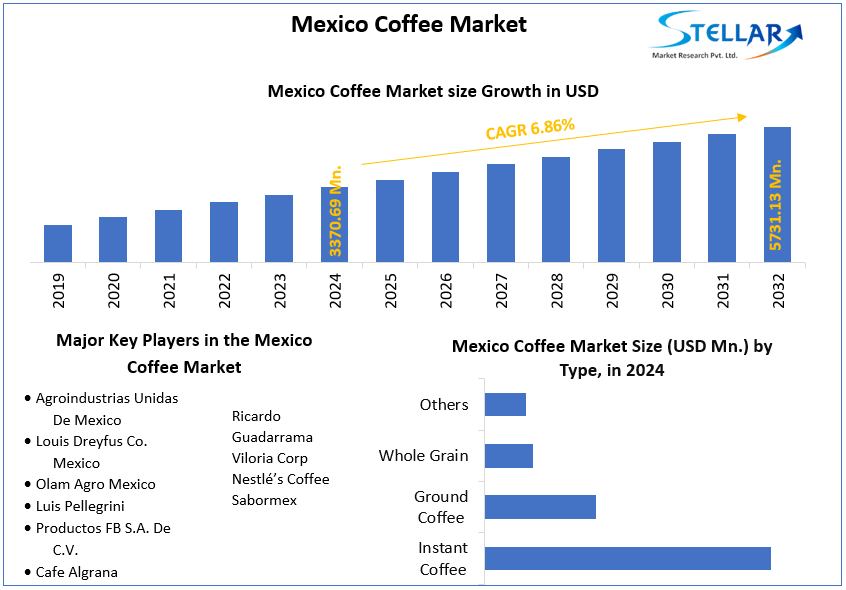
Mexico Coffee Market size was valued at US$ 3370.69 Mn. in 2024. Coffee will encourage a great deal of transformation in Beverage Sector in Mexico.
Driven by urbanization, rising disposable incomes, and shifting consumer preferences, the market is transitioning from a traditional export-focused industry to a more diversified ecosystem that emphasizes value-added products and specialty coffee experiences.
From Export Powerhouse to Emerging Consumption Market
Historically, Mexico’s coffee industry has been heavily export-oriented, supplying premium Arabica beans to international markets. However, the domestic market is gaining momentum as consumers develop a stronger appreciation for quality coffee.
The rise of specialty cafés, artisanal roasters, and local brands is encouraging consumers to explore single-origin, organic, and sustainably sourced coffee. This shift is not only increasing domestic consumption but also driving value growth within the market.
Additionally, government and industry initiatives aimed at supporting farmers and improving production practices are strengthening the overall supply chain.
Key Market Insights
- Mexico is one of the leading coffee producers globally, known for high-quality Arabica beans.
- Domestic coffee consumption is steadily increasing, particularly in urban areas.
- Instant coffee dominates the mass market due to affordability and convenience.
- Specialty coffee is the fastest-growing segment, driven by premiumization trends.
- Café culture is expanding rapidly in cities like Mexico City, Guadalajara, and Monterrey.
- Export demand remains strong, particularly from North America and Europe.
- Sustainability and organic certifications are gaining importance among consumers.
𝐃𝐨𝐰𝐧𝐥𝐨𝐚𝐝 𝐅𝐫𝐞𝐞 𝐏𝐃𝐅 𝐁𝐫𝐨𝐜𝐡𝐮𝐫𝐞: https://www.stellarmr.com/report/req_sample/Mexico-Coffee-Market/74
Market Drivers Accelerating Growth
1. Strong Production Base and Export Demand
Mexico’s favorable climate and established farming practices make it a key supplier of high-quality coffee to global markets.
2. Rising Urbanization and Changing Lifestyles
Urban consumers are increasingly adopting café culture and premium coffee consumption habits.
3. Growth of Specialty Coffee Segment
The increasing popularity of specialty coffee is driving demand for high-quality, ethically sourced products.
Market Challenges and Restraints
1. Climate Change and Production Risks
Coffee farming in Mexico is highly vulnerable to climate change, which can impact yield and quality.
2. Price Volatility
Fluctuations in global coffee prices can affect farmer incomes and market stability.
Technology and Sustainability Trends
Technology is playing a growing role in the Mexico coffee market. Farmers and producers are adopting modern agricultural techniques, data analytics, and improved processing methods to enhance productivity and quality.
Sustainability is a key focus area, with increasing adoption of organic farming, fair trade certifications, and eco-friendly practices. These initiatives not only meet global standards but also improve the livelihoods of coffee farmers.
Traceability is also becoming more important, as consumers seek transparency regarding the origin and production of their coffee.
𝐃𝐨𝐰𝐧𝐥𝐨𝐚𝐝 𝐅𝐫𝐞𝐞 𝐏𝐃𝐅 𝐁𝐫𝐨𝐜𝐡𝐮𝐫𝐞: https://www.stellarmr.com/report/req_sample/Mexico-Coffee-Market/74
Regional Insights: Southern States Lead Production
Coffee production in Mexico is concentrated in southern states such as Chiapas, Veracruz, and Oaxaca, which offer ideal climatic conditions for coffee cultivation.
Urban centers like Mexico City are driving consumption growth, supported by expanding café culture and rising disposable incomes. This regional dynamic highlights the balance between production hubs and consumption markets.
Recent Industry Developments
- Nestlé (2025): Expanded sourcing initiatives in Mexico, supporting sustainable coffee farming and supply chain resilience.
- Starbucks (2024): Strengthened its presence in Mexico with new store openings and local sourcing initiatives.
- Mexican Coffee Institute (2025): Launched programs to improve farmer productivity and sustainability practices.
- World Bank (2024): Supported coffee sector development projects in Mexico, focusing on infrastructure and farmer support.
- Café de Chiapas (2025): Expanded its specialty coffee offerings, targeting both domestic and international markets.
Competitive Landscape
The Mexico coffee market is moderately competitive, with a mix of multinational corporations, local brands, and specialty coffee producers. Companies are focusing on quality, sustainability, and brand differentiation to gain market share.
Export-oriented companies continue to dominate production, while domestic brands and café chains are capturing growth in the consumption segment. Investments in processing, branding, and direct-to-consumer channels are enhancing competitiveness.
Analyst Perspective
A senior market analyst notes:
“Mexico’s coffee market is evolving into a more balanced ecosystem where export strength and domestic consumption growth coexist. The rise of specialty coffee and sustainability initiatives is creating new value opportunities across the supply chain.”
Future Outlook
The Mexico Coffee Market is expected to witness steady growth in the coming years, driven by strong export demand and increasing domestic consumption. Premiumization, café culture expansion, and sustainability trends will continue to shape the market.
The industry is also likely to see greater innovation in product formats, including ready-to-drink coffee and functional beverages. As consumer awareness grows and infrastructure improves, Mexico will strengthen its position in both global and regional coffee markets.
Overall, the Mexico coffee market presents a compelling opportunity for producers, brands, and investors seeking to capitalize on evolving consumer trends and a strong production base.
