Key Highlights
Market Scalability: The total market valuation is projected to expand to USD 89.67 Billion, driven by an accelerating global demand for precision oncology assets.
Velocity Metrics: The sector maintains an accelerating compound annual growth rate (CAGR) of 12.9%, reflecting intense capital allocation into automated biotechnology frameworks.
Core Technology Shift: Modern drug discovery pipelines are transitioning from legacy manual testing to automated, high-throughput machine learning target identification platforms.
Infrastructure Demand: High-performance computing clusters and scalable hybrid cloud databases are expanding rapidly to handle multi-omic patient data streams.
Regulatory Influence: Digital sovereignty protocols and strict regulatory compliance guidelines shape how patient data is hosted across global health information networks.
Why This Matters Now The conversion of biological data into structured digital networks is accelerating, positioning enterprise information technology at the center of modern oncology. For chief technology officers, network operators, and hyper-scale cloud providers, breast cancer therapeutics workloads represent one of the fastest-growing computing demands in modern enterprise medicine. A single automated drug discovery simulation processes terabytes of unstructured genomic, transcriptomic, and proteomic data. This continuous data generation creates an urgent requirement for high-throughput data centers, low-latency edge compute clusters, and scalable database software architectures.
What changed is the technical capacity of machine learning software to accurately predict target molecule binding affinities before physical clinical testing begins. Why now is driven by the global necessity to compress traditional pharmaceutical research timelines while managing the rising global incidence of complex oncological mutations. For enterprise technology buyers and storage providers, this transformation creates an immediate opportunity to deliver specialized high-performance computing (HPC) systems and secure cloud infrastructure. The integration of advanced computational platforms allows developers to eliminate operational silos and accelerate drug validation pipelines.
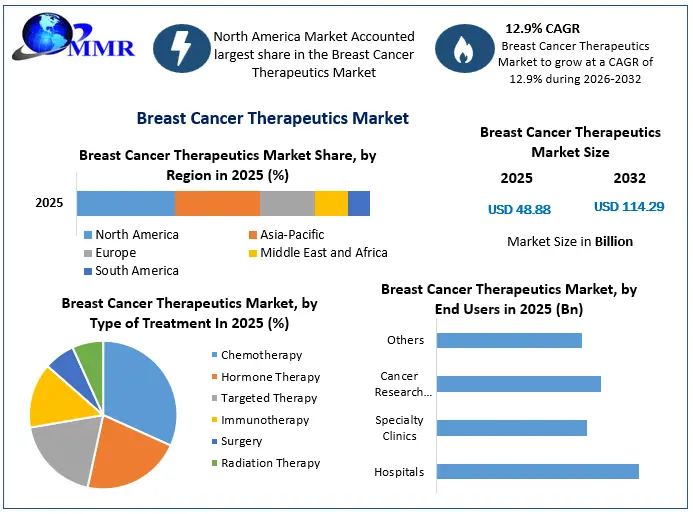
Market Overview The global breast cancer therapeutics market Size is undergoing a structural transition from uniform treatment strategies toward highly automated, patient-specific precision diagnostics and drug matching. The overall market size is on a trajectory to reach USD 89.67 Billion, moving forward at a sustained CAGR of 12.9%. This large-scale growth is driven by the global requirement for efficient, scalable therapeutic options that reduce patient toxicity and overcome traditional treatment resistance. The deployment of advanced corporate software and unified healthcare networks allows global providers to scale therapeutic delivery effectively.
However, the industry faces severe data fragmentation and legacy technology integration challenges across global health systems. Siloed clinical trial systems, mismatched electronic health record (EHR) frameworks, and differing regional data standards often delay the translation of new discoveries into active patient care. To counter these systemic limits, enterprise software vendors are designing scalable data integration platforms that centralize trial outputs, monitor patient adherence metrics in real time, and verify clinical validity across distributed international networks.
Key Trends Driving Growth The primary catalyst driving real-time market monetization is the deployment of generative artificial intelligence and deep machine learning inside core therapeutic research pipelines. Legacy target identification relies on slow, manual screening processes that require years of physical laboratory resources. The integration of deep neural networks allows research software to model molecular shapes and predict cellular interactions instantly, significantly reducing drug discovery cycles. This computing shift optimizes lab operational efficiency and creates a high volume of high-yield therapeutic candidates.
Concurrently, the rapid adoption of Software-as-a-Service (SaaS) operational models is modernizing the administration of clinical trials. Global drug developers utilize secure, cloud-hosted clinical trial management systems (CTMS) to track real-time patient metrics across multiple international test sites simultaneously. This cloud migration allows organizations to decentralize trial logistics, streamline regulatory documentation updates, and ensure data integrity across complex hybrid cloud setups.
𝐃𝐨𝐰𝐧𝐥𝐨𝐚𝐝 𝐏𝐃𝐅 𝐁𝐫𝐨𝐜𝐡𝐮𝐫𝐞 @ https://www.maximizemarketresearch.com/request-sample/3422/
Segment Insights
Targeted Therapy Platforms [Dominant Segment]: This category remains the dominant technical framework for market development. The segment leverages advanced computational modeling software to design monoclonal antibodies and small-molecule inhibitors that target specific genetic markers, bypassing the non-specific cellular damage associated with traditional chemical treatments.
Immunotherapy Delivery Software [Fastest-Growing Segment]: Operating as the fastest-growing technology vector, this segment is expanding due to the integration of machine learning algorithms that predict patient-specific immune system responses. The deployment of automated analytical software allows developers to continuously optimize cellular engineering protocols, driving the commercialization of advanced therapeutic modalities.
Regional Growth Story North America maintains structural dominance over the global market landscape, supported by intensive digital infrastructure investments and a dense concentration of specialized data centers. The United States serves as the main engine for this regional concentration, driven by rapid cloud adoption, early validation of advanced machine learning software, and substantial venture funding for computational biology firms. This mature infrastructure layer allows technology providers to host and secure massive clinical datasets efficiently.
The Asia-Pacific region represents an accelerating growth market, supported by massive digital transformation initiatives and telecom infrastructure expansion across major developing economies. Governments in nations such as India and China are investing heavily in national cloud infrastructure and modernizing public health databases to improve diagnostic access. This rapid network modernization allows regional healthcare networks to integrate advanced clinical software platforms, expanding therapeutic delivery to large patient populations.
Competitive Landscape The competitive environment is shifting away from isolated drug development toward integrated platform economics and collaborative technology ecosystems. Market leadership is increasingly defined by an organization’s computational readiness, data processing capacity, and the depth of its secure API networks. Leading global pharmaceutical and biotechnology enterprises are actively partnering with hyper-scale cloud vendors and specialized AI software providers to build robust drug discovery ecosystems.
This structural shift signals that future industry direction will favor platform providers that establish superior cloud positioning and analytical validity. Companies are no longer evaluated solely on their chemical portfolios; they are measured by the scale and speed of their proprietary data architectures. This platform-centric transformation allows dominant market leaders to protect their pricing power, accelerate regulatory submissions, and deploy advanced analytics tools across global health networks.
Recent Developments
Advanced Pipeline Virtualization: Global technology vendors deployed high-performance virtualization frameworks across major oncology research laboratories, allowing teams to execute complex molecular simulations inside cloud-native sandbox environments.
API Standardization Initiatives: Leading clinical network providers established unified API connectivity standards, allowing secure, real-time synchronization of therapeutic trial data between distributed research systems and centralized regulatory databases.
Hybrid Cloud Security Upgrades: Major enterprise software firms launched specialized, zero-trust hybrid cloud security architectures tailored to protect high-value genomic data assets against rising international cybersecurity threats.
Edge Compute Implementations: Regional hospital networks integrated edge computing infrastructure within local oncology clinics, allowing instant processing of local patient biomarker data without relying on high-latency remote server connections.
Strategic Implications The rapid digitization of precision oncology introduces immediate operational challenges for modern technology buyers and chief information officers. Managing the sheer volume and data gravity of high-resolution multi-omic profiles requires continuous investments in scalable network virtualization and modern data center equipment. As clinical research becomes increasingly reliant on digital pipelines, enterprise networks must update their structural capacity to handle sustained, high-bandwidth data transfers without creating operational bottlenecks.
Furthermore, technology leaders must navigate complex international regulatory environments and strict digital sovereignty mandates. Genomic data assets are tightly regulated, requiring data residency compliance and end-to-end encryption across all cloud storage layers. Enterprise technology providers that develop high-security, compliant infrastructure solutions designed specifically for sensitive health data will find substantial market demand within the global corporate environment.
Future Outlook The global breast cancer therapeutics market will continue its transition toward a fully automated, cloud-managed clinical ecosystem. The integration of advanced generative machine learning models will become standard practice to filter out target errors, optimize binding stability, and streamline therapeutic tracking protocols. As these cloud-native analytical workflows solidify, the historical separation between classical biology and enterprise software engineering will disappear entirely, creating a permanent operational divide between future digital leaders utilizing real-time cloud analytics and laggards relying on legacy physical testing workflows.
Analyst Perspective
“The scaling of the global breast cancer therapeutics market to USD 89.67 Billion is fundamentally a data transformation milestone,” says Komal Patil, Research Analyst at Maximize Market Research. “As precision medicine becomes the baseline standard for oncology care, the primary competitive advantage will belong entirely to enterprises that can efficiently process complex molecular datasets using scalable cloud infrastructure and automated machine learning platforms.”
About Maximize Market Research
Maximize Market Research Pvt. Ltd. (MMR) is a global market research and consulting company that provides reliable, data-focused, and practical business insights. The firm serves a wide range of industries, including healthcare, pharmaceuticals, technology, automotive, electronics, chemicals, personal care, and consumer goods. Through market forecasts, competitive analysis, strategic consulting, and industry impact assessments, MMR helps organizations understand changing market conditions, identify growth opportunities, and make informed business decisions for long-term success.
2nd Floor, Navale IT Park Phase 3
Pune Banglore Highway, Narhe
Pune, Maharashtra 411041, India
+91 9607365656
sales@maximizemarketresearch.com
