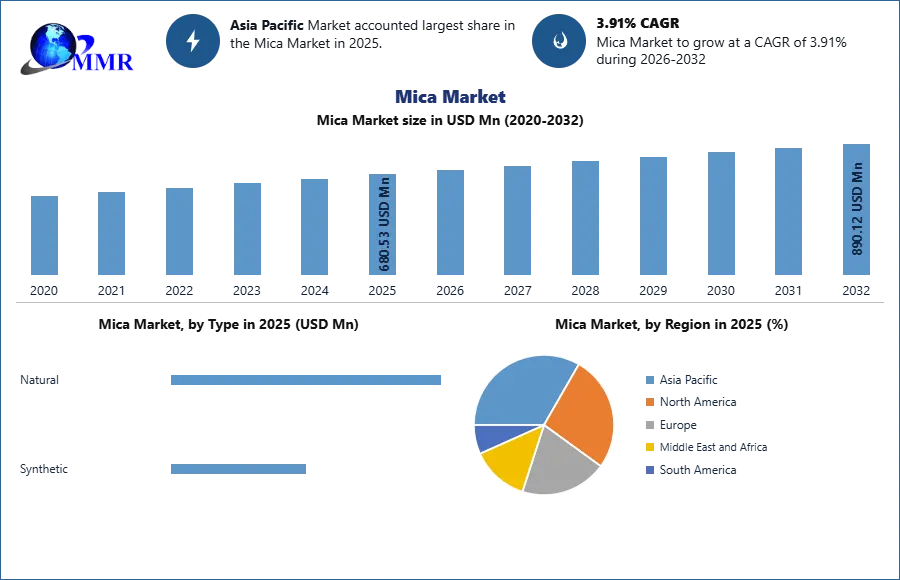
The global Mica Market Size is at a critical inflection point as the 2026 geopolitical climate triggers a systemic cost shock to high-performance insulation and electronics supply chains. With market valuations hitting USD 680.53 million in 2025 and a trajectory toward USD 890.12 million by 2032 at a 3.91% CAGR, the industry is no longer operating in a stable commodity environment. For procurement leaders and industrial manufacturers, the surge in energy-intensive milling costs—exacerbated by broader energy market volatility—demands an immediate reassessment of sourcing strategies and material alternatives.
Why This Matters Now
Energy price spikes are disproportionately affecting the mica processing sector, where the mechanical exfoliation and milling of minerals are inherently energy-intensive. With disruption in key trade corridors driving up operational overhead, manufacturers are facing a margin squeeze. Those reliant on traditional natural sheet mica for high-precision electrical insulation must now confront the reality of supply fragility. The ability to integrate synthetic mica or optimize supply chain logistics is no longer a competitive advantage; it is a fundamental requirement for operational continuity.
Market Overview
Mica remains an irreplaceable component in electronics, radar circuits, and advanced automotive finishes. Its unique combination of dielectric strength, thermal resistance, and perfect cleavage ensures its role as a bedrock material for everything from high-voltage transformers to pearlescent automotive paints. However, the market structure is shifting. While natural mica continues to fulfill core industrial needs, the rise of synthetic alternatives—driven by the need for higher purity and lower environmental compliance risk—is creating a tiered market where technical specifications often outweigh raw price points.
Key Trends Driving Growth
Electronic Insulation Intensity: The miniaturization of electronics and the complexity of modern radar circuits are increasing the demand for precision-cut sheet mica. As electronics become more compact, the reliance on materials with extreme dielectric stability is non-negotiable.
Automotive Aesthetics & Protection: Mica is moving beyond its traditional role as an insulator into the high-end automotive coating sector. Its ability to provide a durable, pearlescent finish is driving growth in the paints and coatings segment, particularly as EV manufacturers look to differentiate their vehicle exteriors.
Synthetic Substitution: To bypass the environmental and ethical complexities of natural mineral extraction, large-scale manufacturers are increasingly adopting synthetic mica. This trend is driven by the need for predictable purity levels and consistent electrical properties in high-stress industrial applications.
Supply Chain Localization: Given recent energy-driven volatility, there is a marked trend toward regionalizing mica processing. Manufacturers in China and India are vertically integrating to capture more value, reducing reliance on cross-border logistics that are increasingly subject to trade and energy-related disruptions.
Segment Insights
Dominant Grade: The Sheet Mica segment holds the largest market share. Its mechanical properties, including perfect cleavage and superior insulation, make it the industry standard for washers, discs, and plates used in capacitors, radar equipment, and transformers.
Fastest-Growing Segment: The Electronics segment is projected to witness the most rapid growth. Increased demand for consumer and industrial electronics, coupled with the rapid adoption of specialized insulation materials in the aviation and EV sectors, is creating a high-growth corridor for refined mica products.
Regional Growth Story
Asia-Pacific stands as the undisputed leader in both production and consumption. The region’s economic trajectory is fueled by massive growth in the domestic electronics and automotive manufacturing hubs of China and India. High population growth and increasing disposable income in these nations are driving a fundamental shift in material consumption, positioning Asia-Pacific as the primary engine for global mica demand.
North America and Europe continue to serve as centers for high-value research and specialty applications. In these regions, the focus is on developing advanced mica-based composites for the aerospace and high-speed rail sectors. While their volume growth is more modest compared to the Asia-Pacific region, their demand for high-purity, processed mica is creating consistent, premium-tier revenue streams for specialized mineral processors.
Competitive Landscape
The mica market is moving toward a highly consolidated structure, with key players investing heavily in mineral exploration and AI-driven processing efficiency. Acquisitions and partnerships are increasingly focused on securing vertical integration—from mine to mill to finished component. This signals a future where pricing power is held by those who can control the energy-intensive milling process and provide certified, high-purity grades that meet stringent industry regulations.
Recent Developments
Technological Advancement: The adoption of AI-driven mineral exploration and automated processing is significantly reducing the carbon footprint of mica extraction and refinement, aligning with global green manufacturing standards.
Strategic Collaborations: Recent industry-wide efforts have focused on establishing dedicated supply lines for high-purity mica capable of withstanding extreme space and aeronautical environments, diversifying revenue streams for traditional mineral manufacturers.
Regulatory Influence: RMI (Responsible Minerals Initiative) certification is becoming a core requirement for European and North American procurement, forcing natural mica producers to undergo rigorous ethical and environmental audits to maintain market access.
Strategic Implications
Procurement officers must pivot toward vendors that demonstrate supply-chain transparency and energy-efficient processing capabilities. The risk of supply disruption due to energy costs is real, and the only hedge is geographic diversification and a balanced portfolio of natural and synthetic mineral sources. For industrial investors, the opportunity lies in supporting the transition to synthetic alternatives, which offer a cleaner, more predictable growth profile compared to the legacy extraction model.
Future Outlook
The winners in this industrial cycle will be the producers who successfully bridge the gap between legacy mining and high-precision chemical engineering, mitigating energy costs through automation and synthetic innovation.
Analyst Perspective
“The mica market is currently defined by a ‘quality-over-quantity’ transition. Manufacturers that optimize for purity and supply chain resilience, rather than just volume, are positioned to capture the value migration driven by the electronics and aerospace sectors,” says Ankita Kagawade, Analyst at Maximize Market Research.
About Maximize Market Research
Maximize Market Research Pvt. Ltd. (MMR) is a global market research and consulting company that provides reliable, data-focused, and practical business insights. The firm serves a wide range of industries, including healthcare, pharmaceuticals, technology, automotive, electronics, chemicals, personal care, and consumer goods. Through market forecasts, competitive analysis, strategic consulting, and industry impact assessments, MMR helps organizations understand changing market conditions, identify growth opportunities, and make informed business decisions for long-term success.
2nd Floor, Navale IT Park Phase 3
Pune Banglore Highway, Narhe
Pune, Maharashtra 411041, India
+91 9607365656
sales@maximizemarketresearch.com
