Key Highlights
Cloud computing architectures replace siloed on-premises infrastructure to lower total cost of ownership and accelerate cross-agency real-time data synchronization.
Next-generation connectivity frameworks, including 5G infrastructure and advanced internet-of-things platforms, allow emergency dispatch systems to handle rich media data like live telemetry, images, and videos.
Artificial intelligence and machine learning deployment automate high-volume routine tasks, optimizing fleet dispatch routes and predictive resource placement.
Rising global security vulnerabilities, natural disasters, and regulatory shifts compel municipal governments to execute structural digital transformation initiatives.
Why This Matters Now
Legacy emergency management systems are collapsing under the data volume generated by modern digital ecosystems. Command and control centers can no longer manage public safety infrastructures using isolated, text-only databases while citizens communicate via live video and real-time location streaming. The immediate necessity for public safety answering points to transition toward next-generation dispatch architecture is forcing a fundamental shift in capital expenditure.
Technology executives, telecom operators, and municipal enterprise buyers face an immediate operational mandate to reconstruct public safety networks. Delayed infrastructure modernizations result in severe systemic failure, increased response times, and an inability to integrate municipal internet-of-things devices. Enterprise software providers and infrastructure investors who control cloud-native emergency platforms are capturing massive market shares as public agencies dismantle historical IT architectures.
Market Overview
Computer aided dispatch Market Size platforms act as the core operating system for emergency response, linking incoming distress notifications directly with active field resources. This operational paradigm ensures optimal routing, precise personnel positioning, and secure cross-agency data distribution during large-scale incidents.
The operational parameters of global emergency centers have changed due to intense structural consolidation among emergency services. Regional public safety answering points are combining operations into centralized unified command hubs to optimize personnel allocation and reduce operational overhead. This architectural consolidation eliminates disparate software packages, creating massive enterprise demand for highly scalable, multi-tenant software platforms.
Key Trends Driving Growth
Artificial intelligence deployment is structurally altering how municipal networks evaluate incoming incident urgency levels. Machine learning algorithms actively parse historical incident data to anticipate emergency patterns, allowing police, fire, and emergency medical service fleets to position units before incidents are dispatched. Automated data extraction removes manual entry friction from call-handling workflows, cutting precious seconds from emergency cycles.
Simultaneously, the widespread rollout of 5G infrastructure provides the bandwidth necessary to transmit high-definition video files directly onto mobile data terminals inside emergency vehicles. This convergence of high-speed telecommunications with next-generation connectivity allows personnel to assess active danger environments while en route. The digital transformation of enterprise communication systems remains tightly coupled with continuous data center investments and edge computing adoption to minimize network latency.
Get Free Sample: https://www.maximizemarketresearch.com/request-sample/6800/
Segment Insights
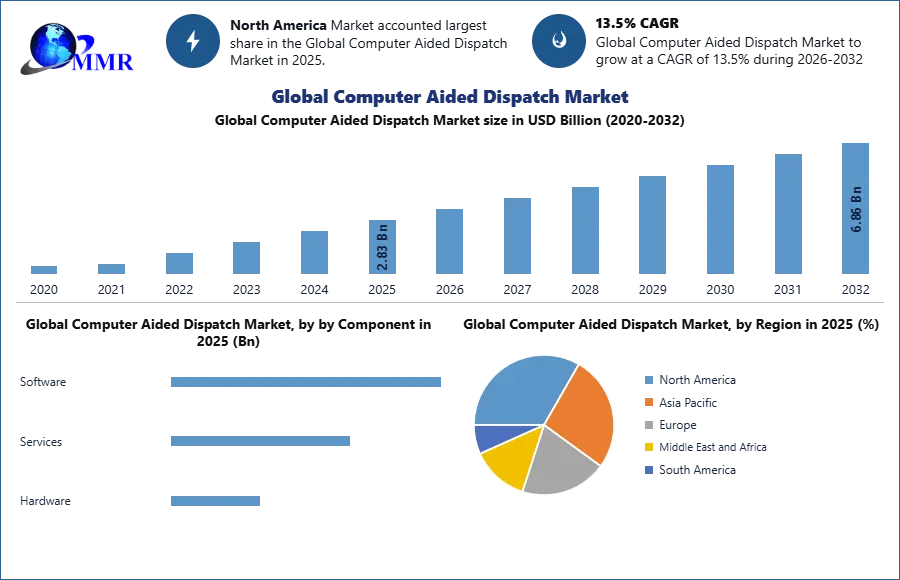
Software Segment (Dominant Segment): Captures the largest revenue portion of the global market due to the structural transition toward integrated public safety software suites, automated dispatch management applications, and cloud-native dashboard visualization tools.
Services Segment (Fastest-Growing Segment): Exhibits the most rapid acceleration over the forecast period, driven by an urgent institutional demand for system integration, ongoing maintenance, and complex technical training required to manage modernized platforms.
On-Premises Deployment: Maintains a significant legacy deployment footprint within government and defense verticals where strict regional digital sovereignty guidelines and historical security infrastructure resist external hosting models.
Cloud-Based Deployment: Expands rapidly across small and medium-sized municipal jurisdictions, offering minimized upfront capital expenditures, rapid multi-agency deployment capability, and seamless remote software updates.
Public Safety and Emergency Services (Dominant Vertical): Represents the primary end-user market, continuously fueled by central government funding initiatives aimed at upgrading law enforcement, fire safety, and emergency medical dispatch workflows.
Healthcare and Logistics Verticals (Emerging Opportunities): Witness accelerating compound annual growth rates as private ambulance services, urban health networks, and commercial transport enterprises adopt real-time tracking solutions to manage fleet utilization.
Regional Growth Story
North America maintains structural dominance over the global technology landscape, propelled by extensive municipal funding allocation and rigid public security regulatory frameworks. The United States market expands as local administrative bodies actively integrate geographic information systems into public communication lines to facilitate automated location identification. Advanced network virtualization and mature data center networks provide a stable foundation for tier-one platform vendors to deploy comprehensive cloud software options.
The Asia-Pacific economic zone exhibits the fastest growth trajectory globally, fueled by aggressive smart city infrastructure developments across China and India. Rapid regional urbanization strains historical emergency response setups, forcing administrative agencies to fund broad network modernization initiatives. Regional telecom operators are prioritizing next-generation public safety networks, transforming emergency communication systems into a core component of national connectivity development plans.
Competitive Landscape
The market environment is defined by intense platform consolidation and strategic software acquisitions aimed at building comprehensive public safety ecosystems. Leading enterprise application providers are acquiring specialized geographic information system developers and machine learning firms to enhance their predictive dispatch modules. This integration strategy reflects a broader industry shift away from isolated software utilities toward unified command, control, and analytical platforms.
Market participants are optimizing their technology stacks to leverage the scalability of major global cloud infrastructure providers, creating resilient hybrid cloud deployment methodologies. Platform engineering teams are prioritizing open application programming interfaces to guarantee cross-compatibility with legacy third-party hardware, reducing customer switching friction. Technology providers that fail to deliver verifiable zero-trust cybersecurity frameworks are losing access to high-value government contracts as national digital sovereignty laws tighten.
Recent Developments
Global technology leaders are embedding generative artificial intelligence capabilities into dispatch consoles to automatically summarize complex, multi-source emergency incident logs for field technicians.
Strategic partnerships between telecom operators and public safety software developers are accelerating the deployment of dedicated, priority-access broadband networks for first responders.
Advanced mobile dispatch applications are launching across corporate and municipal enterprise networks, enabling incident commanders to coordinate personnel via secure smartphones and tablets.
Specialized software modules featuring automated predictive routing are being integrated into commercial enterprise logistics fleets to mitigate urban transport delays.
Strategic Implications
The integration of high-density data networks with emergency response systems means that technology executives can no longer treat dispatch platforms as standalone software tools. Chief Information Officers must structurally redesign enterprise networks to handle continuous streaming inputs from connected urban sensors, traffic cameras, and biometric wearable devices. Failing to establish a unified data pipeline across municipal departments prevents the automated system from generating accurate operational intelligence.
Furthermore, moving critical emergency infrastructure to cloud environments requires strict cybersecurity resilience measures. Because public safety platforms handle sensitive biometric information and critical national security records, they are primary targets for ransomware syndicates. Technology deployment strategies must feature advanced edge computing parameters to ensure dispatch centers retain absolute operational capacity even during complete regional network disconnects.
Future Outlook
The evolution of the computer aided dispatch market will depend on how successfully edge computing is integrated with decentralized emergency response networks. Modern command hubs will increasingly function as data-brokering platforms that coordinate automated drone dispatches, autonomous vehicle routing, and predictive fire prevention models simultaneously. This automated environment will shift the human dispatcher’s role from manual resource tracking to high-level strategic oversight.
As infrastructure capabilities expand, a distinct operational divide will open between progressive administrative organizations and technologically conservative agencies. The future of public safety infrastructure belongs exclusively to digital leaders who build highly elastic, cloud-managed, and AI-optimized platform ecosystems that adapt dynamically to volatile threat landscapes, while digital laggards remain structurally crippled by rigid legacy databases and fragmented communication channels.
Analyst Perspective
“The modern computer aided dispatch environment has moved far beyond simple call logging and vehicle routing parameters,” – Yash Ghosalkar.
About Maximize Market Research
Maximize Market Research Pvt. Ltd. (MMR) is a global market research and consulting company that provides reliable, data-focused, and practical business insights. The firm serves a wide range of industries, including healthcare, pharmaceuticals, technology, automotive, electronics, chemicals, personal care, and consumer goods. Through market forecasts, competitive analysis, strategic consulting, and industry impact assessments, MMR helps organizations understand changing market conditions, identify growth opportunities, and make informed business decisions for long-term success.
2nd Floor, Navale IT Park Phase 3
Pune Banglore Highway, Narhe
Pune, Maharashtra 411041, India
+91 9607365656
sales@maximizemarketresearch.com
